The following problem appeared on the American High School Mathematics Examination (now called the AMC 12) in 1988:
If  , what is
  ?
?
When I presented this problem to a group of students, I was pleasantly surprised by the amount of creativity shown when solving this problem.
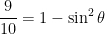
Yesterday, I presented a solution using a Pythagorean identity, but I was unable to be certain if the final answer was a positive or negative without drawing a picture. Here’s a third solution that also use a Pythagorean trig identity but avoids this difficulty. Again, I begin by squaring both sides.





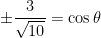
Yesterday, I used the Pythagorean identity again to find  . Today, I’ll instead plug back into the original equation :


Unlike the example yesterday, the signs of and  must agree. That is, if
  , then
  must also be positive. On the other hand, if
 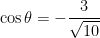 , then
  must also be negative.
If they’re both positive, then
 ,
,
and if they’re both negative, then
 .
.
Either way, the answer must be  .
.
This is definitely superior to the solution provided in yesterday’s post, as there’s absolutely no doubt that the product must be positive.


 and
and  :
:




 , and the substitution
  .
. .
. , the magic substitution
 ,
, .
. since the roots will be complex. The four roots of this quartic equation can be found with De Moivre’s Theorem by writing
 ,
, is a real number, and
 .
. and
and 
 and
and 
 .
.![z = 1 \left[ \cos \displaystyle \frac{\pi}{4} + i \sin \frac{\pi}{4} \right] = \displaystyle \frac{\sqrt{2}}{2} + i \frac{\sqrt{2}}{2}](https://s0.wp.com/latex.php?latex=z+%3D+1+%5Cleft%5B+%5Ccos+%5Cdisplaystyle+%5Cfrac%7B%5Cpi%7D%7B4%7D+%2B+i+%5Csin+%5Cfrac%7B%5Cpi%7D%7B4%7D+%5Cright%5D+%3D+%5Cdisplaystyle+%5Cfrac%7B%5Csqrt%7B2%7D%7D%7B2%7D+%2B+i+%5Cfrac%7B%5Csqrt%7B2%7D%7D%7B2%7D&bg=ffffff&fg=000000&s=0&c=20201002)
![z = 1 \left[ \cos \displaystyle \frac{3\pi}{4} + i \sin \frac{3\pi}{4} \right] = -\displaystyle \frac{\sqrt{2}}{2} + i \frac{\sqrt{2}}{2}](https://s0.wp.com/latex.php?latex=z+%3D+1+%5Cleft%5B+%5Ccos+%5Cdisplaystyle+%5Cfrac%7B3%5Cpi%7D%7B4%7D+%2B+i+%5Csin+%5Cfrac%7B3%5Cpi%7D%7B4%7D+%5Cright%5D+%3D+-%5Cdisplaystyle+%5Cfrac%7B%5Csqrt%7B2%7D%7D%7B2%7D+%2B+i+%5Cfrac%7B%5Csqrt%7B2%7D%7D%7B2%7D&bg=ffffff&fg=000000&s=0&c=20201002)
![z = 1 \left[ \cos \displaystyle \frac{5\pi}{4} + i \sin \frac{5\pi}{4} \right] = -\displaystyle \frac{\sqrt{2}}{2} - i \frac{\sqrt{2}}{2}](https://s0.wp.com/latex.php?latex=z+%3D+1+%5Cleft%5B+%5Ccos+%5Cdisplaystyle+%5Cfrac%7B5%5Cpi%7D%7B4%7D+%2B+i+%5Csin+%5Cfrac%7B5%5Cpi%7D%7B4%7D+%5Cright%5D+%3D+-%5Cdisplaystyle+%5Cfrac%7B%5Csqrt%7B2%7D%7D%7B2%7D+-+i+%5Cfrac%7B%5Csqrt%7B2%7D%7D%7B2%7D&bg=ffffff&fg=000000&s=0&c=20201002)
![z = 1 \left[ \cos \displaystyle \frac{7\pi}{4} + i \sin \frac{7\pi}{4} \right] = \displaystyle \frac{\sqrt{2}}{2} - i \frac{\sqrt{2}}{2}](https://s0.wp.com/latex.php?latex=z+%3D+1+%5Cleft%5B+%5Ccos+%5Cdisplaystyle+%5Cfrac%7B7%5Cpi%7D%7B4%7D+%2B+i+%5Csin+%5Cfrac%7B7%5Cpi%7D%7B4%7D+%5Cright%5D+%3D+%5Cdisplaystyle+%5Cfrac%7B%5Csqrt%7B2%7D%7D%7B2%7D+-+i+%5Cfrac%7B%5Csqrt%7B2%7D%7D%7B2%7D&bg=ffffff&fg=000000&s=0&c=20201002)
 can be written as the following product of linear factors over the complex plane:
![\displaystyle \left(x - \left[ \displaystyle \frac{\sqrt{2}}{2} + i \frac{\sqrt{2}}{2} \right] \right)\left(x - \left[ \displaystyle \frac{\sqrt{2}}{2} - i \frac{\sqrt{2}}{2} \right] \right) \left(x - \left[ -\displaystyle \frac{\sqrt{2}}{2} + i \frac{\sqrt{2}}{2} \right] \right) \left(x - \left[ - \displaystyle \frac{\sqrt{2}}{2} - i \frac{\sqrt{2}}{2} \right] \right)](https://s0.wp.com/latex.php?latex=%5Cdisplaystyle+%5Cleft%28x+-+%5Cleft%5B+%5Cdisplaystyle+%5Cfrac%7B%5Csqrt%7B2%7D%7D%7B2%7D+%2B+i+%5Cfrac%7B%5Csqrt%7B2%7D%7D%7B2%7D+%5Cright%5D+%5Cright%29%5Cleft%28x+-+%5Cleft%5B+%5Cdisplaystyle+%5Cfrac%7B%5Csqrt%7B2%7D%7D%7B2%7D+-+i+%5Cfrac%7B%5Csqrt%7B2%7D%7D%7B2%7D+%5Cright%5D+%5Cright%29+%5Cleft%28x+-+%5Cleft%5B+-%5Cdisplaystyle+%5Cfrac%7B%5Csqrt%7B2%7D%7D%7B2%7D+%2B+i+%5Cfrac%7B%5Csqrt%7B2%7D%7D%7B2%7D+%5Cright%5D+%5Cright%29+%5Cleft%28x+-+%5Cleft%5B+-+%5Cdisplaystyle+%5Cfrac%7B%5Csqrt%7B2%7D%7D%7B2%7D+-+i+%5Cfrac%7B%5Csqrt%7B2%7D%7D%7B2%7D+%5Cright%5D+%5Cright%29&bg=ffffff&fg=000000&s=0&c=20201002)
![\displaystyle \left(\left[x - \displaystyle \frac{\sqrt{2}}{2} \right] - i \frac{\sqrt{2}}{2} \right)\left( \left[ x - \displaystyle \frac{\sqrt{2}}{2} \right] + i \frac{\sqrt{2}}{2} \right) \left( \left[ x + \displaystyle \frac{\sqrt{2}}{2} \right] - i \frac{\sqrt{2}}{2} \right) \left( \left[ x + \displaystyle \frac{\sqrt{2}}{2} \right] + i \frac{\sqrt{2}}{2} \right)](https://s0.wp.com/latex.php?latex=%5Cdisplaystyle+%5Cleft%28%5Cleft%5Bx+-+%5Cdisplaystyle+%5Cfrac%7B%5Csqrt%7B2%7D%7D%7B2%7D+%5Cright%5D+-+i+%5Cfrac%7B%5Csqrt%7B2%7D%7D%7B2%7D+%5Cright%29%5Cleft%28+%5Cleft%5B+x+-+%5Cdisplaystyle+%5Cfrac%7B%5Csqrt%7B2%7D%7D%7B2%7D+%5Cright%5D+%2B+i+%5Cfrac%7B%5Csqrt%7B2%7D%7D%7B2%7D+%5Cright%29+%5Cleft%28+%5Cleft%5B+x+%2B+%5Cdisplaystyle+%5Cfrac%7B%5Csqrt%7B2%7D%7D%7B2%7D+%5Cright%5D+-+i+%5Cfrac%7B%5Csqrt%7B2%7D%7D%7B2%7D+%5Cright%29+%5Cleft%28+%5Cleft%5B+x+%2B+%5Cdisplaystyle+%5Cfrac%7B%5Csqrt%7B2%7D%7D%7B2%7D+%5Cright%5D+%2B+i+%5Cfrac%7B%5Csqrt%7B2%7D%7D%7B2%7D+%5Cright%29&bg=ffffff&fg=000000&s=0&c=20201002)
![\displaystyle \left(\left[x - \displaystyle \frac{\sqrt{2}}{2} \right]^2 - \left[ i \frac{\sqrt{2}}{2} \right]^2 \right) \left( \left[ x + \displaystyle \frac{\sqrt{2}}{2} \right]^2 - \left[i \frac{\sqrt{2}}{2} \right]^2 \right)](https://s0.wp.com/latex.php?latex=%5Cdisplaystyle+%5Cleft%28%5Cleft%5Bx+-+%5Cdisplaystyle+%5Cfrac%7B%5Csqrt%7B2%7D%7D%7B2%7D+%5Cright%5D%5E2+-+%5Cleft%5B+i+%5Cfrac%7B%5Csqrt%7B2%7D%7D%7B2%7D+%5Cright%5D%5E2+%5Cright%29+%5Cleft%28+%5Cleft%5B+x+%2B+%5Cdisplaystyle+%5Cfrac%7B%5Csqrt%7B2%7D%7D%7B2%7D+%5Cright%5D%5E2+-+%5Cleft%5Bi+%5Cfrac%7B%5Csqrt%7B2%7D%7D%7B2%7D+%5Cright%5D%5E2+%5Cright%29&bg=ffffff&fg=000000&s=0&c=20201002)

 .
. ,
,

 ,
, . However, this was a multiple-choice contest problem and
 Mean Green Math