Mathematical Christmas gifts

Now that Christmas is over, I can safely share the Christmas gifts that I gave to my family this year thanks to Nausicaa Distribution (https://www.etsy.com/shop/NausicaaDistribution):

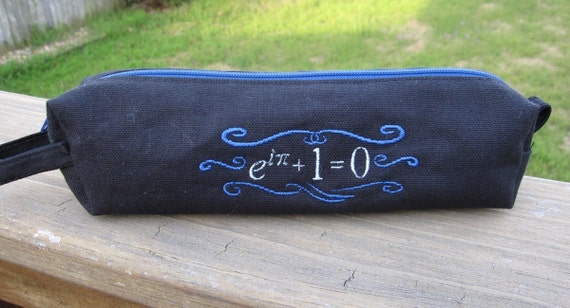
Euler’s equation pencil pouch:

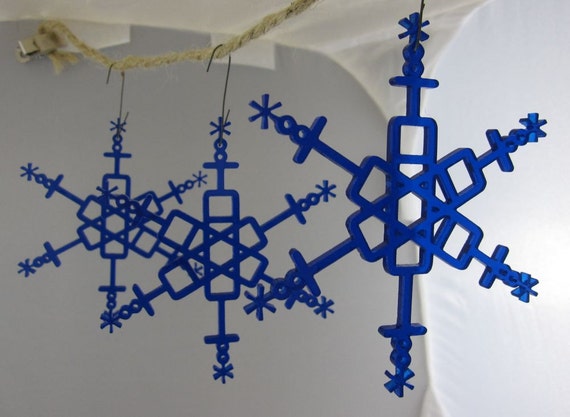
Box-and-whisker snowflakes to hang on our Christmas tree:

And, for me, a wonderfully and subtly punny “Confidence and Power” T-shirt.

Thanks to FiveThirtyEight (see http://fivethirtyeight.com/features/the-fivethirtyeight-2014-holiday-gift-guide/) for pointing me in this direction.

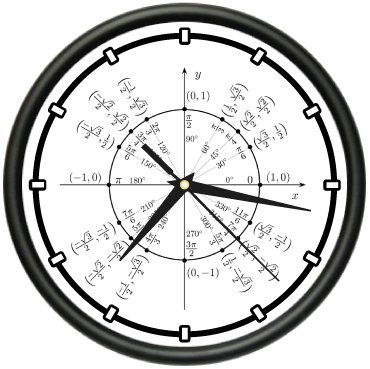
green lineFor the sake of completeness, here are the math-oriented gifts that I received for Christmas:


Arithmetic and Geometric Series: Index

I’m using the Twelve Days of Christmas (and perhaps a few extra days besides) to do something that I should have done a long time ago: collect past series of posts into a single, easy-to-reference post. The following posts formed my series on how I remind students about Taylor series. I often use this series in a class like Differential Equations, when Taylor series are needed but my class has simply forgotten about what a Taylor series is and why it’s important.

Part 1: Deriving the formulas for the nth term of arithmetic and geometric sequences.

Part 2: Pedagogical thoughts on conceptual barriers that students often face when encountering sequences and series.

Part 3: The story of how young Carl Frederich Gauss, at age 10, figured out how to add the integers from 1 to 100 in his head.

Part 4: Deriving the formula for an arithmetic series.

Part 5: Deriving the formula for an arithmetic series, using mathematical induction. Also, extensions to other series.

Part 6: Deriving the formula for an arithmetic series, using telescoping series. Also, extensions to other series.

Part 7: Pedagogical thoughts on assessing students’ depth of understanding the formula for an arithmetic series.

Part 8: Deriving the formula for a finite geometric series.

Part 9: Infinite geometric series and Xeno’s paradox.

Part 10: Deriving the formula for an infinite geometric series.

Part 11: Applications of infinite geometric series in future mathematics courses.

Part 12: Other commonly-arising infinite series.


Why Does 0.999… = 1? (Index)

I’m using the Twelve Days of Christmas (and perhaps a few extra days besides) to do something that I should have done a long time ago: collect past series of posts into a single, easy-to-reference post. The following posts formed my series on different techniques that I’ll use to try to convince students that 0.999\dots = 1.

Part 1: Converting the decimal expansion to a fraction, with algebra.

Part 2: Rewriting both sides of the equation 1 = 3 \times \displaystyle \frac{1}{3}.

Part 3: Converting the decimal expansion to a fraction, using infinite series.

Part 4: A proof by contradiction: what number can possibly be between 0.999\dots and 1?

Part 5: Same as Part 4, except by direct reasoning.


Area of a Triangle and Volume of Common Shapes: Index

I’m using the Twelve Days of Christmas (and perhaps a few extra days besides) to do something that I should have done a long time ago: collect past series of posts into a single, easy-to-reference post. The following posts formed my series on different ways of finding the area of a triangle as well as finding the volumes of common shapes.

Part 1: Deriving the formula A = \displaystyle \frac{1}{2} bh.

Part 2: Cavalieri’s principle and finding areas using calculus.

Part 3: Cavalieri’s principle and finding the volume of a pyramid and then the volume of a sphere.

Part 4: Finding the area of a triangle using the Law of Sines.

Part 5: Finding the area of a triangle using the Law of Cosines.

Part 6: Finding the area of a triangle using the triangle’s incenter.

Part 7: Finding the area of a triangle using a determinant and the coordinates of the vertices.

Part 8: Finding the area of a triangle using Pick’s theorem.


A Curious Square Root: Index

I’m using the Twelve Days of Christmas (and perhaps a few extra days besides) to do something that I should have done a long time ago: collect past series of posts into a single, easy-to-reference post. The following posts formed my series on expressions containing nested square roots that nevertheless can be simplified.

Part 1: Simplifying \sqrt{5 - \sqrt{6} + \sqrt{22+8\sqrt{6}}}.

Part 2: DIfferent ways of calculating \sin 15^\circ.


Reminding students about Taylor series: Index

I’m doing something that I should have done a long time ago: collect past series of posts into a single, easy-to-reference post. The following posts formed my series on how I remind students about Taylor series. I often use this series in a class like Differential Equations, when Taylor series are needed but my class has simply forgotten about what a Taylor series is and why it’s important.

Part 1: Introduction – Why a Taylor series is important, and different applications of Taylor series.

Part 2: How I get students to understand the finite Taylor polynomial by solving a simple initial-value problem.

Part 3: Making the jump to an infinite series, and issues about tests of convergence.

Part 4: Application to f(x) = e^x, and a numerical investigation of speed of convergence.

Part 5: Application to f(x) = \displaystyle \frac{1}{1-x} and other related functions, including f(x) = \ln(1+x) and f(x) = \tan^{-1} x.

Part 6: Application to f(x) = \sin x and f(x) = \cos x, and Euler’s formula.