I'm a Professor of Mathematics and a University Distinguished Teaching Professor at the University of North Texas. For eight years, I was co-director of Teach North Texas, UNT's program for preparing secondary teachers of mathematics and science.
If you have questions or comments about this film please contact @statsdancer #dancingstatistics or dancingstatistics@gmail.com
The BPS runs an annual public engagement grant scheme. Through these grants we aim to help members promote the relevance of evidence-based psychology to wider audiences either through direct work or by organising interesting and relevant communications activities. For press inquiries please contact the BPS Press Office. http://www.bps.org.uk/what-we-do/awar…
IdeasTap is an arts charity for young, creative people at the start of their careers.
Visit their website for more information http://www.ideastap.com.
If you have questions or comments about this film please contact @statsdancer #dancingstatistics or dancingstatistics@gmail.com
The BPS runs an annual public engagement grant scheme. Through these grants we aim to help members promote the relevance of evidence-based psychology to wider audiences either through direct work or by organising interesting and relevant communications activities. For press inquiries please contact the BPS Press Office.
IdeasTap is an arts charity for young, creative people at the start of their careers.
Visit their website for more information http://www.ideastap.com.
If you have questions or comments about this film please contact @statsdancer #dancingstatistics or dancingstatistics@gmail.com
The BPS runs an annual public engagement grant scheme. Through these grants we aim to help members promote the relevance of evidence-based psychology to wider audiences either through direct work or by organising interesting and relevant communications activities. For press inquiries please contact the BPS Press Office.
IdeasTap is an arts charity for young, creative people at the start of their careers.
Visit their website for more information http://www.ideastap.com.
If you have questions or comments about this film please contact @statsdancer #dancingstatistics or dancingstatistics@gmail.com
The BPS runs an annual public engagement grant scheme. Through these grants we aim to help members promote the relevance of evidence-based psychology to wider audiences either through direct work or by organising interesting and relevant communications activities. For press inquiries please contact the BPS Press Office.
IdeasTap is an arts charity for young, creative people at the start of their careers.
Visit their website for more information http://www.ideastap.com.
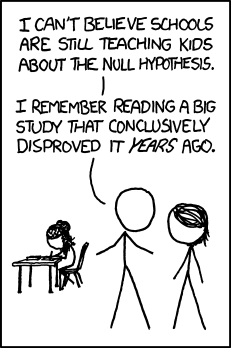
A friend forwarded this very interesting video to me. It’s not so much an exercise in mathematics but an exercise in problem-solving and logic and especially confirmation bias. I won’t ruin the video but I’ll give the punch line at the end:
If you think that something is true, you should try as hard as you can to disprove it. Only then can you really get at the truth and not fool yourself.
In my capstone class for future secondary math teachers, I ask my students to come up with ideas for engaging their students with different topics in the secondary mathematics curriculum. In other words, the point of the assignment was not to devise a full-blown lesson plan on this topic. Instead, I asked my students to think about three different ways of getting their students interested in the topic in the first place.
I plan to share some of the best of these ideas on this blog (after asking my students’ permission, of course).
This student submission again comes from my former student Rebekah Bennett. Her topic, from Pre-Algebra: finding points on the coordinate plane.
Applications: How could you as a teacher create an activity or project that involves your topic?
For this topic, the first thing that came to mind was battleship. The game was introduced to me when I was around 8 or 9 years old. The mathematical content that the game expresses never really occurred to me until I became older and made a connection. The game board for battleship is simply one quadrant of the coordinate plane and the players call out coordinates which are found on the game board. This is the same as finding a point on the coordinate plane but in a much more fun way of doing so.
For those of you who do not know what the game is, here is a quick clip from Seinfeld where they are playing the game.
To make things interesting, we will play Human Battleship. For this activity you would need a large area that can be marked off as a grid, such as a gym or field. Each group will have at least 4 students (ships) that they can place strategically on their side. Since there is no barrier between the sides, the captains must face the opposite direction to ensure they have not seen the opponent’s ships locations. Now each captain will take turns calling out coordinate points and having them recorded by their co-captain. The shipmates must go to each point and yell hit or miss, marking a hit with a red flag and miss with a white flag. When a ship is sunk the shipmates will make a bombing sound so that both captains know they are a down a ship. The students will continue to do this until one team has all their ships sunk and the other is declared the winner.
Curriculum: How can this topic be used in your students’ future courses in mathematics or science?
This topic is used continually throughout mathematics and builds up to something more every day in math. It is a basis for learning how to work with graphs. Students learn how to plot points now and then later they learn how to create graphs according to the points. With graphs, they will learn how to move points along the coordinate plane, learning new vocabulary such as; translation, rotation, reflection, stretch and shrink. Students will then learn how to draw a line using slope to connect one point to another and find the distance between those 2 points. The x and y values work as an input, output function. All these things are based on the simple concept of plotting points which we use in every day math.
This topic is also used throughout the scientific world. The student learns how to make scatter plots and line graphs. Also, science uses functions as well. In science students record data in a table using an x and y value but are typically labeled according to a real life experiment such as growth and amount of water. When conducting research or displaying data the student uses the same techniques for graphs that were learned in math and applies them to science, which builds more and more everyday as well.
History: How was this topic adopted by the mathematical community?
During the European Renaissance, mathematics was split into two separate subjects of geometry and algebra. They didn’t coincide. Algebraic equations were only used in algebra and people only drew pictures in geometry. Rene Descartes changed the whole outcome and combined both subjects together developing a brighter future for mathematics.
Descartes’ method involved two number lines. The student was already introduced to the basic number line in elementary and then introduced to a number line with negative numbers during 8th or 9th grade completing the number line. Knowing that the students have full knowledge of a number line, Descartes decided to put two number lines together. The traditional number line is horizontal and rotated the other number line 90 degrees (vertical) where both of the number lines intersect at zero. These two lines are called axes; such as x-axis (horizontal line) and y-axis (vertical line). Since a number line stretches in both directions, the axes will have arrows on each end. The whole area, side to side, top to bottom, and stretching infinitely in all directions creates a plane. When constructing two axes within a plane, it is then converted to a Cartesian Plane. The name “Cartesian” was derived from the name “Descartes.” From creating a plane, the student can now find a point on the plane using the coordinate pair they are given.
In my capstone class for future secondary math teachers, I ask my students to come up with ideas for engaging their students with different topics in the secondary mathematics curriculum. In other words, the point of the assignment was not to devise a full-blown lesson plan on this topic. Instead, I asked my students to think about three different ways of getting their students interested in the topic in the first place.
I plan to share some of the best of these ideas on this blog (after asking my students’ permission, of course).
This student submission again comes from my former student Chelsea Hancock. Her topic, from Pre-Algebra: dividing fractions.
Applications (A1)
Students can encounter the division of fractions in a variety of places outside of the classroom. Some of these instances could even happen in your own home! When using fractions, the most common examples include slicing pizza or pie into equal slices. Here is one of those problems:
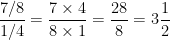
Assume you have seven-eighths of a whole pizza left. Three of your friends walk into the kitchen and ask for one-fourth of the whole pizza each. If you wanted to share with your friends, will you have enough pizza for each friend to get the amount they want? (Divide 7/8 by 1/4 and see if it’s bigger than three).
It is bigger than three, therefore there is, in fact, enough pizza left for all three of your friends to get the amount they wanted.
Other problems might involve finding a fraction of a fraction of a whole. Here is an example of this:
I have a giant cookie jar with 36 cookies in it. My family comes over and eats some of the cookies. If 1/3 of the cookies are eaten and 3/4 of the eaten cookies had frosting, how many of the eaten cookies had frosting? (Multiply 36 by 1/3 to get 12. Then multiply 12 by 3/4).
.
Nine of the eaten cookies had frosting.
Curriculum (B2)
In previous mathematics classes, students have obtained a wide variety of skills which can be used when dividing fractions. These skills include the multiplication of whole numbers, the division of whole numbers, and how to reduce fractions to their simplest form. Dividing fractions is an extension of these skills. It can also be said that students already understand what a fraction is. On a separate note, we will discuss how many students relate to fractions and how they think of fractions when confronted with them.
Many students find fractions difficult and intimidating, often freezing when they see a fraction. Involve more than one fraction in a problem and students will get easily frustrated and give up. This can be caused by the way a student perceives fractions. Many students are taught that a fraction is simply part of a bigger whole number. While this is true, many students lose focus on the big picture and get caught up on the fact that a fraction is less than 1 whole unit. In order to help avoid this, teachers could instead try explaining fractions in a slightly different way: a fraction is just a number written like a division problem. The video found at http://www.youtube.com/watch?v=3xwDryouw6o can help to provide a more in-depth explanation about this new perspective on fractions.
By thinking of a fraction as simply a division problem, students automatically incorporate their previous knowledge on dividing whole numbers. When students work through a problem with dividing fractions, they will go through the steps of “keep, change, and flip.” Once they have changed the division symbol to a multiplication symbol and flipped the second fraction, the students will be ready to use their previous knowledge on multiplying whole numbers. After the numerators and denominators are multiplied respectively and the new fraction is obtained, the students must recall previous knowledge on the reduction of fractions to their simplest form.
Technology (E1)
A video can be used to engage students and give them a foundation for dividing fractions. The video I chose, which can be found at http://www.youtube.com/watch?v=uMz4Hause-o, is an excellent example of an acceptable engagement tool. In the video Flocabulary uses music and repetition to describe how to perform the task of dividing fractions. This will help the students be able to recall the information about dividing fractions later on when they need to. Flocabulary explains the process step-by-step and then demonstrates the method in action, using two different fractions to help students understand how it works. Then the video goes on to explain why we flip the second fraction in a division problem, which is vital for ensuring that actual learning is taking place and not simple memorization. Students need to know why they perform certain steps and why the trick works. While the cartoon animations are meant to target a younger audience, this clip is easy to follow and the repetitious nature of the music puts an interesting spin on learning mathematics.

 ,
,


 .
.
