Engaging students: Solving one-step algebra problems

In my capstone class for future secondary math teachers, I ask my students to come up with ideas for engaging their students with different topics in the secondary mathematics curriculum. In other words, the point of the assignment was not to devise a full-blown lesson plan on this topic. Instead, I asked my students to think about three different ways of getting their students interested in the topic in the first place.

I plan to share some of the best of these ideas on this blog (after asking my students’ permission, of course).

This student submission again comes from my former student Anna Park. Her topic, from Algebra: solving one-step algebra problems.

green line

How could you as a teacher create an activity or project that involves your topic?

Bingo game:

The teacher will create a bingo sheet with a free space in the middle, and integers in the other spaces. These integers represent the answers to the word problems that the teacher will be putting on the board or projector screen. Each word problem will either be a one-step equation or a two-step equation. A one step equation involves only one step to solve for the variable, this means only one operation will be done on the equation. The goal is to have the variable by itself on the left side of the equal sign and the numbers on the right side of the equal sign. A two-step equation is similar to a one step equation. A two-step equation is where it takes only two steps to solve for the variable in the equation that has more than one operation. The goal is the same as a one-step equation.
green line

How can this topic be used in your students’ future courses in mathematics or science?

  1. In future courses students will need to know how to isolate a variable in an equation to receive its value. They will need to know how to graph equations and inequalities in future mathematics courses. From Algebra and on students will need to know how to solve for the value of a variable.
  2. Students will also need to know how to create an equation given to them in word problems. Some of the classes that this will be needed for is Physics, geometry, algebra II, Pre-Calculus, Calculus, college courses..etc. Algebra is a tool for problem solving, and critical thinking. Word problems give real life examples of algebra and students will be able to apply this knowledge to real life situations and understand the problems given to them in future classes.


green line

How can technology (YouTube, Khan Academy [khanacademy.org], Vi Hart, Geometers Sketchpad, graphing calculators, etc.) be used to effectively engage students with this topic?

  1. Kolumath is a great youtube math channel that explains how to do certain math operations with great visual examples and clear explanations. The speaker talks clearly and is easy to understand, and the examples he uses ties in information the students have learned in previous courses. His visual examples allow students who struggle with picturing math functions to connect to the lesson.
  2. This channel also gives definitions over the topic and any definition relatable to the operations done in the video.
  3. Listed below are examples he uses on how to solve one-step and two-step equations. (References)

Solving one step equations:  https://www.youtube.com/watch?v=Ot-KSERw8Gc

Solving two step equations: https://www.youtube.com/watch?v=m7acIUcQ-7E


Engaging students: Venn diagrams

In my capstone class for future secondary math teachers, I ask my students to come up with ideas for engaging their students with different topics in the secondary mathematics curriculum. In other words, the point of the assignment was not to devise a full-blown lesson plan on this topic. Instead, I asked my students to think about three different ways of getting their students interested in the topic in the first place.

I plan to share some of the best of these ideas on this blog (after asking my students’ permission, of course).

This student submission comes from my former student Amber Northcott. Her topic, from Probability: Venn diagrams.

green line

How could you as a teacher create an activity or project that involves your topic?

There are a few activities you can do with Venn diagrams. One idea is for the first day of class you can put up a big poster with a Venn diagram on it or you can draw one on the board. One circle can be ‘loves math’, while the other is ‘do not like math’. Then of course the center where the two circles intertwine will be the students who love math, but yet don’t like it. When your students come into the room you can have them put their name where it seems fit. This way you can get to better know your students on the topic of math. Another idea is that when you get to a topic, for instance arithmetic and geometric sequences, you can create a giant poster Venn diagram or draw it on the board. Then you can have your students write one thing that either arithmetic has or geometric has or both of them have. Once each student has put up just one thing on the Venn diagram, you can start a class discussion on the Venn diagram. While the discussion goes on you may fix a couple things here and there or even add to it. At the end each student will have their own Venn diagram to fil out, so they can have it in their notes.


green line

How can this topic be used in your students’ future courses in mathematics or science?


Venn diagrams are an easier way to compare and contrast two topics. It can help differentiate between the two topics. For example, how are geometric and arithmetic sequences different? Do they have anything in common? What do they have in common? This helps students identify the topics more thoroughly and helps them get a better understanding about each topic.


green line

How has this topic appeared in the news.


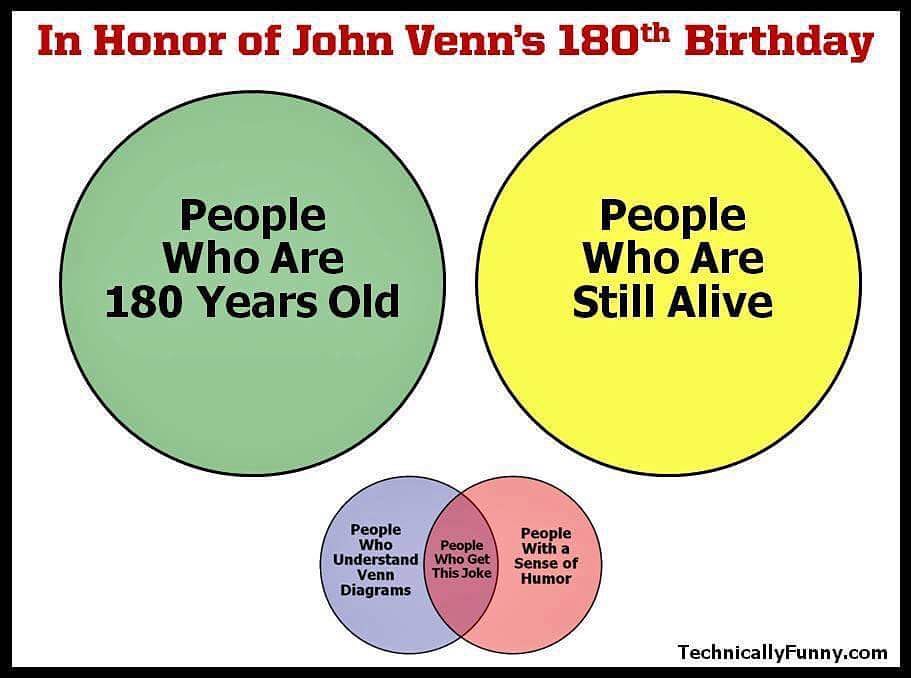
Not too long ago Hillary Clinton posted a Venn diagram about gun control on twitter. In response she was getting mocked and criticized. A short article on thehill.com goes into the mockery by showing pictures of people’s tweets to Hillary Clinton. Some had two circles separate from each other with one stating people who know how to make Venn diagrams and the other one stating Hillary’s graphic design staff. The other article from the Washington Post actually goes through her Venn diagram and fixes errors. These errors include the data in the Venn diagram.

Letting students see this, would definitely cause a discussion. I think we can turn the discussion into whether or not we think the Venn diagram was wrong. By having this discussion, we can learn more about what the students know about Venn diagrams and shed more light on how we can use the Venn diagrams in many different ways for many different topics.


References

https://www.washingtonpost.com/news/the-fix/wp/2016/05/20/we-fixed-hillary-clintons-terrible-venn-diagram-on-gun-control/

http://thehill.com/blogs/ballot-box/presidential-races/280706-clinton-mocked-for-misuse-of-venn-diagram


What I Learned by Reading “Gamma: Exploring Euler’s Constant” by Julian Havil: Index

I’m doing something that I should have done a long time ago: collecting a series of posts into one single post.

When I was researching for my series of posts on conditional convergence, especially examples related to the constant \gamma, the reference Gamma: Exploring Euler’s Constant by Julian Havil kept popping up. Finally, I decided to splurge for the book, expecting a decent popular account of this number. After all, I’m a professional mathematician, and I took a graduate level class in analytic number theory. In short, I don’t expect to learn a whole lot when reading a popular science book other than perhaps some new pedagogical insights.

Boy, was I wrong. As I turned every page, it seemed I hit a new factoid that I had not known before.

In this series, I’d like to compile some of my favorites along with the page numbers in the book — while giving the book a very high recommendation.

Part 1: The smallest value of n so that 1 + \frac{1}{2} + \dots + \frac{1}{n} > 100 (page 23).

Part 2: Except for a couple select values of m<n, the sum \frac{1}{m} + \frac{1}{m+1} + \dots + \frac{1}{n} is never an integer (pages 24-25).

Part 3: The sum of the reciprocals of the twin primes converges (page 30).

Part 4: Euler somehow calculated \zeta(26) without a calculator (page 41).

Part 5: The integral called the Sophomore’s Dream (page 44).

Part 6: St. Augustine’s thoughts on mathematicians — in context, astrologers (page 65).

Part 7: The probability that two randomly selected integers have no common factors is 6/\pi^2 (page 68).

Part 8: The series for quickly computing \gamma to high precision (page 89).

Part 9: An observation about the formulas for 1^k + 2^k + \dots + n^k (page 81).

Part 10: A lower bound for the gap between successive primes (page 115).

Part 11: Two generalizations of \gamma (page 117).

Part 12: Relating the harmonic series to meteorological records (page 125).

Part 13: The crossing-the-desert problem (page 127).

Part 14: The worm-on-a-rope problem (page 133).

Part 15: An amazingly nasty formula for the nth prime number (page 168).

Part 16: A heuristic argument for the form of the prime number theorem (page 172).

Part 17: Oops.

Part 18: The Riemann Hypothesis can be stated in a form that can be understood by high school students (page 207).


The Running Nerd: The US Marathoner Who Is Also a Statistics Professor

I loved these articles about Jared Ward, an adjunct professor of statistics at BYU who also happens to be a genuine and certifiable jock… he finished the 2016 Olympic marathon in 6th place with a time of 2:11:30.

Ward started teaching at his alma mater after graduating from BYU with a master’s degree in statistics in April 2015…

Ward wrote his master’s thesis on the optimal pace strategy for the marathon. He analyzed data from the St. George Marathon, and compared the pace of runners who met the Boston Marathon qualifying time to those who did not.

The data showed that the successful runners had started the race conservatively, relative to their pace, and therefore had enough energy to take advantage of the downhill portions of the race.

Ward employs a similar pacing strategy, refusing to let his adrenaline trick him into running a faster pace than he can maintain.

And, in his own words,

[A]t BYU, on our cross-country field, on the guys side, there were maybe 20 guys on the team; half of them were statistics or econ majors. There was one year when we thought if we pooled together all of the runners from our statistics department, we could have a stab with just that group of guys at being a top-10 cross-country team in the nation…

To be a runner, it’s a very internally motivated sport. You’re out there running on the road, trying to run faster than you’ve ever run before, or longer than you’ve ever gone before. That leads to a lot of thinking and analyzing.We’re out there running, thinking about what we’re eating, what we need to eat, energy, weightlifting, how our body feels today, how it’s going to feel tomorrow with how much we run today. We’re gauging all of these efforts based on how we feel and trying to analyze how we feel and how we can best get ourselves ready for a race. As opposed to all the time on a soccer field, you’re listening to do a drill that your coach tells you to do, and then you go home.

I think we have a lot of time to think about what we are doing and how it impacts our performance. And statistics is the same way. It’s thinking about how numbers and data lead to answers to questions.

Yes, I think there’s probably some sort of connection there to nerds and runners.

Sources: http://www.nbcolympics.com/news/running-nerd-us-marathoner-who-also-statistics-professor and http://www.chronicle.com/article/Trading-One-Marathon-for/237595?utm_source=Sailthru&utm_medium=email&utm_campaign=Issue:%202016-08-29%20Higher%20Ed%20Education%20Dive%20Newsletter%20%5Bissue:7064%5D&utm_term=Education%20Dive:%20Higher%20Ed

Computing e to Any Power: Index

I’m doing something that I should have done a long time ago: collecting a series of posts into one single post. The following links comprised my series examining one of Richard Feynman’s anecdotes about mentally computing e^x for three different values of x.

Part 1: Feynman’s anecdote.

Part 2: Logarithm and antilogarithm tables from the 1940s.

Part 3: A closer look at Feynman’s computation of e^{3.3}.

Part 4: A closer look at Feynman’s computation of e^{3}.

Part 5: A closer look at Feynman’s computation of e^{1.4}.


Lessons from teaching gifted elementary school students: Index (updated)

I’m doing something that I should have done a long time ago: collect past series of posts into a single, easy-to-reference post. The following posts formed my series on various lessons I’ve learned while trying to answer the questions posed by gifted elementary school students. (This is updated from my previous index.)

Part 1: A surprising pattern in some consecutive perfect squares.

Part 2: Calculating 2 to a very large exponent.

Part 3a: Calculating 2 to an even larger exponent.

Part 3b: An analysis of just how large this number actually is.

Part 4a: The chance of winning at BINGO in only four turns.

Part 4b: Pedagogical thoughts on one step of the calculation.

Part 4c: A complicated follow-up question.

Part 5a: Exponentiation is multiplication as multiplication is to addition. So, multiplication is to addition as addition is to what? (I offered the answer of incrementation, but it was rejected: addition requires two inputs, while incrementation only requires one.)

Part 5b: Why there is no binary operation that completes the above analogy.

Part 5c: Knuth’s up-arrow notation for writing very big numbers.

Part 5d: Graham’s number, reputed to be the largest number ever to appear in a mathematical proof.

Part 6a: Calculating $(255/256)^x$.

Part 6b: Solving $(255/256)^x = 1/2$ without a calculator.

Part 7a: Estimating the size of a 1000-pound hailstone.

Part 7b: Estimating the size a 1000-pound hailstone.

Part 8a: Statement of an usually triangle summing problem.

Part 8b: Solution using binomial coefficients.

Part 8c: Rearranging the series.

Part 8d: Reindexing to further rearrange the series.

Part 8e: Rewriting using binomial coefficients again.

Part 8f: Finally obtaining the numerical answer.

Part 8g: Extracting the square root of the answer by hand.

A Natural Function with Discontinuities: Index

I’m doing something that I should have done a long time ago: collecting a series of posts into one single post. The following links comprised my series on a natural function that nevertheless has discontinuities.

Part 1: Introduction

Part 2: Derivation of this piecewise function, beginning.

Part 3: Derivation of the piecewise function, ending.