I’m doing something that I should have done a long time ago: collect past series of posts into a single, easy-to-reference post. The following posts formed my series on various lessons I’ve learned while trying to answer the questions posed by gifted elementary school students.
Part 1: A surprising pattern in some consecutive perfect squares.
I’m doing something that I should have done a long time ago: collect past series of posts into a single, easy-to-reference post. The following posts formed my short series on what happens when too many significant digits are reported.
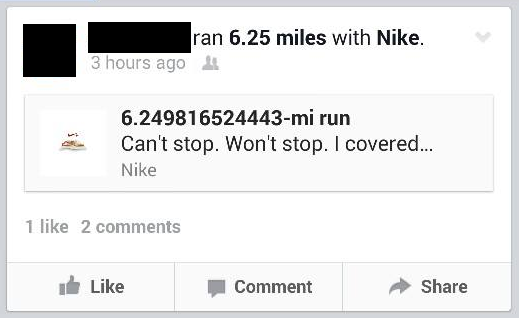
Part 1: An analysis of the report of this Nike app:
Part 2: Links to resources that discuss how many significant digits should be reported.
I’m doing something that I should have done a long time ago: collect past series of posts into a single, easy-to-reference post. The following posts formed my series on computing the number of digits in .
Part 1: Introduction – my own childhood explorations.
[This] is a collection of materials directed at either teaching a math history class or including math history ideas in other math courses. Things that are available:
An extensive set of problem-solving lessons that include student materials, teacher commentary, problem sets, problem commentary, associated writing topics, and references…originally this was prepared with the intent it would become a “300-page” book, but now is being made available for FREE.
A broad collection of materials that supports a Math History course … writing assignments, paper topics, writing prompts, rubrics, etc.
A multi-level reference list of historical resources that focus on the history of mathematics, ranging from texts to articles. It can be used to build identify resources in the writing of papers and guide the broad understanding of the history of mathematics. If students need reference info on topic or mathematicians, please share this with them….might lessen the over-emphasis on Internet resources.
[This] is a data base of more than 1600 historical problems connected with mathematical topics, skills, and concepts taught in secondary schools and colleges. The problems are categorized within broad areas of number, algebra, geometry, measurement, trigonometry, number theory, probability, statistics, pre-calculus, calculus, logic, discrete mathematics, and recreational mathematics. Revealing international contributions and changing cultures, the problems span the full history of mathematics (2000 B.C. – 1940). Each problem statement includes its source and solution commentary.
Moore’s method uses the axiomatic method as an instructional device. Moore would give the students the axioms a few at a time and let them deduce consequences. A typical Moore class might begin like this. Moore would ask one student to step up to the board to prove a result stated in the previous class or to give a counterexample to some earlier conjecture — and very occasionally to formulate a new axiom to meet a previously identified need. Moore would generally begin by asking the weakest student to make the first attempt — or at least the student who had hitherto contributed least to the class. The other students would be charged with pointing out any errors in the first student’s presentation.
Very often, the first student would be unable to provide a satisfactory answer — or even any answer at all, and so Moore might ask for volunteers or else call upon the next weakest, then the next, and so on. Sometimes, no one would be able to provide a satisfactory answer. If that were the case, Moore might provide a hint or a suggestion, but nothing that would form a constitutive part of the eventual answer. Then again, he might simply dismiss the group and tell them to go away and think some more about the problem.
Moore’s discovery method was not designed for — and probably will not work in — a mathematics course which should survey a broad area or cover a large body of facts. And it would obviously need modification in an area of mathematics where the student needs a substantial background knowledge in order to begin. But there are areas of mathematics where, in the hands of the right teacher — and possibly the right students — Moore’s procedure can work just fine. Moore’s own area of general topology is just such an area. You can find elements of the Moore method being used in mathematics classes at many institutions today, particularly in graduate courses and in classes for upper-level undergraduate mathematics majors, but few instructors ever take the process to the lengths that Moore did, and when they try, they rarely meet with the same degree of success.
Lest this sound extreme, here’s a snapshot of Moore’s educational philosophy produced:
If you measure teaching quality in terms of the product – the successful students – our man has no competition for the title of the greatest ever math teacher. During his 64 year career as a professor of mathematics, he supervised fifty successful doctoral students. Of those fifty Ph.D.’s, three went on to become presidents of the AMS – a position our man himself held at one point – and three others vice-presidents, and five became presidents of the MAA. Many more pursued highly successful careers in mathematics, achieving influential positions in the AMS and the MAA, producing successful Ph.D. students of their own and helping shape the development of American mathematics as it rose to its present-day position of world dominance.
Present-day inquiry-based learning uses some (but not all) elements of Moore’s teaching style. I personally do not teach using the Moore method, as I have developed my own teaching style that seems to work well with my students. That said, I would seriously consider using the Moore method for classes which are best suited for this style of pedagogy.
In my capstone class for future secondary math teachers, I ask my students to come up with ideas for engaging their students with different topics in the secondary mathematics curriculum. In other words, the point of the assignment was not to devise a full-blown lesson plan on this topic. Instead, I asked my students to think about three different ways of getting their students interested in the topic in the first place.
I plan to share some of the best of these ideas on this blog (after asking my students’ permission, of course).
This student submission comes from my former student Emily Bruce. Her topic, from Geometry: deriving the proportions of a 30-60-90 triangle.
How could you as a teacher create an activity or project that involves your topic?
There is a great activity for deriving the ratio of the sides of a 30-60-90 triangle that uses an equilateral triangle with known side lengths. If you draw the line that bisects one of the angles in the triangle, it is then perpendicular to the side opposite the bisected angle. This creates two triangles with a corresponding 30-degree angle (from the bisected angle), a congruent corresponding side (the line drawn through the triangle), and a corresponding right angle (from the perpendicular line). From this information the two triangles are congruent by the ASA rule. Students might also use the SAS rule by recognizing that the sides of an equilateral triangle are the same lengths, so the two sides adjacent to the bisected 60-degree angle will be congruent. Since the two smaller triangles are congruent, we can show that the smaller sides of the triangle are half the length of the hypotenuse. Using the Pythagorean theorem, the students can find out what the ratio of the sides will be. This is a great activity because it uses students’ prior knowledge about equilateral triangles, angle bisectors, perpendicular lines, and congruent triangles to derive the ratio on their own.
Serra, Michael. Discovering Geometry. Emeryville: Ker Curriculum Press, 2008. Print.
How can this topic be used in your students’ future courses in mathematics and science?
Memorizing the ratio of these sides is not critical in mathematics, because they can always be derived; however having these ratios memorized is very helpful for future use in mathematics and science. When students get into precalculus, they learn about trigonometry. 30-60-90 triangles and their side ratios are specifically helpful when it comes to learning about the unit circle. Students will have to learn the different values of the sine, cosine, and tangent functions of common angles like 30, 60 and 90 that correspond to special right triangles. What they will learn is that for a 30-degree angle, the sine function is equal to the opposite angle divided by the hypotenuse. If the students have memorized the 30-60-90 side ratios, computing these values is simple. Another way in which this can be helpful is in physics. One important topic in physics is projectile motion. In order to find out how far a projectile object will go before it hits the ground, the initial velocity, which is usually at a certain angle upward, must first be split up into its vertical and horizontal components. To do this, they set up the problem as a right triangle, with the initial velocity as the hypotenuse and the angle the object is launched as one of the angles of the triangle. In order to find the vertical and horizontal components of the velocity, it is just a matter of finding the other sides of the triangle. If it so happens that the object was shot at a nice angle like 30 or 60 degrees, students can use their ratio to quickly and easily find the vertical and horizontal components of the velocity.
How can technology be used to effectively engage students with this topic?
A great website for learning and practicing with special right triangles is kahnacademy.org. It provides a video for how to derive the ratios for special right triangles. The way they derive the 30-60-90 ratio is very similar to the activity I described above. This is a great resource for students who may want to go back and look at how the activity was done. The website has many other videos with practice problems. It shows a problem and how to solve it. This gives students a visual example of how to solve some of the questions that might appear on homework. Finally, the website includes word problems and more videos that extend what they students are learning and apply it. The application part of a math topic is extremely important because if students can see the importance of what they’re learning, they will be more inclined to learn it well.
In my capstone class for future secondary math teachers, I ask my students to come up with ideas for engaging their students with different topics in the secondary mathematics curriculum. In other words, the point of the assignment was not to devise a full-blown lesson plan on this topic. Instead, I asked my students to think about three different ways of getting their students interested in the topic in the first place.
I plan to share some of the best of these ideas on this blog (after asking my students’ permission, of course).
This student submission comes from my former student Tiffany Wilhoit. Her topic, from Geometry: perimeters of polygons.
How could you as a teacher create an activity or project that involves your topic?
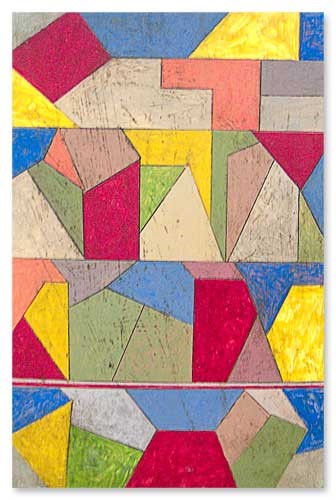
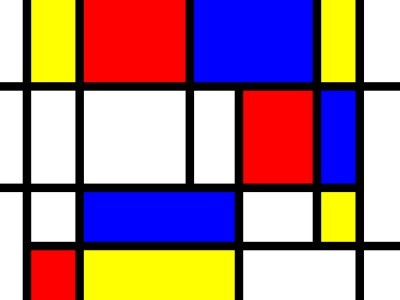
Most activities around the topic of perimeter involve building a fence or a border. However, I feel as if that idea has been overused, and become boring to the students. One activity you could have your students do is to create a piece of art using polygons. There are many artists which create pieces of art using geometric shapes, such as Piet Mondrian. There are two different ways you could do this. The first could be to create a piece of work using polygons of various sizes and structures. The students could then calculate the perimeter of each polygon in their piece of art. There could be a minimum number of polygons the student must use, and you can put extra restrictions on how many different types of polygons the students must use as well. This would provide the students extra practice on determining perimeter of various polygons. Another way to do the project is to have the students create a piece of art using various polygons with the same perimeter. This would allow the students to see how shapes (and area) can change according to how the perimeter is arranged. The students would be able to grasp the idea of two (or more) polygons having the same perimeter, but being different sizes. Either one of these projects would allow the students to discover math while enjoying art.
How does this topic extend what your students should have learned in previous courses?
Students learn about perimeter starting in elementary school. The students learn to add up the four sides of a rectangle or square. Elementary students deal with very basic shapes, and discover the basic meaning of perimeter. As the students go through school the difficulty of the problems increases. The students learn about multiplying the length of one side by the number of sides to find the perimeter of a regular polygon. Soon, the students have to solve for missing sides. First they have to be aware that some sides are equal to other sides, and they just plug in the numbers. Then the students will use algebra to solve for the sides labeled as X or X plus some amount. The students continue to see perimeter throughout calculus. In calculus, the students will be asked to minimize or maximize the perimeter. The students see the topic or perimeter throughout their schooling, so it is necessary for them to have a good understanding of the topic.
How can technology be used to effectively engage students with this topic?
This video was a little silly, but it shared the idea of perimeter of polygons, and I think the students would enjoy it. The graphics are constantly changing which will help keep the attention of the students. This video shows some examples of polygons and their perimeter. However, the video only uses rectangles and triangles. One good point of the video is when it shows how to find the missing sides of different rectangles, however, by high school the students should already have a grasp on this. Nevertheless, it is still an engaging.
This video uses the beat of a song, but changes the words to discuss perimeter. I liked this video because it gave the examples of building a fence or walking around the block. These are examples the student would know already, and they would be able to remember if they needed help distinguishing between area and perimeter. The last half of the song discusses area. You could choose to play the entire video or just the portion on perimeter.
This video is an excellent review all about perimeter. The video goes into the topic pretty deeply, and would make a great review for the students. The video discusses the importance of units since perimeter is a measurement. It goes over a variety of topics, such as using multiplication to find perimeter of regular polygons, how to find missing sides of polygons, irregular polygons, and it even discusses why perimeter is one dimensional. This video is very informative, however, it is not the most engaging video, so it might be better off used as a review, or for the students having trouble.
The classic application of confidence intervals is political polling: the science of sampling relatively few people to predict the opinions of a large population. However, in the 2010s, the art of political polling — constructing representative samples from a large population — has become more and more difficult.

 .
.
 Mean Green Math