My Mathematical Magic Show: Index

I’m doing something that I should have done a long time ago: collecting a series of posts into one single post. The links below show the mathematical magic show that I’ll perform from time to time.

Part 1: Introduction.

Part 2a, Part 2b, and Part 2c: The 1089 trick.

Part 3a, Part 3b, and Part 3c: A geometric magic trick.

Part 4a: Part 4b, Part 4c, and Part 4d: A trick using binary numbers.

Part 5a, Part 5b, Part 5c, and Part 5d: A trick using the rule for checking if a number is a multiple of 9.

Part 7: The Fitch-Cheney card trick, which is perhaps the slickest mathematical card trick ever devised.

Part 8a, Part 8b, and Part 8c: A trick using Pascal’s triangle.

Part 6: The Grand Finale.

And, for the sake of completeness, here’s a recent picture of me just before I performed an abbreviated version of this show for UNT’s Preview Day for high school students thinking about enrolling at my university.

magician


Engaging students: Solving one-step algebra problems

In my capstone class for future secondary math teachers, I ask my students to come up with ideas for engaging their students with different topics in the secondary mathematics curriculum. In other words, the point of the assignment was not to devise a full-blown lesson plan on this topic. Instead, I asked my students to think about three different ways of getting their students interested in the topic in the first place.

I plan to share some of the best of these ideas on this blog (after asking my students’ permission, of course).

This student submission again comes from my former student Jason Trejo. His topic, from Algebra: solving one-step algebra problems.

green line

A2) How could you as a teacher create an activity or project that involves this topic?

How can I engage my students with solving for a variable? Off the top of my head, I came up with 3 tried and true surefire ways that would not only further my students understanding but also be a ton of fun for them: Algeblocks with accompanying interactive whiteboard, using a balance and counters, and possibly using snacks (e.g. cookies, chips, candies, etc.)

First things first, the Algeblocks:
algeblocks

Essentially, Algeblocks are made of a variety of cubes and rectangles that represent ones, tens hundreds, thousands, and even the variables x and x2. Although obscured in the picture, the Algeblocks mat in the back represents a balance where the fulcrum is “=” and each end of the balance represent both sides of the equation. There is even a place that represents negative numbers! Using the problem “x+4=8”, students would have 8 green blocks to the left of the fulcrum and 4 green blocks with an x block. Students would then add or take away tiles to solve the equation. As for problems such as “4x=16”, the students would display the problem using the blocks and then group the green blocks with the x’s to find there answer. Now that I think of it, I would essentially do the same thing but use either a real balance with any type of manipulative.


green line

B1) How can this topic be used in you students’ future courses in mathematics or science?

Being able to solve single step algebraic problems is a foundation to algebra in general, correct? This means that this will continue to pop up regardless of what math class (and even science classes like chemistry). There will always be problems given to students where they will need to solve for a variable and the final step of even the most excruciatingly, horrific looking algebra problems is usually adding, subtracting, multiplying, dividing, etc. to get the “x” all alone. In reality, solving an initial value problem (like I currently do in my Differential Equations class) boils down to one step algebraic solutions.


green line

E1) How can technology (YouTube, Khan Academy [khanacademy.org], Vi Hart, Geometers Sketchpad, graphing calculators, etc.) be used to effectively engage students with this topic?

Interestingly enough, I have the perfect example that ties both Khan Academy and the “use of a balance” activity I mentioned earlier. A quick Google search for “one-step equations” gives a link to Khan Academy that allows for a digital balance and you are to solve the equation given with the balance. This would be an amazing tool for teachers to use when they don’t have actual balances for their class or even have their students create a profile on Khan Academy and use it to be able to track extra problems the students can do. Besides Khan Academy, there are even some cheesy yet fun games (like “Equations Pong” off the XP Math website) that would give the students more practice with these equations while feeling like a reward since they are playing a game. Plus, students can go head-to-head in “Equations Pong” and a vast majority of students like to best their friends in anything and everything.


References:

Information on Algeblocks: http://www.hand2mind.com/brands/algeblocks

Image of Algeblock Mats: https://cdn.hand2mind.com/productimages/76986_Algeblocks_Mats_BQS-web.jpg

Khan Academy use for subject: https://www.khanacademy.org/math/algebra/solving-linear-equations-and-inequalities/why-of-algebra/e/one_step_equation_intuition

Equations Pong Game: http://www.xpmath.com/forums/arcade.php?do=play&gameid=105


Engaging students: Factoring polynomials

In my capstone class for future secondary math teachers, I ask my students to come up with ideas for engaging their students with different topics in the secondary mathematics curriculum. In other words, the point of the assignment was not to devise a full-blown lesson plan on this topic. Instead, I asked my students to think about three different ways of getting their students interested in the topic in the first place.

I plan to share some of the best of these ideas on this blog (after asking my students’ permission, of course).

This student submission again comes from my former student Irene Ogeto. Her topic, from probability: Venn diagrams.

green line

A2. How could you as a teacher create an activity or project that involves your topic?


As a warm up activity to a lesson on Venn diagrams, I could set up a model Venn diagram made out of tape on the classroom floor or in the hallway outside of the class. The topic for the activity would be comparing the number of students who prefer to play indoor sports versus the number of students who prefer to play outdoor sports. I would ask the students who prefer to play outdoor sports such as soccer, baseball, football or field hockey to stand in the circle that represents outdoor sports. Then I would ask the students who prefer to play indoor sports such as bowling or table tennis to stand in the other circle. Next, I would ask the students who prefer to play both indoor and outdoor sports such as basketball, volleyball or badminton to stand where the circles intersect. Lastly, I would ask the students who don’t prefer to play any sports to stand outside the two circles.


With this activity we can explore these questions:

  • How many students prefer to play indoor sports?
  • What is the percentage of students in our class prefer to play indoor sports?
  • How many students prefer to play both indoor and outdoor sports?
  • What percentage of students in our class prefer play both indoor and outdoor sports?
  • What percentage of the students in our class prefer to play sports?

green line

C1. How has this topic appeared in pop culture (movies, TV, current music, video games, etc.)?


Venn diagrams have appeared in children’s TV shows such as Cyberspace. In this episode of Cyberspace which is was aired on PBS in Season 1, the Cyberspace squad uses a Venn diagram to rescue the Lucky Charms. The squad uses the terms “or” and “and” with respect to sets to find the Lucky Charms. Motherboard tells them that the Lucky Charms is both blue and tall. One circle represents the blue bunnies and the other circle represents the bunnies of another color. The area where the two circles intersect represents the area where the tall and blue bunnies are. The squad works together to find the Lucky Charms using applications of Venn diagrams. Venn diagrams can be used to explore possibilities and combinations of things. This video can serve as an introduction to a lesson on Venn diagrams. It enables students to see how math is part of culture, as it is found in television shows.


Episode 112: “Of All the Luck” http://www.pbs.org/parents/cyberchase/episodes/season-1/


green line

D1. What interesting things can you say about the people who contributed to the discovery and/or the development of this topic?


John Venn (1834-1923) the famous mathematician, devised a way to picture sets by creating what is now known as Venn diagrams in 1881. John Venn was born in Hull, New England, United Kingdom. He was a lecturer, president of a college, and a priest for some of the years in his life. Venn wanted to show how different groups of things could be represented visually. John Venn called Venn diagrams Eulerian circles because they were similar to the Euler circles created by Leonhard Euler. While they share similarities, Euler circles and Venn diagrams are different. Venn diagrams are more sophisticated and are used to represent all possible combinations of classes. Euler circles differ in the sense that the circles do not always have to intersect and do not always represent all possible combinations. Some people still refer to Venn diagrams as Eulerian circles to this day and often some people use the two terms interchangeably. Despite the differences, both diagrams are used in math every day.


References:

http://www.venndiagram.net/the-history-behind-the-venn-diagram.html

http://www.mathresources.com/products/mathresource/maa/venn_diagram.html

http://www.pbs.org/parents/cyberchase/episodes/season-1/


Engaging students: Rational and irrational numbers

In my capstone class for future secondary math teachers, I ask my students to come up with ideas for engaging their students with different topics in the secondary mathematics curriculum. In other words, the point of the assignment was not to devise a full-blown lesson plan on this topic. Instead, I asked my students to think about three different ways of getting their students interested in the topic in the first place.

I plan to share some of the best of these ideas on this blog (after asking my students’ permission, of course).

This student submission again comes from my former student Emma Sivado. Her topic, from Algebra: rational and irrational numbers.

green line

D.1: What interesting things can you say about the people who contributed to the discovery and/or the development of this topic?

The famous story on the first discovery of irrational numbers is one of violence. We all know the Pythagorean theorem, a2+b2=c2 , but what happens if we have a right triangle with height 1 and base 1? The hypotenuse becomes √2. So, √2, what’s the big deal? Well this is where we turn to history for the answer. Hippassus was an ancient greek philosopher who belonged to the Pythagorean school of thought. Now the Pythagorean’s had a saying, “All is number.” What do we think this means? What Pythagoras meant was that everything in the universe had a numerical attribute. For example, one is the number of reason, five is the number of marriage. So one day when Hippassus was playing with the length of the diagonal of the unit square, or the hypotenuse of a right triangle with base 1 and height 1, he discovered the number √2. Hippassus tried to write √2 as a fraction, or rational number, and found it to be impossible. Therefore, √2 is what we call an irrational number. Well this is where the history turns violent. There are numerous stories to explain the death of Hippassus, but all of them point to his ultimate cause of death being the discovery of these irrational numbers. Irrational numbers were so against Pythagoras and the Pythagorean school of thought that they had this man killed!

https://brilliant.org/discussions/thread/discovery-of-irrational-numbers/

http://www.math.tamu.edu/~dallen/history/pythag/pythag.html


green line

B.1: How can this topic be used in your students’ future courses in mathematics and science?

I believe that the irrational number would be a great place to introduce a simple proof. Students will have to do proofs in multiple math classes in the future and to give them an example with an interesting story might be a good place to start. For example, after telling the story of the discovery of irrational numbers ask the students how Hippassus might have proven that this was true; possibly his dying words. Then give them an outline or fill in the black of the proof that √2 is irrational. This example I found on homeschoolmath.net is given in good language and gives good explanations of why everything is done in the order it is:

Let’s suppose √2 is a rational number. Then we can write it √2  = a/b where a, b are whole numbers, b not zero.

We additionally assume that this a/b is simplified to lowest terms, since that can obviously be done with any fraction.

From the equality √2  = a/b it follows that 2 = a2/b2,  or  a2 = 2 · b2.  So the square of a is an even number since it is two times something.

From this we know that a itself is also an even number. Why? Because it can’t be odd; if a itself was odd, then a · a would be odd too. Odd number times odd number is always odd.

Okay, if a itself is an even number, then a is 2 times some other whole number. In symbols, a = 2k where k is this other number. We don’t need to know what k is; it won’t matter. Soon comes the contradiction.

If we substitute a = 2k into the original equation 2 = a2/b2, this is what we get:

2 = (2k)2/b2
2 = 4k2/b2
2*b2 = 4k2
b2 = 2k2

This means that b2 is even, from which follows again that b itself is even. And that is a contradiction!!!

WHY is that a contradiction? Because we started the whole process assuming that a/b was simplified to lowest terms, and now it turns out that a and b both would be even. We ended at a contradiction; thus our original assumption (that √2 is rational) is not correct. Therefore √2 is rational.


Obviously this would have to be presented slowly, but I believe that the students could do this and understand it.

http://www.homeschoolmath.net/teaching/proof_square_root_2_irrational.php


green line

I would begin by showing the movie clip from Life of Pi when Pi is reciting all the digits of Pi that he knows, or another video of someone reciting a ridiculous number of digits of pi. Then I would ask the students how many digits of Pi there are? When no one could tell me an exact answer I would introduce the irrational number and explain how the decimals will go on forever because this number cannot be written as a fraction like a rational number. At the end of class you could show the kids the Princeton University Pi Day celebration complete with Einstein look alike contests, and pi reciting competitions to win $314.15!

http://www.pidayprinceton.com/


References:


Engaging students: Adding and subtracting a mixture of positive and negative integers

In my capstone class for future secondary math teachers, I ask my students to come up with ideas for engaging their students with different topics in the secondary mathematics curriculum. In other words, the point of the assignment was not to devise a full-blown lesson plan on this topic. Instead, I asked my students to think about three different ways of getting their students interested in the topic in the first place.

I plan to share some of the best of these ideas on this blog (after asking my students’ permission, of course).

This student submission again comes from my former student Diana A’Lyssa Rodriguez. Her topic, from Algebra: adding and subtracting a mixture of positive and negative integers.

green line

A2. How could you as a teacher create an activity or project that involves your topic?

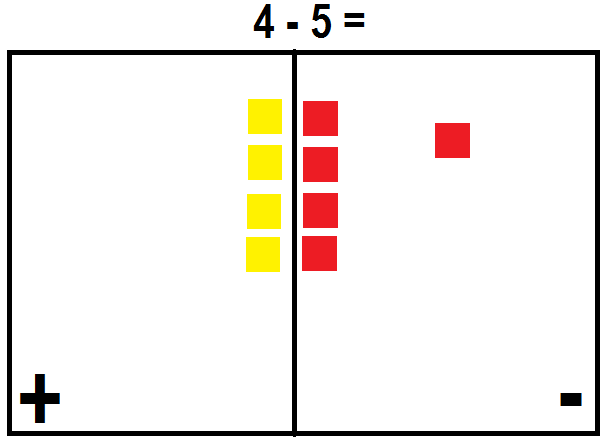
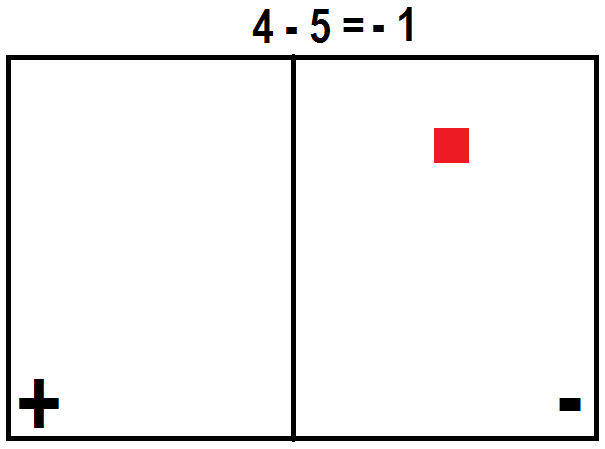
Algebra tiles are a fun, hands-on way to help students understand how to add or subtract positive and negative integers. Using a mat with a positive and negative side, students can manipulate the 1-tiles. Using the yellow side of the tile for the positive numbers and the red side for the negative numbers, students pair together opposing colors and take those away. The tiles leftover is the answer to the problem. Here is an example:

Step 1:

algebratile1

Step 2:

algebratile2

Step 3:

algebratile3

green line

B1. How can this topic be used in your students’ future courses in mathematics or science?

Adding and subtracting positive and negative integers is a one of the most crucial foundation skills that students must learn. This concept is demonstrated and needed in almost every math scenario. In its simplest form, students begin to learn this concept around the first grade, 1+1=2. This process is carried over into third grade with multiplication. Then negative numbers are introduced while in sixth grade. Adding and subtracting opposing integers is a continuous concept that consistently builds upon itself, even through algebra, geometry, calculus, or most especially the real world. There is not just one future math course students will use this in; they will use it for the rest of their lives, even if they do not realize it.


green line

E1. How can technology (YouTube, Khan Academy [khanacademy.org], Vi Hart, Geometers Sketchpad, graphing calculators, etc.) be used to effectively engage students with this topic?

YouTube is always a great resource when trying to engage students. The video below explains how positive and negative numbers work when adding and subtracting them.

A lot of the time students struggle with numbers in general, which makes it harder for them to understand why a concept in math works. This video explains how positive and negative numbers work in relation to each other by using characters from Batman instead of numbers. Using the balance and watching the arrow move in either direction, depending on the type of character that was added into or taken out, allows students to see why positive and negative numbers work the way they do. Once they understand this, it makes working with numbers a whole lot easier. This video also does a wonderful job of maintaining the students’ interest by keeping it related to popular culture by incorporating Batman and the Matrix.


Math autobiography

I recently read a very interesting opinion piece: asking students to write a math autobiography as the first assignment of the semester. I may try this out in a future semester. From the opinion piece:

Want to know one of my favorite assignments that I have ever given my students? Want to know learn a lot of useful information about your students in a short amount of time?

I know it sounds too good to be true, but this one simple assignment could change how you teach your classes and how well you know your audience…

Math Autobiography

Purpose of the Assignment 
As your instructor, I want to get to know you as a person and as a student of mathematics. This will help me better meet your needs. It also helps our department as we work to improve our services to students.

Content 
Your autobiography should address the four sections listed below. I’ve listed some questions to help guide you, but please don’t just go through and answer each question separately. The questions are just to help get you thinking. Remember the purpose of the paper. Write about the things that will give me a picture of you. The key to writing a good piece is to give lots of detail…

Section 1: Introduction

  • How would you describe yourself?
  • Where are you from? How did you decide to attend Fort Lewis?
  • What is your educational background? Did you just graduate from high school? Have you been out of school for a few years? If so, what have you been doing since then?
  • General interests: favorite subjects in school, favorite activities or hobbies.

Section 2: Experience with Math

  • What math classes have you taken and when?
  • What have your experiences in math classes been like?
  • How do you feel about math?
  • In what ways have you used math outside of school?

Section 3: Learning Styles and Habits (specifically for math)

  •  Do you learn best from reading, listening or doing?
  • Do you prefer to work alone or in groups?
  • What do you do when you get “stuck”?
  • Do you ask for help? From whom?
  • Describe some of your study habits. For example: Do you take notes? Are they helpful? Are you organized? Do you procrastinate? Do you read the text?

Section 4: The Future

  • What are your expectations for this course?
  • What are your responsibilities as a student in this course? What do you expect from your instructor?
  • What are your educational and life goals?
  • How does this course fit into your educational goals?

The author’s conclusions:

It was fantastic! Students took it way more seriously than I could have imagined. Some wrote pages and all wrote enough to get to know them. It made me realize that we don’t give our students opportunities to share their math baggage/backgrounds/etc. with us often enough. Students shared everything from horror stories about being shamed in math courses to their excitement about math. Some let you know what they have heard about your class and even fears they may have such as a fear of presenting or working with others.

How to Avoid Thinking in Math Class: Index

I’m doing something that I should have done a long time ago: collecting a series of posts into one single post. Recently, Math With Bad Drawings had a terrific series on how students try to avoid thinking in math class.

Part 1: Introduction: “In teaching math, I’ve come across a whole taxonomy of insidious strategies for avoiding thinking. Albeit for understandable reasons, kids employ an arsenal of time-tested ways to short-circuit the learning process, to jump to right answers and good test scores without putting in the cognitive heavy lifting. I hope to classify and illustrate these academic maladies: their symptoms, their root causes, and (with any luck) their cures.”

Part 2: Students’ natural desire to mindlessly plug numbers into a formula without conceptual understanding.

Part 3: The importance of both computational proficiency and conceptual understanding.

Part 4: Fears of word problems.

Part 5: What happens when students get stuck getting started on a problem.

Part 6: Is only getting the right answer important?


Engaging students: Factoring polynomials

In my capstone class for future secondary math teachers, I ask my students to come up with ideas for engaging their students with different topics in the secondary mathematics curriculum. In other words, the point of the assignment was not to devise a full-blown lesson plan on this topic. Instead, I asked my students to think about three different ways of getting their students interested in the topic in the first place.

I plan to share some of the best of these ideas on this blog (after asking my students’ permission, of course).

This student submission again comes from my former student Banner Tuerck. His topic, from Algebra: factoring polynomials.

green line

A1. What interesting (i.e., uncontrived) word problems using this topic can your students do now?

In relation to a specific case one can generate a word problem well within their students reach by relating the factors of a said quadratic polynomial to the length and width of a rectangle or perfect square. Many online resources, such as http://www.purplemath.com/, offer diverse and elaborate examples one could use in order to facilitate this concept. Nevertheless, this way of viewing a factored polynomial may appear more comfortable to a class because it is applying the students preexisting knowledge of area to the new algebraic expressions and equations. Furthermore, it has been my experience that geometric activities interrelating algebra aid in straying students away from ignoring the variable in an expression as a value.

A garden measuring 12 meters by 16 meters is to have a pedestrian pathway installed all around it, increasing the total area to 285 square meters. What will be the width of the pathway?

garden

The above problem is a prime example pulled from the Purple Math website one could use to illustrate a physical situation in which we need to actually determine the factors in order to formulate a quadratic expression to solve for the width. It should be noted that some of these particular word problems can quickly fall into a lesson relating more towards distributing and foiling factors to form an expanded form equation. However, as an instructor one can easily work backwards from an expanded equation to interpret what the factored form can tell us, say about the garden with respect to the example given above.


green line

B1. How can this topic be used in your students’ future courses in mathematics or science?

Factoring polynomials allows students to further comprehend the properties of these expressions before they are later applied as functions in areas such as mathematics and physics. For example, projectile motion stands as a great real world topic capable of enlightening students further on the factors of the polynomial. Specifically, how these factors come about geometrically and how knowing their role will benefit our understanding of the functions potential real world meaning. Lastly, factoring polynomials and evaluating them as roots during middle and high school mathematics will definitely be used when students approach college level calculus courses in relation to indefinite and definite integrals. The previous are just a few examples of how factoring polynomials plays a role in students’ future courses.


green line

How can technology (YouTube, Khan Academy [khanacademy.org], Vi Hart, Geometers Sketchpad, graphing calculators, etc.) be used to effectively engage students with this topic?

Doing a simple YouTube search of the phrase “factoring polynomials” allows anyone access to nearly 57,000 videos of various tutors, instructors, and professors discussing factoring and distributing respectfully. I would say that future generations will definitely not be without resources. That is not even to mention the revolutionary computation website that is www.wolframalpha.com. This website in and of itself will allow so many individuals to see various forms of a factored polynomial, as well as the graph, roots (given from factors), domain, range, etc. Essentially, computation websites like Wolfram Alpha are intended to allow students the opportunity to discover properties, relationships, and patterns independently. However, there is a potential risk for such websites to become a crutch the students use in order to get good grades as opposed to furthering their understanding. Similarly, with the advancing technology of graphing calculators students will become more engaged when discussing polynomial factorization for the first time in class. Many modern calculators have the ability to identify roots, give a table of coordinates, trace graphs, etc. Some even have a LCD screen or a backlit display to aid in viewing various graphs. Although, just as with computation engines, calculators could potentially distract students from thinking about their problem solving method by them just letting the calculator take over the calculation process. Therefore, I would suggest using caution regarding how soon calculators are introduced when initially engaging a class in factoring polynomials.


References:

http://www.purplemath.com/

http://www.purplemath.com/modules/quadprob2.htm

http://www.wolframalpha.com/

https://www.youtube.com/results?search_query=factoring+polynomials


Mathematical induction and blank space

I tried out a one-liner in class that I’d been itching to try all summer.

I was introducing my students to proofs by mathematical induction; my example was showing that

1 + 3 + 5 + \dots + (2n-1) = n^2.

After describing the principle of mathematical induction, I wrote out the n = 1 step and the assumption for n = k:

n=1: 1=1^2, so this checks.

n =k: Assume that 1 + 3 + 5 + \dots + (2k-1) = k^2.

Then, for the inductive step, I had my students tell me what the left- and right-hand side would be if I substituted k+1 in place of n. I wrote the answer for the left-hand side at the top of the board, the answer for the right-hand side at the bottom of the board, and left plenty of blank space in between the two (which I would fill in shortly):

n = k+1:

1 + 3 + 5 \dots + (2k-1) + (2[k+1]-1) =

~

~

~

~

~

~

= (k+1)^2

So I explained that, to complete the proof by induction, all we had to do was convert the top line into the bottom line.

As my class swallowed hard as they thought about how to perform this task, I told them, “Yes, this looks really intimidating. Indeed, to quote the great philosopher, ‘You might think that I’m insane. But I’ve got a blank space, baby… and I’ll write your name.’ “

The one-liner provoked the desired response from my students… and after the laughter died down, we then worked through the end of the proof.

And, just in case you’ve been buried under a rock for the past few months, here’s the source material for the one-liner (which, at the time of this writing, is the second-most watched video on YouTube):

High School Teachers’ Problem Solving Activities to Review and Extend Their Mathematical and Didactical Knowledge

Every so often, I’ll publicize through this blog an interesting article that I’ve found in the mathematics or mathematics education literature that can be freely distributed to the general public. Today, I’d like to highlight Manuel Santos-Trigo & Fernando Barrera-Mora (2011) High School Teachers’ Problem Solving Activities to Review and Extend Their Mathematical and Didactical Knowledge, PRIMUS: Problems, Resources, and Issues in Mathematics Undergraduate Studies, 21:8, 699-718, DOI: 10.1080/10511971003600965

Here’s the abstract:

The study documents the extent to which high school teachers reflect on their need to revise and extend their mathematical and practicing knowledge. In this context, teachers worked on a set of tasks as a part of an inquiring community that promoted the use of different computational tools in problem solving approaches. Results indicated that the teachers recognized that the use of the Cabri-Geometry software to construct dynamic representations of the problems became useful, not only to make sense of the problems statement, but also to identify and explore a set of mathematical relations. In addition, the use of other tools like hand-held calculators and spreadsheets offered them the opportunity to examine, contrast, and extend visual and graphic results to algebraic approaches.

The full article can be found here: http://dx.doi.org/10.1080/10511971003600965