In 2012, the Conference Board for the Mathematical Sciences published The Mathematical Education of Teachers II, providing recommendations for how universities prepare future teachers at all grade levels. From Chapter 6 of this report, here are the recommendations for future secondary teachers:
This report recommends that the mathematics courses taken by prospective high school teachers include at least a three-course calculus sequence, an introductory statistics course, an introductory linear algebra course, and 18 additional semester-hours of advanced mathematics, including 9 semester-hours explicitly focused on high school mathematics from an advanced standpoint. It is desirable to have a further 9 semester-hours of mathematics…
The report then goes on to describe how advanced mathematics courses that emphasize theorems and proofs, such as abstract algebra, real analysis, group theory, and number theory, are directly relevant for teaching the secondary mathematics curriculum.
In my experience, most math majors who want to be high school math teachers understand why they have to take calculus, statistics, linear algebra, and math courses specifically designed for their future career. But a perennial question that they often ask is, “Why do I have to take theorem-proof math classes if all I want to do is teach high school math?” Some years ago, I wrote the following document for my students to address this issue, which hopefully provide some good reasons for why these more abstract courses are required.

1. A central goal of theorem-proof courses (and subsequent courses) is to emphasize that mathematics is not only an exercise in quantitative skills; it is also an exercise in explaining why the rules of mathematics work the way they do. After you become a teacher, that’s also something that you can impress upon your students — not only the “how” of solving problems but also the “why.”
Through all of the “proof” classes, you will learn that the real purpose of math is not to be able to perform arithmetic, solve for  , or even to be able to find the area under the curve. Rather, it is to be able to think logically, to reach a logical solution on well-defined terms, and to be able to problem-solve. So many of today’s youth do not encompass any of these qualities and/or abilities; when you think about it, that is a very scary thought! So when you become a teacher and are asked the inevitable questions “Why do I need to know (fill in a math topic)? How is that going to help me in life?”, you will be prepared to respond. (But don’t be surprised when they don’t like your response!)
2. Theorem-proof courses are specified by the National Council of Teachers of Mathematics (NCTM) and the National Council for Accreditation of Teacher Education (NCATE) as part of the national standard of best practices for preparing future high school math teachers. Furthermore, you will be responsible for the material in these classes when it’s time for you to take the TExES certification exam. All this to say, including these classes in the curriculum isn’t a requirement that somebody at our university thought was a bright idea; this is an “industry standard,” so to speak, for the preparation of highly qualified secondary math teachers.
3. Of course, simply saying “You have to do this because the ‘powers that be’ say that it’s good for you” may not be a terribly motivating reason for you to be in courses that emphasize mathematical abstraction. Another good reason to take these courses is because it’s always a good idea for teachers to be familiar with a few years’ worth of mathematics above the subject matter that they’re teaching. Right now, you probably expect (perhaps subconsciously) that your professor knows not only the content immediately pertinent to your class but also the content in subsequent classes, so that you’re prepared to take those subsequent classes if you elect to do so. The same logic will apply to you when you become a teacher yourself.
By analogy, UNT’s elementary teachers often complain, “Why do I have to take College Algebra if I’m only going to be teaching arithmetic?” Well, elementary students are learning algebra without the technical terms. For example:  is a first-grade problem, and students will use the number line (or their fingers) to reach the conclusion that
  . However, 6th graders taking Pre-Algebra are replacing the box with the variable and now must show their work on why
  , which is a proof! Having taken theorem-proof courses will allow you, the teacher, to explain why we can add a
  to both sides and it cancels out on one side and subtracts
  from the
  . Moreover, it explains that the minus sign just tells you which direction you are moving on the number line and why the word we came up with for that idea, subtraction, means “to take away, to go to the left.”
Ideally, elementary school teachers should teach their classes mindful of the fact that elementary school arithmetic is not a mere exercise in computation but part of a process of logical thinking that will be further developed in middle-school algebra. In the same way, when you become a secondary math teacher, you should be familiar with the topics that lie beyond algebra, geometry, trigonometry, and calculus.
4. When you’re in your future classroom, you should be equipped to answer just about any mathematical question that comes your way. Someday, a bright and inquisitive student will ask you an honest question about some of the deeper concepts covered in the course that you’re teaching. Such questions typically start with “why” instead of “how.” For example:
- “Why is the number
 irrational?”
- “Why is the Pythagorean theorem correct?”
- “Why can’t complex numbers be defined using
 instead of
  ?”
?”
- “Why are all of the hypotheses of the intermediate value theorem needed?”
- “Why do the rows in Pascal’s triangle add to powers of
 ?”
?”
- “Why do polynomials have a unique factorization using linear terms involving complex numbers?”
High school teachers (and, if they’re honest, college professors) will tell you that it’s quite embarrassing to be unable to provide an immediate answer to a student’s question, no matter how difficult. It’s even worse if the teacher is at a complete and utter loss as to who or what to consult to provide the answer. Theorem-proof classes will hopefully provide you the framework to answer such questions.
5. Many of the concepts in real analysis are directly related to concepts taught below the level of calculus. To give a few examples from the first few chapters of our textbook:
- Unions and intersections of sets are important for developing the rules for computing
 , the probability that event
  happens or event
  happens, and
  , the chance that and both happen.
- Important examples of equivalence classes are those derived from congruences, a notion which leads to the familiar grade-school rules for testing for divisibility by , ,
 ,
,  ,
,  , ,
, ,  ,
,  or
or  .
.
- The notion of an injective function explains why the horizontal line test works.
- The axioms of ordered fields are the logical framework behind high school algebra, and for why the “FOIL” method is correct but the “distributive” property
 is incorrect.
- The density of both rational and irrational numbers is often taken for granted by high school students without explanation.
6. Many theorems in calculus, which are typically stated without proof when actually teaching a calculus course, rely on notions from real analysis. In fact, a major goal of theorem-proof courses is to “dot the i’s and cross the t’s” of familiar theorems that are often stated in a calculus class but not always completely proved for students. Here’s a sampling:
- The order of quantifiers is important for distinguishing between the continuous functions and uniformly continuous functions. The latter notion is necessary to formally prove that every continuous function has a definite integral on a closed interval, often taken for granted in Calculus I.
- The notion of supremum and the completeness property of
 underlie some important concepts in calculus, including the proof of the intermediate value theorem, the rigorous definition of a definite integral, and the proof that the definite integral of the sum of two functions equals the sum of the two definite integrals.
- Many optimization problems in calculus rely on the fact that continuous functions assume both an absolute minimum and absolute maximum value on any closed interval. The proof of this theorem relies on properties of closed sets and compact sets.
- The proof that the composition of two continuous functions is continuous (and also the proof of the Chain Rule for differentiation) relies on properties of open sets.
- Limit theorems that are often taken for granted in calculus may be proven using limit theorems about sequences.
- The Mean Value Theorem (from Calculus I) is derived from the fact that limits preserve inequalities. Many important properties of calculus, including L’Hopital’s Rule, indefinite integration, curve sketching, and Taylor series, are direct consequences of the Mean Value Theorem.
- The Root and Ratio Tests from Calculus II are derived using the notions of limsup and liminf.
Hopefully, while you’re still in college, you will begin the process of making connections between the topics that you will directly teach your students and the topics that your students will see after they graduate from high school. This may not fully sink in until you begin student teaching; only then will you realize the importance of being able to prove something (i.e. teaching a topic in a logical manner) when you are trying to explain it to inquiring minds.
As a student taking real analysis or abstract algebra, it’s easy to lose sight of the forest for all of the trees. That is, it’s easy to simply develop your skills in abstraction and theorem-proving without realizing that the topics you’re learning are indeed relevant to your future career as a mathematics educator. Teach North Texas and the UNT Math Department both wish you well as you continue through our degree program.


 degrees in a right angle,
  degrees in a straight angle, and a circle has
  degrees. They are introduced to
  and
and  right triangles. Fans of snowboarding even know the multiples of
  or even
  degrees.
 ,
,  ,
,  ,
,  ,
,  , and multiples thereof.
 , but to visualize an angle of
  and
and  look palatable.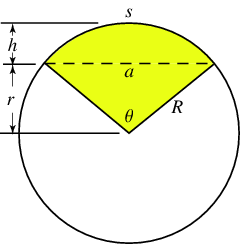
 in a circle with radius
  is
is

 and
and 
 makes the following computations from calculus a lot easier.
 , we replace
  to find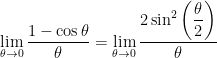
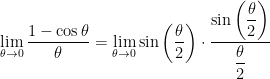


 and
and  — are needed to prove that
  and
and 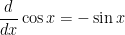 . Again, I won’t reinvent the wheel, but the proofs can be found
  floating around.

 are called complex numbers. In modern English, of course, the word complex is usually associated with phrases like difficult, inscrutable, time-consuming, hard to solve, and other negative connotations that teachers would prefer to not introduce into a math class.
 and the imaginary part $bi$ are joined to form
  . Indeed, my understanding is that complex was chosen to be the opposite of simplex, or a single unit (like a real number).
 directions, which result in a representation very similar to an ordered pair. It gets expanded to teach the students that unlike an ordered pair, which represents a distinct point in space, a vector pair represents a specific force that can originate from any point on the Cartesian Plane.
 , we can find the magnitude of the vector by using the Pythagorean Theorem. It gives them a working example of when this theorem can be applied on objects other than triangles. It also reinforces the students trigonometry skills since the direction of a vector can also be expressed using magnitude and angles.
