My wife had asked me to compute this integral by hand because Mathematica 4 and Mathematica 8 gave different answers. At the time, I eventually obtained the solution by multiplying the top and bottom of the integrand by and then employing the substitution (after using trig identities to adjust the limits of integration).
But this wasn’t the only method I tried. Indeed, I tried two or three different methods before deciding they were too messy and trying something different. So, for the rest of this series, I’d like to explore different ways that the above integral can be computed.
So far, I have shown that
We now employ the substitution , so that . Also, the limits of integration change from to , so that
Next, I’ll divide write by dividing the interval of integration (not to be confused with the and used in the previous method), where
For , I employ the substitution , so that and . Under this substitution, the interval of integration changes from $2\pi \le \theta \le 4\pi$ to $0 \le u \le 2\pi$, and so
Next, I use the periodic property for both sine and cosine — and — to rewrite as
Except for the dummy variable , instead of , we see that is identical to . Therefore,
.
I’ll continue this different method of evaluating this integral in tomorrow’s post.
My wife had asked me to compute this integral by hand because Mathematica 4 and Mathematica 8 gave different answers. At the time, I eventually obtained the solution by multiplying the top and bottom of the integrand by and then employing the substitution (after using trig identities to adjust the limits of integration).
But this wasn’t the only method I tried. Indeed, I tried two or three different methods before deciding they were too messy and trying something different. So, for the rest of this series, I’d like to explore different ways that the above integral can be computed.
For this next technique, I begin by using the trigonometric identities
,
,
.
Using these identities, we obtain
In this way, the exponents have been removed from the denominator, thus making the integrand somewhat less complicated.
I’ll continue this different method of evaluating this integral in tomorrow’s post.
Some husbands try to impress their wives by lifting extremely heavy objects or other extraordinary feats of physical prowess.
That will never happen in the Quintanilla household in a million years.
But she was impressed that I broke an impasse in her research and resolved a discrepancy between Mathematica 4 and Mathematica 8 by finding the following integral by hand in less than an hour:
In this series, I’ll explore different ways of evaluating this integral.So far in this series, I’ve shown that
I now employ the substitution , so that . Also, the endpoints change from to , so that
I’ll continue with the evaluation of this integral in tomorrow’s post.
Some husbands try to impress their wives by lifting extremely heavy objects or other extraordinary feats of physical prowess.
That will never happen in the Quintanilla household in a million years.
But she was impressed that I broke an impasse in her research and resolved a discrepancy between Mathematica 4 and Mathematica 8 by finding the following integral by hand in less than an hour:
In this series, I’ll explore different ways of evaluating this integral.In yesterday’s post, I showed that
We now multiply the top and bottom of the integrand by . This is permissible because is defined on the interior of the interval — which is why I needed to adjust the limits of integration in the first place. I obtain
Next, I use some trigonometric identities to simplify the denominator:
Therefore, the integral becomes
I’ll continue with the evaluation of this integral in tomorrow’s post.
Some husbands try to impress their wives by lifting extremely heavy objects or other extraordinary feats of physical prowess.
That will never happen in the Quintanilla household in a million years.
But she was impressed that I broke an impasse in her research and resolved a discrepancy between Mathematica 4 and Mathematica 8 by finding the following integral by hand in less than an hour:
In this series, I’ll explore different ways of evaluating this integral.I begin by adjusting the range of integration:
,
where
,
,
.
I’ll begin with and apply the substitution , or . Then , and the endpoints change from to . Therefore,
.
Next, we use the periodic property for both sine and cosine — and — to rewrite as
.
Changing the dummy variable from back to , we have
.
Therefore, we can combined into a single integral:
Next, we work on the middle integral . We use the substitution , or , so that . Then the interval of integration changes from to , so that
.
Next, we use the trigonometric identities
,
,
so that the last integral becomes
On the line above, I again replaced the dummy variable of integration from to . We see that , and so
I’ll continue with the evaluation of this integral in tomorrow’s post.
In a recent class with my future secondary math teachers, we had a fascinating discussion concerning how a teacher should respond to the following question from a student:
Is it ever possible to prove a statement or theorem by proving a special case of the statement or theorem?
Usually, the answer is no. In this series of posts, we’ve seen that a conjecture could be true for the first 40 cases or even the first cases yet not always be true. We’ve also explored the computational evidence for various unsolved problems in mathematics, noting that even this very strong computational evidence, by itself, does not provide a proof for all possible cases.
However, there are plenty of examples in mathematics where it is possible to prove a theorem by first proving a special case of the theorem. For the remainder of this series, I’d like to list, in no particular order, some common theorems used in secondary mathematics which are typically proved by first proving a special case.
However, we see that what I’ve called Lemma 3, often called a cofunction identity, can be considered a special case of Theorem 2. However, this is not circular logic since the cofunction identities can be proven without appealing to Theorems 1 and 2.
In a recent class with my future secondary math teachers, we had a fascinating discussion concerning how a teacher should respond to the following question from a student:
Is it ever possible to prove a statement or theorem by proving a special case of the statement or theorem?
Usually, the answer is no. In this series of posts, we’ve seen that a conjecture could be true for the first 40 cases or even the first cases yet not always be true. We’ve also explored the computational evidence for various unsolved problems in mathematics, noting that even this very strong computational evidence, by itself, does not provide a proof for all possible cases.
However, there are plenty of examples in mathematics where it is possible to prove a theorem by first proving a special case of the theorem. For the remainder of this series, I’d like to list, in no particular order, some common theorems used in secondary mathematics which are typically proved by first proving a special case.
2. Theorem. In where , , and , we have .
This is typically proven using the Pythagorean theorem:
Lemma. In right triangle , where is a right angle, we have .
Though it usually isn’t thought of this way, the Pythagorean theorem is a special case of the Law of Cosines since .
There are well over 100 different proofs of the Pythagorean theorem that do not presuppose the Law of Cosines. The standard proof of the Law of Cosines then uses the Pythagorean theorem. In other words, a special case of the Law of Cosines is used to prove the Law of Cosines.
Many famous machines have been built to do math — like Babbage’s Difference Engine for solving polynomials or Leibniz’s Stepped Reckoner for multiplying and dividing — yet none worked as well as Albert Michelson’s harmonic analyzer. This 19th century mechanical marvel does Fourier analysis: it can find the frequency components of a signal using only gears, springs and levers. We discovered this long-forgotten machine locked in a glass case at the University of Illinois. For your enjoyment, we brought it back to life in this book and in a companion video series — all written and created by Bill Hammack, Steve Kranz and Bruce Carpenter.
A free PDF of their book is available at the above link; the book is also available for purchase. Here are the companion videos for the book.
In my capstone class for future secondary math teachers, I ask my students to come up with ideas for engaging their students with different topics in the secondary mathematics curriculum. In other words, the point of the assignment was not to devise a full-blown lesson plan on this topic. Instead, I asked my students to think about three different ways of getting their students interested in the topic in the first place.
I plan to share some of the best of these ideas on this blog (after asking my students’ permission, of course).
This student submission comes from my former student Tracy Leeper. Her topic, from Precalculus: verifying trigonometric identities.
Many students when first learning about trigonometric identities want to move terms across the equal sign, since that is what they have been taught to do since algebra, however, in proving a trigonometric identity only one side of the equality is worked at a time. Therefore my idea for an activity to help students is to have them look at the identities as a puzzle that needs to be solved. I would provide them with a basic mat divided into two columns with an equal sign printed between the columns, and give them trig identities written out in a variety of forms, such as on one strip, and written on another strip. Other examples would also include having on one, and on another. The students will have to work within one column, and step by step, change one side to eventually reflect the term on the other side, and each strip has to be one possible representation of the same value. By providing the students with the equivalent strips, they will be able to construct the proof of the identity. I feel that giving them the strips will allow them to see different possibilities for how to manipulate the expression, without leaving them feeling lost in the process, and by dividing the mat into columns, they can focus on one side, and see that the equivalency is maintained throughout the proof. The students would need to arrange the strips into the correct order to prove the left hand side is equivalent to the right hand side, while reinforcing the process of not moving anything across the equal sign.
Trigonometry identities are used in most of the math courses after pre-calculus, as well as the idea of proving an equivalency. If the students learn the concept of proving an equivalency that will help them construct proofs for any future math courses, as well as learning to look at something given, and be able to see it as parts of a whole, or just be able to write it a different way to assist with the calculations. If students learn to see that
,
their ability to manipulate expressions will dramatically improve, and their confidence in their ability will increase, as well as their understanding of the complexities and relations throughout all of mathematics. The trigonometric identities are the fundamental part of the relationships between the trig functions. These are used in science as well, anytime a concept is taught about a wave pattern. Sound waves, light waves, every kind of wave discussed in science are sinusoidal wave. Anytime motion is calculated, trigonometry is brought into the calculations. All students who wish to progress in the study of science or math need to learn basic trigonometric identities and learn how to prove equivalency for the identities. Since proving trigonometric identities is also a practice in logical reasoning, it will also help students learn to think critically, and learn to defend their conjectures, which is a valuable skill no matter what discipline the student pursues.
For learning how to verify trigonometric identities, I like the Professor Rob Bob (Mr. Tarroy’s) videos found on youtube. He’s very energetic, and very thorough in explaining what needs to be done for each identity. He also gives examples for all of the different types of identities that are used. He is very specific about using the proper terms, and he makes sure to point out multiple times that this is an identity, not an equation, so terms cannot be transferred across the equal sign. He also presents options to use for a variety of cases, and that sometimes things don’t work out, but it’s okay, because you can just erase it and start again. I also like that he uses different colored chalk to show the changes that are being made. He is very articulate, and explains things very well, and makes sure to point out that he is providing examples, but it’s important to remember that there are many different ways to prove the identity presented. I enjoyed watching him teach, and I think the students would enjoy his energy as well.
In my capstone class for future secondary math teachers, I ask my students to come up with ideas for engaging their students with different topics in the secondary mathematics curriculum. In other words, the point of the assignment was not to devise a full-blown lesson plan on this topic. Instead, I asked my students to think about three different ways of getting their students interested in the topic in the first place.
I plan to share some of the best of these ideas on this blog (after asking my students’ permission, of course).
This student submission comes from my former student Delaina Bazaldua. Her topic, from Precalculus: computing trigonometric functions using a unit circle.
How could you as a teacher create an activity or project that involves your topic?
When I first picked my topic, I was searching through topics that I could choose while playing the game Headbandz with my coworkers. That is when my idea hit me: Trigonometry Headbandz. Instead of asking the traditional questions like: “Am I an animal?” “Do I move?” “Am I famous?” or whatnot, the person guessing would have either a degree value, radian value, or the x-y coordinate on their headband and would ask questions like: “Is my measure in radians?” “Is my measure in quadrant I?” “Does my measure have a radical in it?” For the first few minutes, students would be allowed to use a premade unit circle to help them in guessing. However, after that they would need to guess solely based on memorization of the circle. I think this is a good engage because it is a familiar game that students will enjoy and it’s also educational in that they are subconsciously memorizing the unit circle that will carry them through the remaining months of high school, college, and perhaps, everyday life.
How does this topic extend what your students should have learned in previous courses?
When I was in EDSE 3500 with Dr. Pratt, I truly learned how the unit circle worked for the first time in my life. In high school, it was more taught as: “learn this so you can use it for a really long, hard word that is supposedly math (trigonometry.)” In Dr. Pratt’s class, she gave every student the two special right triangles (30-60-90 and (45-45-90) and an empty circle that had the x-y coordinate plane on it. She asked us to recall what we learned in geometry in high school so that we can figure out the side lengths of the triangle. After that, we formed the unit circle using the two right triangles that she gave us by using the degree measure and the side lengths. It was so neat and so surprising that I have never learned how the unit circle is formed—especially as a math major. I definitely want to implement this in my teaching because it forces students to recall what they used in geometry and it also teaches where the unit circle comes from. In addition, it will also be easier for them to construct it in the future if they were to ever forget it.
How could you as a teacher create an activity or project that involves your topic?
I just love this topic and activities that go hand-in-hand with it, so I decided to do it again. I was in the mood to procrastinate, so naturally I log onto Pinterest. I came across a board game dealing with the unit circle: http://cheesemonkeysf.blogspot.com/2014/07/life-on-unit-circle-board-game-for-trig.html?spref=pi. It is based on the game Life on a Number Line. It caught my attention because it tests the students’ knowledge of the unit circle in a fun way. The game involves game pieces, 3 die (a standard one and two positive-negative dice), a semi-blank unit circle, and flash cards of the trigonometric functions. When a student lands on the radian, they are to name the sine and cosine measurement in order to get credit. This game can also be played on a much larger scale with the entire class competing for extra credit. The whole point of the game is to, as the blog says, “used to living on the unit circle” in a fun and educational way. Like the first activity, Trigonometry Headbandz, it inevitably forces students to learn the unit circle. This way, it’s much more engaging and fun than staring at a piece of paper in hopes of memorizing it.


 and then employing the substitution
  (after using trig identities to adjust the limits of integration).







 ,
,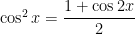 ,
, .
.


 . Also, the endpoints change from
  to
to  , so that
 — which is why I needed to adjust the limits of integration in the first place. I obtain


 ,
, ,
, ,
, .
. and apply the substitution
  , or
, or  . Then
  , and the endpoints change from
  to
to  . Therefore,
 .
. and
and  — to rewrite
  .
. , we have
 .
. into a single integral:


 , or
, or  , so that
  to
to  , so that
 .
. ,
, ,
,


 , and so
 cases yet not always be true. We’ve also explored the computational evidence for various unsolved problems in mathematics, noting that even this very strong computational evidence, by itself, does not provide a proof for all possible cases.



![\sin(\alpha + \beta) = \cos(\pi/2 - [\alpha + \beta])](https://s0.wp.com/latex.php?latex=%5Csin%28%5Calpha+%2B+%5Cbeta%29+%3D+%5Ccos%28%5Cpi%2F2+-+%5B%5Calpha+%2B+%5Cbeta%5D%29&bg=ffffff&fg=000000&s=0&c=20201002) by Lemma 4
by Lemma 4![= \cos([\pi/2 - \alpha] - \beta)](https://s0.wp.com/latex.php?latex=%3D+%5Ccos%28%5B%5Cpi%2F2+-+%5Calpha%5D+-+%5Cbeta%29&bg=ffffff&fg=000000&s=0&c=20201002)
 by Lemma 1
 by Lemmas 3 and 4.
![\sin(\alpha - \beta) = \cos(\pi/2 - [\alpha - \beta])](https://s0.wp.com/latex.php?latex=%5Csin%28%5Calpha+-+%5Cbeta%29+%3D+%5Ccos%28%5Cpi%2F2+-+%5B%5Calpha+-+%5Cbeta%5D%29&bg=ffffff&fg=000000&s=0&c=20201002) by Lemma 4
by Lemma 4![= \cos([\pi/2 - \alpha] + \beta)](https://s0.wp.com/latex.php?latex=%3D+%5Ccos%28%5B%5Cpi%2F2+-+%5Calpha%5D+%2B+%5Cbeta%29&bg=ffffff&fg=000000&s=0&c=20201002)
 by Lemma 2
 by Lemmas 3 and 4.
 where
where  ,
,  , and
, and  , we have
  .
. is a right angle, we have
  .
. .
. on one strip, and
  written on another strip. Other examples would also include having
  on one, and
  on another. The students will have to work within one column, and step by step, change one side to eventually reflect the term on the other side, and each strip has to be one possible representation of the same value. By providing the students with the equivalent strips, they will be able to construct the proof of the identity. I feel that giving them the strips will allow them to see different possibilities for how to manipulate the expression, without leaving them feeling lost in the process, and by dividing the mat into columns, they can focus on one side, and see that the equivalency is maintained throughout the proof. The students would need to arrange the strips into the correct order to prove the left hand side is equivalent to the right hand side, while reinforcing the process of not moving anything across the equal sign.
 ,
, Mean Green Math