In my capstone class for future secondary math teachers, I ask my students to come up with ideas for engaging their students with different topics in the secondary mathematics curriculum. In other words, the point of the assignment was not to devise a full-blown lesson plan on this topic. Instead, I asked my students to think about three different ways of getting their students interested in the topic in the first place.
I plan to share some of the best of these ideas on this blog (after asking my students’ permission, of course).
This student submission comes from my former student Trent Pope. His topic, from Precalculus: computing a dot product.

What interesting (i.e., uncontrived) word problems using this topic can your students do now? (You may find resources such as http://www.spacemath.nasa.gov to be very helpful in this regard; feel free to suggest others.)
This website gives an example of a word problem that students could solve, and it has real-world applications. It is not a complete worksheet for students to work on. The teacher would have to create more word problems incorporating the idea of this website. The example on this web page is that you are a local store owner and are selling beef, chicken, and vegetable pies 3 days a week. The owner has a list of how many pies he sells a day and how much they cost. The cost of beef pies are $3, chicken pies are $4, and vegetable pies are $2. On Monday he sells 13 beef, 8 chicken, and 6 vegetable pies. Tuesday he sells 9 beef, 7 chicken, and 4 vegetable pies. Finally, on Thursday the owner sold 15 beef, 6 chicken, and 3 vegetable pies. Now, let’s think about how we can solve for the total number of sales for Monday. First, we would solve for the sales of the beef pies by multiplying the price of the pie and the number we sold. Then we would do the same for chicken and vegetable pies. After finding the sales of the three pies, we would add up sales to get the total amount for the day. In this case, we would get $83 of sales on Monday. The students would do the same thing for the other days the store is open. This is an example of the dot product of matrices in a word problem.
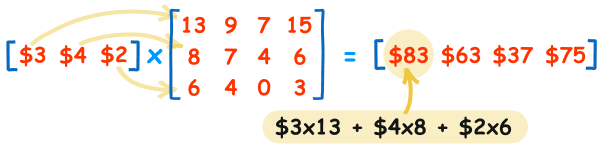
https://www.mathsisfun.com/algebra/matrix-multiplying.html
How could you as a teacher create an activity or project that involves your topic?
An idea I was able to see in an actual classroom during observation this week was the use of Fantasy Football in matrices. A teacher at Lake Dallas High School has her classes in a Football Fantasy League competing against each other. The way they started this activity is that the students have to keep up with the points that their teams are earning. They are doing this by the information the teacher gives them about how to score their players. Each class chooses one quarterback, running back, wide receiver, kicker, and defense to represent their team. The point system is the same as in the online fantasy. For instance, Aaron Rodgers, quarterback for the Green Bay Packers, throws for 300 yards, two touchdowns, and one interception. The points Rodgers earns you for the week comes from taking the several yards and multiplying by the points earned for each yard. Then, do the same for touchdowns and interceptions. After computing this, you will then add the numbers up to get the total points you receive from Aaron for the week. This is using dot product because we have two matrices, which are the stats that the player receives in the game, and the points you get for those same stats. By doing this activity, the students would be working on this aspect of pre-calculus for the entire football season.
How can technology (YouTube, Khan Academy [khanacademy.org], Vi Hart, Geometers Sketchpad, graphing calculators, etc.) be used to effectively engage students with this topic? Note: It’s not enough to say “such-and-such is a great website”; you need to explain in some detail why it’s a great website.
Graphing calculators would be a great way to use technology to teach this topic. When computing the dot product of two matrices, there are two ways to do it. One is by hand and the other is a calculator. As the teacher, it would be more efficient for you to see how students are learning the material by having them compute it by hand, but no student wants to do that with every problem. A way the teacher could incorporate solving for the dot product using a calculator in an engaging way would be to have students complete a scavenger hunt. In the scavenger hunt, students will have to solve problems of the dot product to get the next clue and move on to the next. The idea of this would be for the students to show that they can work the calculator and actually get answers. You could have anywhere from five to ten questions for them to solve and decoy answers throughout the room with little mishaps. This would get the students up and moving for this activity





















![= \displaystyle \left[ \frac{d^2r}{dt^2} - r \left(\frac{d\theta}{dt} \right)^2 \right] {\bf u}_r + \left[ 2\frac{dr}{dt} \frac{d\theta}{dt} + r \frac{d^2\theta}{dt^2} \right] {\bf u}_\theta](https://s0.wp.com/latex.php?latex=%3D+%5Cdisplaystyle+%5Cleft%5B+%5Cfrac%7Bd%5E2r%7D%7Bdt%5E2%7D+-++r+%5Cleft%28%5Cfrac%7Bd%5Ctheta%7D%7Bdt%7D+%5Cright%29%5E2+%5Cright%5D+%7B%5Cbf+u%7D_r+%2B+%5Cleft%5B+2%5Cfrac%7Bdr%7D%7Bdt%7D+%5Cfrac%7Bd%5Ctheta%7D%7Bdt%7D+%2B+r+%5Cfrac%7Bd%5E2%5Ctheta%7D%7Bdt%5E2%7D+%5Cright%5D+%7B%5Cbf+u%7D_%5Ctheta&bg=ffffff&fg=000000&s=0&c=20201002)
 , where
  is the linear momentum of the free end of the door being opened or closed, and
  and
and  . Find the area of the room (I will also draw the room (parallelogram ABCD) in three dimensions and show students).”
 . Notice that
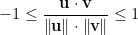
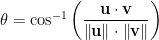
  represents the vectors in three dimensions. After understanding the definition of the vectors, students are going to learn how to do the operation of vectors. They start with doing the addition and scalar multiplication, and magnitude. One more thing that students should learn before learning the cross product which is the dot product. However, students should understand and master how to do the vector operation before they learn the dot product since the dot product is not easy. Students should have learned these concepts and do practices to make sure they are familiar with the vector before they learn the cross products.

 and
and  . Consequently,
 ,
,
 is defined as
![\hbox{SD}(X) = \sqrt{E(X^2) - [E(X)]^2}](https://s0.wp.com/latex.php?latex=%5Chbox%7BSD%7D%28X%29+%3D+%5Csqrt%7BE%28X%5E2%29+-+%5BE%28X%29%5D%5E2%7D&bg=ffffff&fg=000000&s=0&c=20201002) .
. implies that
  must satisfy
 .
. , then
  for some constants
  , where
  . On the other hand, if
  , if
, if  .
. Mean Green Math