
I enjoyed this article from the magazine Physics Today about the historical background behind three-dimensional spherical trigonometry: https://physicstoday.scitation.org/doi/10.1063/PT.3.3798
Tag: trigonometry
Babylonian trigonometry
An interesting article that I read on Babylonian mathematics.
Engaging students: Computing trigonometric functions using a unit circle
In my capstone class for future secondary math teachers, I ask my students to come up with ideas for engaging their students with different topics in the secondary mathematics curriculum. In other words, the point of the assignment was not to devise a full-blown lesson plan on this topic. Instead, I asked my students to think about three different ways of getting their students interested in the topic in the first place.
I plan to share some of the best of these ideas on this blog (after asking my students’ permission, of course).
This student submission comes from my former student Sarah Asmar. Her topic, from Precalculus: computing trigonometric functions using a unit circle.

How could you as a teacher create an activity or project that involves your topic?
Learning the unit circle can be very challenging for many students. One must know all the elements of the circle and need to know how to apply it. Therefore, I have come up with a few activities to make learning the unit circle more fun and engaging. One activity that would be great when teaching students how to memorize the unit circle and all the elements of it is the game of “I Have Who Has.” I would create a stack of note cards that would have one element of the unit circle on it. For example, one card will have 90° while another will have π. I will do that for all the elements on the unit circle. Then, I would pass out one note card to each student. One student will begin by saying “I have 2π, who has 0° or 360°?” Then, the student that has the card with those two elements on it will say what they have and ask who has the next element. This will go on until all of the elements have been said and it returns to the student that started the game. Another activity I found that would help students see the unit circle in a more colorful way is if they created it on a paper plate using colored yarn or colored markers. The x and y axis would be in one color and the rest would be in different colors. They would label each line/angle with the correct degree and radian, and the correct (x, y). Here is the link to a picture of what I would want the students to do: https://s-media-cache-ak0.pinimg.com/736x/74/e9/23/74e9232e7389804ce4df2ea6890e0ff9.jpg
How does this topic extend what your students should have learned in previous courses?
Students first see trigonometry in Geometry class as sophomores in high school, but they typically go into more depth during pre-calculus. One way to compute trigonometric functions using the unit circle is by using right triangles. You can find the angle measurement by drawing a right triangle on the unit circle and connect two points. The two special right triangles (30-60-90 and 45-45-90) can be used to form the unit circle. Students would need to recall the rules from geometry to figure out the side lengths of the triangles. With this, students are forced to remember what they were taught in geometry class in order to compute trigonometric functions. If students can see how using the two special triangles creates the unit circle, then it might make more sense to them as where all the measurements/elements came from.
How can technology be used to effectively engage students with this topic?
Technology plays a big role in education these days. Students and teachers are encouraged to use technology in the classroom. Khan Academy is one of my favorite websites. He creates very detailed videos about every mathematical topic. I found a few videos on his website to show my students that would help them understand how to use sine, cosine, and tangent with the unit circle. He even has a video that shows a way to remember the unit circle. Another way to implement technology use with tis topic would be with the graphing calculator. Students tend to believe the calculator more than their own teacher. If they saw that the calculator gave them the same exact values as the found using the unit circle, I think they would be amazed and understand how the calculator finds them as well. They might see themselves as smart as the calculator if they can figure out the values by hand and then using the calculator to check their work. I also, might try to find a funny YouTube video that would help the students remember the parts of the unit circle. Once they have the unit circle memorized, it is much easier using it to compute trigonometric functions. Students tend to be more engaged and willing to do something when technology is involved.
References:
Engaging students: Deriving the double angle formulas for sine, cosine, and tangent
In my capstone class for future secondary math teachers, I ask my students to come up with ideas for engaging their students with different topics in the secondary mathematics curriculum. In other words, the point of the assignment was not to devise a full-blown lesson plan on this topic. Instead, I asked my students to think about three different ways of getting their students interested in the topic in the first place.
I plan to share some of the best of these ideas on this blog (after asking my students’ permission, of course).
This student submission comes from my former student Daniel Adkins. His topic, from Precalculus: deriving the double angle formulas for sine, cosine, and tangent.
How does this topic extend what your students should have already learned?
A major factor that simplifies deriving the double angle formulas is recalling the trigonometric identities that help students “skip steps.” This is true especially for the Sum formulas, so a brief review of these formulas in any fashion would help students possibly derive the equations on their own in some cases. Listed below are the formulas that can lead directly to the double angle formulas.
A list of the formulas that students can benefit from recalling:
- Sum Formulas:
- sin(a+b) = sin(a)cos(b) + cos(a)sin(b)
- cos(a+b) = cos(a)cos(b) – sin(a)sin(b)
- tan(a+b) = [tan(a) +tan(b)] / [1-tan(a)tan(b)]
- Pythagorean Identity:
- Sin2 (a) + Cos2(a) = 1
This leads to the next topic, an activity for students to attempt the equation on their own.
How could you as a teacher create an activity or project that involves your topic?
I’m a firm believer that the more often a student can learn something of their own accord, the better off they are. Providing the skeletal structure of the proofs for the double angle formulas of sine, cosine, and tangent might be enough to help students reach the formulas themselves. The major benefit of this is that, even though these are simple proofs, they have a lot of variance on how they may be presented to students and how “hands on” the activity can be.
I have an example worksheet demonstrating this with the first two double angle formulas attached below. This is in extremely hands on format that can be given to students with the formulas needed in the top right corner and the general position where these should be inserted. If needed the instructor could take this a step further and have the different Pythagorean Identities already listed out (I.e. Cos2(a) = 1 – Sin2(a), Sin2(a) = 1 – Cos2(a)) to emphasize that different formats could be needed. This is an extreme that wouldn’t take students any time to reach the conclusions desired. Of course a lot of this information could be dropped to increase the effort needed to reach the conclusion.
A major benefit with this also is that even though they’re simple, students will still feel extremely rewarded from succeeding on this paper on their own, and thus would be more intrinsically motivated towards learning trig identities.
How can Technology be used to effectively engage students with this topic?
When it comes to technology in the classroom, I tend to lean more on the careful side. I know me as a person/instructor, and I know I can get carried away and make a mess of things because there was so much excitement over a new toy to play with. I also know that the technology can often detract from the actual math itself, but when it comes to trigonometry, and basically any form of geometric mathematics, it’s absolutely necessary to have a visual aid, and this is where technology excels.
The Wolfram Company has provided hundreds of widgets for this exact purpose, and below, you’ll find one attached that demonstrates that sin(2a) appears to be equal to its identity 2cos(a)sin(a). This is clearly not a rigorous proof, but it will help students visualize how these formulas interact with each other and how they may be similar. The fact that it isn’t rigorous may even convince students to try to debunk it. If you can make a student just irritated enough that they spend a few minutes trying to find a way to show you that you’re wrong, then you’ve done your job in that you’ve convinced them to try mathematics for a purpose.
After all, at the end of the day, it doesn’t matter how you begin your classroom, or how you engage your students, what matters is that they are engaged, and are willing to learn.
Wolfram does have a free cdf reader for its demonstrations on this website: http://demonstrations.wolfram.com/AVisualProofOfTheDoubleAngleFormulaForSine/
References
My Favorite One-Liners: Part 106
In this series, I’m compiling some of the quips and one-liners that I’ll use with my students to hopefully make my lessons more memorable for them.
Years ago, when I first taught Precalculus at the college level, I was starting a section on trigonometry by reminding my students of the acronym SOHCAHTOA for keeping the trig functions straight:


At this point, one of my students volunteered that a previous math teacher had taught her an acrostic to keep these straight: Some Old Hippie Caught Another Hippie Tripping On Acid.
Needless to say, I’ve been passing this pearl of wisdom on to my students ever since.
My Favorite One-Liners: Part 100
In this series, I’m compiling some of the quips and one-liners that I’ll use with my students to hopefully make my lessons more memorable for them.
Today’s quip is one that I’ll use surprisingly often:
If you ever meet a mathematician at a bar, ask him or her, “What is your favorite application of the Cauchy-Schwartz inequality?”
The point is that the Cauchy-Schwartz inequality arises surprisingly often in the undergraduate mathematics curriculum, and so I make a point to highlight it when I use it. For example, off the top of my head:
1. In trigonometry, the Cauchy-Schwartz inequality states that

for all vectors 

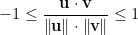
which means that the angle
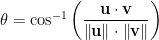
is defined. This is the measure of the angle between the two vectors
2. In probability and statistics, the standard deviation of a random variable 
![\hbox{SD}(X) = \sqrt{E(X^2) - [E(X)]^2}](https://s0.wp.com/latex.php?latex=%5Chbox%7BSD%7D%28X%29+%3D+%5Csqrt%7BE%28X%5E2%29+-+%5BE%28X%29%5D%5E2%7D&bg=ffffff&fg=000000&s=0&c=20201002)
The Cauchy-Schwartz inequality assures that the quantity under the square root is nonnegative, so that the standard deviation is actually defined. Also, the Cauchy-Schwartz inequality can be used to show that 
3. Also in probability and statistics, the correlation between two random variables 

Furthermore, if 




Since I’m a mathematician, I guess my favorite application of the Cauchy-Schwartz inequality appears in my first professional article, where the inequality was used to confirm some new bounds that I derived with my graduate adviser.
My Favorite One-Liners: Part 76
In this series, I’m compiling some of the quips and one-liners that I’ll use with my students to hopefully make my lessons more memorable for them.
Here’s a problem that might arise in trigonometry:
Compute
.
To begin, we observe that 

We then remember that 





Said another way, 


In mathematics, there’s a technical term for this idea; it’s called
My Favorite One-Liners: Part 9
In this series, I’m compiling some of the quips and one-liners that I’ll use with my students to hopefully make my lessons more memorable for them.
Today, I’d like to discuss a common mistake students make in trigonometry… as well as the one-liner that I use to (hopefully) help students not make this mistake in the future.
Question. Find all solutions (rounded to the nearest tenth of a degree) of 
Erroneous Solution. Plugging into a calculator, we find that 

The student correctly found the unique angle 


First, if $\sin x > 0$, then the angle 


However, most students don’t really believe that there’s a second angle that works until they see the results of a calculator.

Second, any angle that’s coterminal with either of these two angles also works. This can be drawn into the above picture and, as before, confirmed with a calculator.
So the complete answer (again, approximate to one decimal place) should be 


Therefore, the student who simply answers
Here’s my one-liner — which never fails to get an embarrassed laugh — that hopefully helps students remember that merely using the arcsine function is not enough for solving problems such as this one.
You’ve forgotten infinitely many solutions. So how many points should I take off?
For further reading, here’s my series on inverse functions.
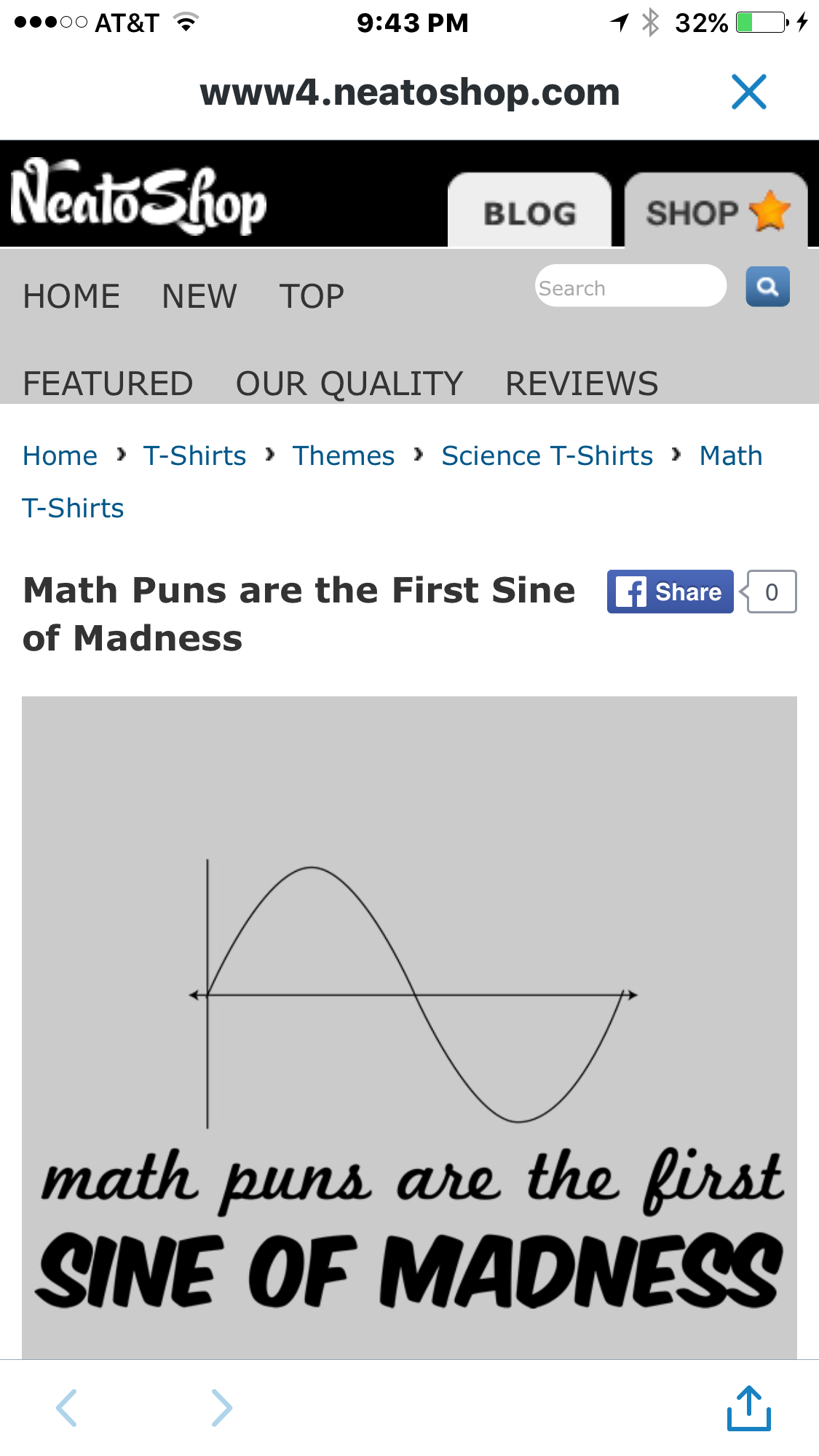
Sine of madness
A Visual Proof of a Remarkable Trig Identity
Strange but true (try it on a calculator):

Richard Feynman learned this from a friend when he was young, and it stuck with him his whole life.
Recently, the American Mathematical Monthly published a visual proof of this identity using a regular 9-gon:

This same argument would work for any 
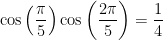
and a regular 17-gon can be used to show that

 Mean Green Math
