Two-Column Proofs that Two-Column Proofs are Terrible

I’m not entirely sure that I completely agree with the author of this post (http://mathwithbaddrawings.com/2013/10/16/two-column-proofs-that-two-column-proofs-are-terrible/), but he certainly provides food for thought and so I’m happy to link to it. Among the most provocative quotes from this post:

In a good proof, each individual step is obvious, but the conclusion is surprising.  In many two-column proofs—especially those taught earliest in a geometry course—each individual step is mystifying, while the conclusion is obvious.

Engaging students: Truth tables

In my capstone class for future secondary math teachers, I ask my students to come up with ideas for engaging their students with different topics in the secondary mathematics curriculum. In other words, the point of the assignment was not to devise a full-blown lesson plan on this topic. Instead, I asked my students to think about three different ways of getting their students interested in the topic in the first place.

I plan to share some of the best of these ideas on this blog (after asking my students’ permission, of course).

This student submission comes from my former student Elizabeth (Markham) Atkins. Her topic, from Geometry: truth tables.

green line

D. History: Who were some of the people who contributed to the development of this topic?

In “Peirce’s Truth-Functional Analysis and the Origin of Truth Tables” it is said that Charles Peirce was the first to start studying truth tables or rather developing the idea. He created the truth table in 1893. Peirce stated “the purpose of reasoning is to establish the truth or falsity of our beliefs, and the relationship between truth and falsity”. Nineteen years later, two mathematicians developed the truth table as we know it today. Ludwig Wittgenstein and Bertrand Russell both knew of truth tables but formalized them into the form we know today. In “The Genesis of the Truth-Table Device” it is said that George Berry stated “Peirce developed the technique, but not the device”. Wittgenstein developed the terminology that we today associate with truth tables. All in all it is the work of many people that finally developed the truth tables that we know today.


green line

APPLICATIONS: What interesting word problems using this topic can your students do now?

Truth tables state that if P is true and Q is true then both P and Q are true. If either P or Q or both are false then P and Q are false. So I could have the students construct many truth tables to demonstrate their knowledge of the subject or I could come up with some interesting word problems. Word problems such as “True or false: If Billy Joe graduated and Shawn graduated then both Billy Joe and Shawn graduated.” There are not many word problems you could create that would deal with truth tables. You can have the students begin to think logically. You could give them a statement to complete such as, “Good apples are red. Granny Smith apples are green. Thus ____” This enables the teacher to get the students in the logical process of thinking in order for them to correctly understand truth tables.

green line

B. CURRICULUM: How can this topic be used in your students’ future courses in mathematics or science?

By teaching my students truth tables and how to use them correctly it prepares them for future classes and for everyday life. In high schools now the students are learning twenty first century skills. To learn truth tables it will help with the twenty first century skills. When you learn truth tables you learn to think logically. The students need to learn logical thinking for science and economics. In Science, they need to learn logical thinking for when they do experiments. It will allow them to process, “well if I do this then this might happen.” In economics students need logical thinking so that when they learn to invest money they can weigh their options. In everyday life students make decisions that they need to think about. Teenagers in the modern day are moving so fast that they often do and say things without thinking. If they learn to think logically then they might be able to think, “If I say or do this then this might happen.”

Irving H. Anelli’s


Engaging students: Introducing the two-column, statement-reason paradigm of geometric proofs

In my capstone class for future secondary math teachers, I ask my students to come up with ideas for engaging their students with different topics in the secondary mathematics curriculum. In other words, the point of the assignment was not to devise a full-blown lesson plan on this topic. Instead, I asked my students to think about three different ways of getting their students interested in the topic in the first place.

I plan to share some of the best of these ideas on this blog (after asking my students’ permission, of course).

This student submission comes from my former student Derek Skipworth. His topic, from Geometry: introducing the two-column, statement-reason paradigm of geometric proofs.

green line

A. Applications – How could you as a teacher create an activity or project that involves your topic?

I would have the students get in groups and come up with 5-8 statements on one sheet of paper, numbering each one.  This could be a statement about the weather, something that happened the day before, anything.  My example would be “I wore a long sleeve shirt today”.  After coming up with these statements, I would then have the students create reasons behind these statements on a separate sheet.  For each statement, the students would have to ask “why…”.  For my example, it might be that it was laundry day and it was my only clean shirt, or that it was cold outside.  Upon generating all reasons behind each statement, I would then introduce the proof model.

green line

B. Curriculum – How can this topic be used in your students’ future courses in mathematics or science?

The two-column, statement-reason paradigm is a system that can actually be used in all subjects.  The idea behind it, giving a statement on the right and a reason on the right, can be applied to almost everything.  For problem solving, you can work through an entire problem step by step and explain why you think that is the correct process.  In a class such as Calculus, this could be used to help them memorize derivatives by doing the problem on the left and listing what “tool” they used for each step of the process.  Even for something like social studies, this process could be adapted into a tool similar to the Cornell Notes (http://coe.jmu.edu/LearningToolbox/cornellnotes.html).  In this process, you use the two-column approach.  On the left, you list your main ideas, while the right column “explains” what you know about the idea.

green line

E. Technology – How can Technology be used to effectively engage students with this topic?

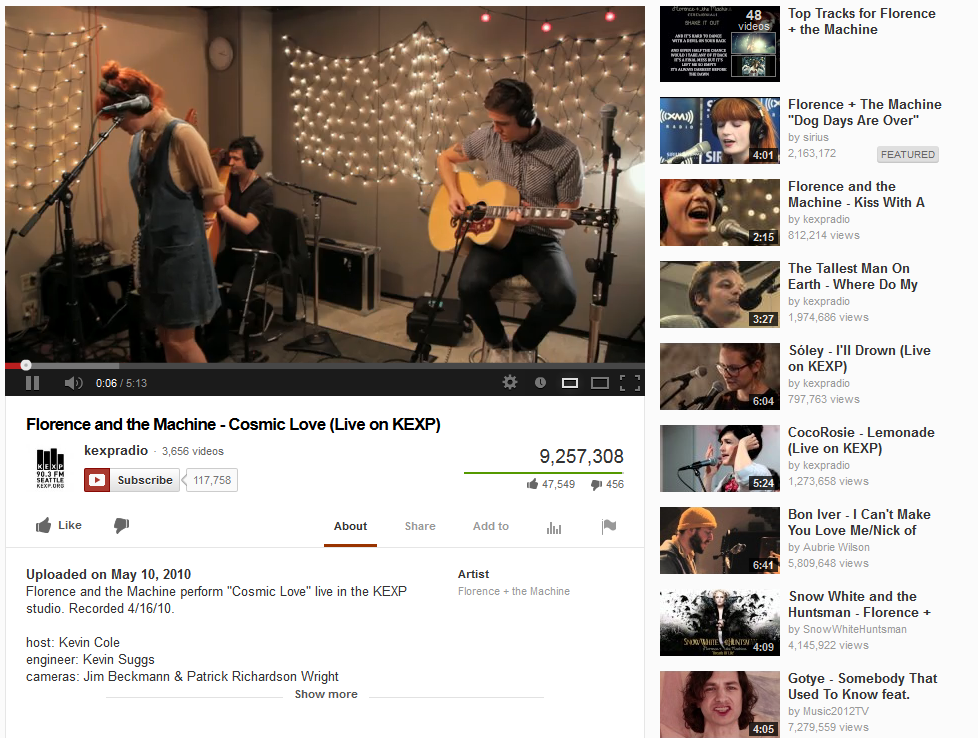
I had issues tying this topic to a third question.  While it’s a good topic, its more of a process than an actual concept.  This would actually qualify as an engage activity, slightly different to the one mentioned above, but I would see it working better as a take-home assignment than an in-class one.  The assignment would be to use YouTube and pull up a video that piques their interest.  Obviously, it needs to be school-appropriate.  This could be their favorite music video, a funny video of cats, whatever it is would work.  They would write the name of the video at the top and provide a link to the video if possible.  Then, they would take the paper and fold it in half, hot-dog style.  On the left, they list the names of videos on the suggested pane to the right, in order as they appear.  On the right, they would add comments about how that video was related to the video they chose and why it was in that order.  The idea is that this should take a bit of thinking since often times the videos appear to be randomly added to that queue.  This would reinforce the model while hopefully developing a better idea of how a website they are familiar with operates.  Though this could be done with any search engine as well, I feel those are just too similar to offer any “investigative” work for the students.

Florence and the Machine

Seen above, one would likely suspect that a Florence and the Machine video would pull up various other Florence videos in the top 9; however, the snapshot shows that this is not the case.  We see that most results have nothing to do with Florence.  We see that there are a few matches based on the KEXP live performance.  When listening to some others, it might be reason to believe they were in the queue not only based on a performance, but also because the genres are very similar.  That would be my main conclusion about Gotye’s music video being included in the list: it’s a very popular song and is in the same genre as Florence.


Engaging students: Distinguishing between axioms, postulates, theorems, and corollaries

In my capstone class for future secondary math teachers, I ask my students to come up with ideas for engaging their students with different topics in the secondary mathematics curriculum. In other words, the point of the assignment was not to devise a full-blown lesson plan on this topic. Instead, I asked my students to think about three different ways of getting their students interested in the topic in the first place.

I plan to share some of the best of these ideas on this blog (after asking my students’ permission, of course).

This student submission comes from my former student Roderick Motes. His topic, from Geometry: distinguishing between axioms, postulates, theorems, and corollaries.

green line

How could you as a teacher create an activity or project that involves your topic?

This topic lends itself well to projects, and to activities. Axiom systems are fundamental to the study of math. In high school geometry in particular we start to ask students to do proofs. When students begins proofs it’s important that we define what we’re working with. All students know definitions, these tell us what the objects ARE. Postulates and Axioms tell us the most basic rules of how an object behaves.

There are various options you can use to communicate the differences here. My suggestion would be to take an interesting, visual, and intuitive problem and find the simplest rule set you can. Find the rules from which you can easily (though not trivially) solve the question. Take for example the Seven Bridges of Konnisburg. The website http://www.mathsisfun.com/activity/seven-bridges-konigsberg.html has a GREAT activity based around the Seven Bridges problem. Towards the middle, after the initial exploration, the activity introduces some vocabulary central to the student of graphs. The definitions are, as Euclid would have them, definitions. The activity then assumes some things implicitly:

“A path leads into a vertex by one edge and out of the vertex by a second edge.”

This is an example of an axiom.

With careful choice of activity you can distinguish between theorem and corollary.  In geometry in particular we can use the theorem that opposite angles are congruent to quickly prove that the sum of the angles when a line cuts another is 4 right angles. This is a quick corollary, and so the difference between corollary and theorem could be shown AS PART OF an activity you already have.

So there are really two places that you can fit this. Adapting an explore will allow you to quickly demonstrate the difference between theorem and corollary. Having students prove solutions from axioms is another method of showing everything.

Below I have included several axiom systems you could fit in. Euclids Elements defines Euclidean Geometry, and so whenever you are proving something from there you could consider adapting your activity to require proof from axioms and prior proofs.

Peano axiomatized the basics of number theory. You could potentially adapt this if you’re teaching middle school, but that would be more tricky. Alligator Eggs is a GREAT manipulative for advanced high school students who are going to be taking computer science around the same time. Alligator eggs has cut outs, colors, gives definitions, and shows the axiomatic assumptions of typed lambda calculus in a greatly intuitive way (chomp chomp chomp.)

http://worrydream.com/AlligatorEggs/

http://en.wikipedia.org/wiki/Axiomatic_system#Example:_The_Peano_axiomatization_of_natural_numbers

http://aleph0.clarku.edu/~djoyce/java/elements/elements.html


green line

What interesting things can you say about the people who contributed to the discovery and/or the development of this topic? 

The axiomatic method took us a while to work the kinks out of and, accordingly, it’s history is rife with interesting figures. We can start at the beginnings with Euclid though, to be fair to those before him, his work built upon the works of the Pythagoreans, Plato, and Theaetetus (the first two of which have countless fun asides you can discuss.) Euclid wrote down his ‘postulates and common notions’ and proceeded to build up Euclidean Geometry from them.  Euclid is a rather mysterious figure for all we know about him. He is alleged to have published many books. Interestingly he is thought to have published the book “Music: Elements of Music” in which he extends on the Pythagoreans musings on the connection between intervals in music, and mathematics.

After the Greeks the seat of mathematical progress moved to the Middle East. During this time many mathematicians would continue to use the axiomatic method of Euclid, but none doubted his own axioms save for a few. Among these men was one Omar Al-Khayyam. Al-Khayyam raised some objections to Euclids use of the 5th postulate (the parallel postulate.) This same objection would later be noted and used as the basis for the study of non-euclidean geometries. Outside of mathematics Al-Khayyam was an interesting man. He was a poet as well as a mathematician, philosopher, and astronomer. Quite interesting he was brazen enough to publish the idea that the year was actually 365.24219858156 days. I say it was a brazen idea because the degree to which he was claiming accuracy was more or less unheard of for astronomical calculations at the time. What’s amazing is how right he was. His calculation is accurate to the sixth decimal place which, we now know, actually varies naturally. It would be like someone coming into a room and telling you that you are 5.62536412 feet tall based on their calculations and then having them be correct.

After Al-Khayyam the next most notable figures in the refinement of the axiomatic method are probably Hilbert, who refined Euclids axiom system, Whitehead and Russell (who tried and failed to axiomatize ALL of mathematics,) and Cantor. A quick search on the internet will pull up many many interesting facts, but here are some of my favorites:

  • “David Hilbert used to have a garden attached to his house, with a chalkboard allowing him to do research out in the fresh air. Reportedly, he would stand at the board working for periods of time, but would occasionally, without warning, hop onto his bicycle, make a circuit or two of the garden’s path, then just as abruptly hop off and return to his chalkboard.”
  •  “Bertrand Russell (British mathematician) – reported in print as having died in 1937, had to have his obituary reprinted when he actually died in 1970.”

Cantor is particularly interesting, I think, since his mathematics earned him such admonition as a “scientific charlatan”, a “renegade” and a “corrupter of youth.” It wasn’t until the tail end of his life, having been driven to fits of madness and depression, that he finally started to be realized as one of the great mathematicians, and his set theory to be one of mathematics crowning achievements.

Sources:

green line

How does this topic extend what your students should have learned in previous courses?

Axiomatic methods can be used to prove everything is true (well… mostly. Incompleteness Theorem throws a wrench into the works but is well beyond the scope of a high school course.) Have the students ever wondered why we factorize things into primes? Or wondered how any of the mechanical routines they’ve learned (like synthetic division) can be justified or proven? If so, then they’ve been looking for the same kind of path that we’ve taken all throughout Math 4050.

We take some simple basic principles about numbers, and show that they have complex consequences. Moreover we show that we can extend these principles to many different areas. In geometry in particular we can give geometric, visual, intuitive ideas some very rigorous backing. Moreover much of Euclids Elements gives us an intuition for algebra without explicitly using it. Consider when Euclid proves Pythagorean Theorem. Nowadays we say a2 + b2 = c2 . But Euclid actually proves it by showing that the area of a square with side A, plus the area of a square with side B sum to the area of a square with sides C. He takes the literal square of the sides, and shows they are equal. This is a very interesting way you could discuss these points, and connect back with your students.

Engaging students: The field axioms

In my capstone class for future secondary math teachers, I ask my students to come up with ideas for engaging their students with different topics in the secondary mathematics curriculum. In other words, the point of the assignment was not to devise a full-blown lesson plan on this topic. Instead, I asked my students to think about three different ways of getting their students interested in the topic in the first place.

I plan to share some of the best of these ideas on this blog (after asking my students’ permission, of course).

This student submission again comes from my former student Maranda Edmonson. Her topic, from Pre-Algebra: the field axioms of arithmetic (the distributive law, the commutativity and associativity of addition and multiplication, etc.).

green line

B. Curriculum: How can this topic be used in your students’ future courses in mathematics or science?

It is safe to say that the field axioms are used in all mathematics classes once they are introduced. As students, we know them to be rules for how to simplify or expand expressions, solving equations, or just manipulating numbers and expressions. As instructors, we know them to be a solid foundation for further mathematical understanding. “In mathematics or logic, [an axiom is] an unprovable rule or first principle accepted to be true because it is self-evident or particularly useful” (Merriam-Webster.com). Is the distributive property not useful? Isn’t the associative property self-evident? We learn these axioms, master them during the first lesson we encounter them, and they stick with us. Why? Because they are obvious “rules” that we use and apply to all aspects of mathematics. They are a foundation on which we, as instructors, wish to build upon a greater mathematical understanding.

green line

B. Curriculum: How does this idea extend what your students should have learned in previous courses?

When students first begin to learn addition they are learning the associative property as well. Think about it – when kids learn about the expanded form of a number, they are already seeing that when you add more than two numbers together they equal the same thing, no matter what order they are being added in. For example:

1,458 = 1,000 + 400 + 50 + 8 = (1,000 + 400) + (50 + 8) = (1,000 + 50) + (400 + 8)

and so on. Kids tend to add numbers in the order that they are given. However, when they start learning little tricks (say, their tens facts), then they will start seeing how the numbers work together. For example: 3 + 4 + 7 soon becomes (3 + 7) + 4. Then, when students get into higher grades and begin learning multiplication, the commutative property becomes a real focus. When they are learning their multiplication facts, students are faced with $5 \times 7$ one minute, then 7 \times 5 the next. They start seeing that it does not matter what order the numbers are in, but that when two numbers are being multiplied together, they will equal the same product each time.

green line

E. Technology: How can technology be used to effectively engage students with this topic?

Math and music are always a good combination. Honestly, who doesn’t hum “Pop! Goes the Weasel” every time they need to use the quadratic formula? This YouTube video (the link is below) is of some students singing a song about the associative, commutative and distributive properties. The video is difficult to hear unless you turn the volume up, and the quality is not the greatest. However, the students in the video get the point across about what the axioms are and that they only apply to addition and multiplication.  Note that you only need to watch the first three minutes of the video. The last minute and a half or so is irrelevant to the axioms themselves.

Engaging students: Distinguishing between inductive and deductive reasoning

In my capstone class for future secondary math teachers, I ask my students to come up with ideas for engaging their students with different topics in the secondary mathematics curriculum. In other words, the point of the assignment was not to devise a full-blown lesson plan on this topic. Instead, I asked my students to think about three different ways of getting their students interested in the topic in the first place.

I plan to share some of the best of these ideas on this blog (after asking my students’ permission, of course).

This student submission again comes from my former student Caitlin Kirk. Her topic, from Geometry (and proof writing): distinguishing between inductive and deductive reasoning.

green line

C. Culture: How has this topic appeared in pop culture (movies, TV, current music, video games, etc.)?

Inductive and deductive reasoning are often used on TV, radio, or in print in the form of advertising.

Deductive Reasoning

Man: What’s better, faster or slower?

All kids: Faster!

Man: And what’s fast?

Boy: My mom’s car and a cheetah.

Girl: A space ship.

Man: And what’s slow?

Boy: My grandma’s slow.

Man: Would you like her better if she was fast?

Boy: I bet she would like it if she was fast.

Man: Hmm, maybe give her some turbo boosters?

Boy: Or tape a cheetah to her back.

Man: Tape a cheetah to her back, it seems like you’ve thought about this before.

Narrator: It’s not complicated, faster is better. And iPhone 5 downloads fastest on AT&T 4G.

Deductive reasoning, which applies a general rule to specific examples, can be seen in advertisements like the AT&T commercial above. The kids establish in their conversation that faster things are better. The narrator says that iPhone 5 downloads fastest on AT&T 4G. Thus the viewer is left with the conclusion that AT&T 4G is better. This commercial’s deduction can be summed up as follows:

Faster things are better.

AT&T 4G is faster.

AT&T 4G is better. (conclusion)

Inductive Reasoning

Hotch: Sprees usually end in suicide. If he’s got nothing to live for, why wouldn’t he end it?

Reid: Because he’s not finished yet.

Reid: He’s obviously got displaced anger and took it out on his first victim.

Hotch: The stock boy represented someone. We need to know who. What about the other victims.

Reid: Defensive.

Hotch: Was he military?

Garcia: Negative.

Hotch: He’s lashing out. There’s got to be a reason. Rossi and Prentiss, dig through his house. Reid and JJ, get to the station. Morgan and I will take the crime scene. This guy’s got anger, endless targets and a gun. And from the looks of it, he just got started.

Inductive reasoning, which uses specific examples to make a general rule, can be seen frequently in episodes of TV shows or movies that involve crime scene investigation. The show Criminal Minds features a special unit of the FBI that profiles criminals. They do this by interviewing criminals who have already been caught and then inducing general rules about all criminals in order to catch the one they are looking for. Conversations among the profilers, like the one above, lead to inductive reasoning that can be summed up as follows:

He has nothing to live for.

He doesn’t want to commit suicide.

He wasn’t in the military.

He has displaced anger.

He has endless targets.

He has a gun.

He is a dangerous man who will hurt more people. (conclusion)

green line

C. Culture: How has this topic appeared in high culture (art, classical music, theatre, etc.)?

 When in the Course of human events, it becomes necessary for one people to dissolve the political bands which have connected them with another, and to assume among the powers of the earth, the separate and equal station to which the Laws of Nature and of Nature’s God entitle them, a decent respect to the opinions of mankind requires that they should declare the causes which impel them to the separation.

 We hold these truths to be self-evident, that all men are created equal, that they are endowed by their Creator with certain unalienable rights, that among these are Life, Liberty, and the pursuit of Happiness. That to secure these rights, Governments are instituted among Men, deriving their just powers from the consent of the governed. That whenever any Form of Government becomes destructive of these ends, it is the Right of the People to alter or to abolish it, and to institute new Government, laying its foundation on such principles and organizing its powers in such form, as to them shall seem most likely to effect their Safety and Happiness.

-The Declaration of Independence

July, 4, 1776

The Declaration of Independence was drafted as a deductive argument as to why the United States can and should be a country independent of Great Britain. Thomas Jefferson drafted the declaration with a series of premises leading to four different conclusions.

  1. George III is a tyrant
  2. The colonies have a right to be free and independent states
  3. All political connections between Britain and the colonies should be dissolved
  4. The “united states” have the right to do all things that free nations do

These four conclusions then serve as premises for the final conclusion that the United States is now an independent country. The declaration is a great example of deductive reasoning because it takes specific examples, such as the 27 grievances against the monarch, and makes logical conclusions, such as “George III is a tyrant,” from the examples. Its deduction can be plainly seen.

The Declaration of Independence is a great example of high culture to use in the classroom because every student who is educated in the United States will have some knowledge of this document. Therefore learning to analyze it “mathematically” in terms of deductive versus inductive reasoning, is a great engagement tool.

green line

E. Technology: How can technology be used to effectively engage students with this topic?

Crime Scene Games & Deductive Reasoning: https://sites.google.com/a/wcsga.net/mock-trial/crime-scene-games-deductive-reasoning

This website contains links to several crime scene investigation games. Several of the games require students to collect clues, compare evidence, and then determine who is responsible for committing a given crime. These games are great for having students use their deductive skills. A couple of the other games require students to review given qualities of a criminal and inductively decide who the criminal in a scenario is based on these broad statements.

This website could be used to engage students easily. Having students play a game, especially one like these where they cannot pick out the mathematical skill they are using, is a great way to get students to abandon their potential distaste for a topic and be involved. After the students have completed a game and solved their crime, the teacher can smoothly transition into a geometrical lesson on inductive and deductive reasoning. The teacher will have activated the students’ knowledge of reasoning through a fun game. They will then be in a better position to learn a new, mathematical application of the reasoning they just used.