In this series, I’m discussing how ideas from calculus and precalculus (with a touch of differential equations) can predict the precession in Mercury’s orbit and thus confirm Einstein’s theory of general relativity. The origins of this series came from a class project that I assigned to my Differential Equations students maybe 20 years ago.
We previously showed that if the motion of a planet around the Sun is expressed in polar coordinates  , with the Sun at the origin, then under Newtonian mechanics (i.e., without general relativity) the motion of the planet follows the differential equation
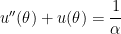 ,
,
where  and
and  is a certain constant. We will also impose the initial condition that the planet is at perihelion (i.e., is closest to the sun), at a distance of
  , when
  . This means that
  obtains its maximum value of
  when . This leads to the two initial conditions
 ;
;
the second equation arises since has a local extremum at .
We now take the perspective of a student who is taking a first-semester course in differential equations. There are two standard techniques for solving a second-order non-homogeneous differential equations with constant coefficients. One of these is the method of variation of parameters. First, we solve the associated homogeneous differential equation
 .
.
The characteristic equation of this differential equation is  , which clearly has the two imaginary roots
  . Therefore, two linearly independent solutions of the associated homogeneous equation are
  and
and  .
.
(As an aside, this is one answer to the common question, “What are complex numbers good for?” The answer is naturally above the heads of Algebra II students when they first encounter the mysterious number  , but complex numbers provide a way of solving the differential equations that model multiple problems in statics and dynamics.)
According to the method of variation of parameters, the general solution of the original nonhomogeneous differential equation

is
 ,
,
where
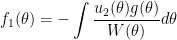 ,
,
 ,
,
and  is the Wronskian of
  and
and  , defined by the determinant
 .
.
Well, that’s a mouthful.
Fortunately, for the example at hand, these computations are pretty easy. First, since and , we have

from the usual Pythagorean trigonometric identity. Therefore, the denominators in the integrals for  and
and  essentially disappear.
Since  , the integrals for and are straightforward to compute:
 ,
,
where we use  for the constant of integration instead of the usual
  . Second,
 ,
,
using  for the constant of integration. Therefore, by variation of parameters, the general solution of the nonhomogeneous differential equation is


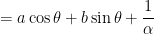 .
.
Unsurprisingly, this matches the answer in the previous post that was found by the method of undetermined coefficients.
For the sake of completeness, I repeat the argument used in the previous two posts to determine  and
and  . This is require using the initial conditions
  and
and  . From the first initial condition,



From the second initial condition,


 .
.
From these two constants, we obtain

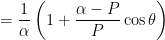
 ,
,
where  .
.
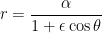
Finally, since  , we see that the planet’s orbit satisfies
 ,
,
so that, as shown earlier in this series, the orbit is an ellipse with eccentricity  .
.

and
be independent normally distributed random variables, each with its own mean and variance. Show that the variance of
is smaller than the variance of


 , then
  is always positive, where
 must be greater than
  .
.
 . If I could prove both of these claims, then that would prove that
  .
. , we integrate by parts. (This is permissible: the integrands below are well-behaved if
  is not in the range of integration.)

![= \displaystyle x e^{x^2/2} \left[ -\frac{1}{t} e^{-t^2/2} \right]_{-\infty}^x - x e^{x^2/2} \int_{-\infty}^x \frac{d}{dt} \left(\frac{1}{t} \right) \left( -e^{-t^2/2} \right) \, dt](https://s0.wp.com/latex.php?latex=%3D+%5Cdisplaystyle++x+e%5E%7Bx%5E2%2F2%7D+%5Cleft%5B+-%5Cfrac%7B1%7D%7Bt%7D+e%5E%7B-t%5E2%2F2%7D+%5Cright%5D_%7B-%5Cinfty%7D%5Ex+-+x+e%5E%7Bx%5E2%2F2%7D+%5Cint_%7B-%5Cinfty%7D%5Ex+%5Cfrac%7Bd%7D%7Bdt%7D+%5Cleft%28%5Cfrac%7B1%7D%7Bt%7D+%5Cright%29+%5Cleft%28+-e%5E%7B-t%5E2%2F2%7D+%5Cright%29+%5C%2C+dt&bg=ffffff&fg=000000&s=0&c=20201002)
![= \displaystyle x e^{x^2/2} \left[ -\frac{1}{x} e^{-x^2/2} - 0 \right] + |x| e^{x^2/2} \int_{-\infty}^x \frac{1}{t^2} e^{-t^2/2} \, dt](https://s0.wp.com/latex.php?latex=%3D+%5Cdisplaystyle++x+e%5E%7Bx%5E2%2F2%7D+%5Cleft%5B+-%5Cfrac%7B1%7D%7Bx%7D+e%5E%7B-x%5E2%2F2%7D+-+0+%5Cright%5D+%2B+%7Cx%7C+e%5E%7Bx%5E2%2F2%7D+%5Cint_%7B-%5Cinfty%7D%5Ex+%5Cfrac%7B1%7D%7Bt%5E2%7D+e%5E%7B-t%5E2%2F2%7D+%5C%2C+dt&bg=ffffff&fg=000000&s=0&c=20201002)

 .
. .
. ,
, .
. ,
, ,
,  ,
,  , and
, and  . With these definitions, we may write
  and
and  , where
  and
and  are independent standard normal random variables.
 . In previous posts, we showed that it will be sufficient to show that
  , where
  and
and  . We also showed that
  , where
  and
and
![\hbox{Var}(Z_1 \mid Z_1 > a + bZ_2) = E(Z_1^2 \mid Z_1 + a bZ_2) - [E(Z_1 \mid Z_1 > a + bZ_2)]^2](https://s0.wp.com/latex.php?latex=%5Chbox%7BVar%7D%28Z_1+%5Cmid+Z_1+%3E+a+%2B+bZ_2%29+%3D+E%28Z_1%5E2+%5Cmid+Z_1+%2B+a+bZ_2%29+-+%5BE%28Z_1+%5Cmid+Z_1+%3E+a+%2B+bZ_2%29%5D%5E2&bg=ffffff&fg=000000&s=0&c=20201002) ,
,
 .
.
![= 1 - \displaystyle\frac{c e^{-c^2/2}}{ \sqrt{2\pi} (b^2+1) \Phi(c)} - \frac{e^{-c^2}}{2\pi (b^2+1) [\Phi(c)]^2}](https://s0.wp.com/latex.php?latex=%3D+1+-++%5Cdisplaystyle%5Cfrac%7Bc+e%5E%7B-c%5E2%2F2%7D%7D%7B+%5Csqrt%7B2%5Cpi%7D+%28b%5E2%2B1%29+%5CPhi%28c%29%7D+-+%5Cfrac%7Be%5E%7B-c%5E2%7D%7D%7B2%5Cpi+%28b%5E2%2B1%29+%5B%5CPhi%28c%29%5D%5E2%7D&bg=ffffff&fg=000000&s=0&c=20201002)
![= 1 - \displaystyle\frac{c}{ \sqrt{2\pi} (b^2+1) \Phi(c) e^{c^2/2}} - \frac{1}{2\pi (b^2+1) [\Phi(c)]^2e^{c^2}}](https://s0.wp.com/latex.php?latex=%3D+1+-++%5Cdisplaystyle%5Cfrac%7Bc%7D%7B+%5Csqrt%7B2%5Cpi%7D+%28b%5E2%2B1%29+%5CPhi%28c%29+e%5E%7Bc%5E2%2F2%7D%7D+-+%5Cfrac%7B1%7D%7B2%5Cpi+%28b%5E2%2B1%29+%5B%5CPhi%28c%29%5D%5E2e%5E%7Bc%5E2%7D%7D&bg=ffffff&fg=000000&s=0&c=20201002)
![= 1 - \displaystyle\frac{\sqrt{2\pi} c e^{c^2/2} \Phi(c) + 1}{2\pi (b^2+1) [\Phi(c)]^2 e^{c^2}}](https://s0.wp.com/latex.php?latex=%3D+1+-++%5Cdisplaystyle%5Cfrac%7B%5Csqrt%7B2%5Cpi%7D+c+e%5E%7Bc%5E2%2F2%7D+%5CPhi%28c%29+%2B+1%7D%7B2%5Cpi+%28b%5E2%2B1%29+%5B%5CPhi%28c%29%5D%5E2+e%5E%7Bc%5E2%7D%7D&bg=ffffff&fg=000000&s=0&c=20201002) .
. , it suffices to show that the second term must be positive. Furthermore, since the denominator of the second term is positive, it suffices to show that
  must also be positive.
 .
. ,
, is the joint probability density function of
  .
. ,
, for the event
  .
. 
![=\displaystyle \left[ -z_1 e^{-z_1^2/2} \right]_{a+bz_2}^\infty + \int_{a+bz_2}^\infty e^{-z_1^2/2} \, dz_1](https://s0.wp.com/latex.php?latex=%3D%5Cdisplaystyle+%5Cleft%5B+-z_1+e%5E%7B-z_1%5E2%2F2%7D+%5Cright%5D_%7Ba%2Bbz_2%7D%5E%5Cinfty+%2B+%5Cint_%7Ba%2Bbz_2%7D%5E%5Cinfty+e%5E%7B-z_1%5E2%2F2%7D+%5C%2C+dz_1&bg=ffffff&fg=000000&s=0&c=20201002)
![= (a+bz_2) \displaystyle \exp \left[-\frac{(a+bz_2)^2}{2} \right] + \int_{a+bz_2}^\infty e^{-z_1^2/2} \, dz_1](https://s0.wp.com/latex.php?latex=%3D+%28a%2Bbz_2%29+%5Cdisplaystyle+%5Cexp+%5Cleft%5B-%5Cfrac%7B%28a%2Bbz_2%29%5E2%7D%7B2%7D+%5Cright%5D+%2B+%5Cint_%7Ba%2Bbz_2%7D%5E%5Cinfty+e%5E%7B-z_1%5E2%2F2%7D+%5C%2C+dz_1&bg=ffffff&fg=000000&s=0&c=20201002)
![E(Z_1^2 I_A) = \displaystyle \frac{1}{2\pi} \int_{-\infty}^\infty (a+bz_2) \exp \left[-\frac{(a+bz_2)^2}{2} \right] \exp \left[ -\frac{z_2^2}{2} \right] \, dz_2 + \int_{-\infty}^\infty \int_{a+bz_2}^\infty \frac{1}{2\pi} e^{-z_1^2/2} e^{-z_2^2/2} \, dz_1 dz_2](https://s0.wp.com/latex.php?latex=E%28Z_1%5E2+I_A%29+%3D+%5Cdisplaystyle+%5Cfrac%7B1%7D%7B2%5Cpi%7D+%5Cint_%7B-%5Cinfty%7D%5E%5Cinfty+%28a%2Bbz_2%29+%5Cexp+%5Cleft%5B-%5Cfrac%7B%28a%2Bbz_2%29%5E2%7D%7B2%7D+%5Cright%5D+%5Cexp+%5Cleft%5B+-%5Cfrac%7Bz_2%5E2%7D%7B2%7D+%5Cright%5D+%5C%2C+dz_2+%2B+%5Cint_%7B-%5Cinfty%7D%5E%5Cinfty+%5Cint_%7Ba%2Bbz_2%7D%5E%5Cinfty+%5Cfrac%7B1%7D%7B2%5Cpi%7D+e%5E%7B-z_1%5E2%2F2%7D+e%5E%7B-z_2%5E2%2F2%7D+%5C%2C+dz_1+dz_2&bg=ffffff&fg=000000&s=0&c=20201002) .
. since the double integral is
  . For the first integral, we complete the square as before:
![E(Z_1^2 I_A) = \Phi(c) + \displaystyle \frac{1}{2\pi} \int_{-\infty}^\infty (a+bz_2) \exp \left[-\frac{(b^2+1)z_2^2 + 2abz_2 + a^2}{2} \right] \, dz_2](https://s0.wp.com/latex.php?latex=E%28Z_1%5E2+I_A%29+%3D+%5CPhi%28c%29+%2B+%5Cdisplaystyle+%5Cfrac%7B1%7D%7B2%5Cpi%7D+%5Cint_%7B-%5Cinfty%7D%5E%5Cinfty+%28a%2Bbz_2%29+%5Cexp+%5Cleft%5B-%5Cfrac%7B%28b%5E2%2B1%29z_2%5E2+%2B+2abz_2+%2B+a%5E2%7D%7B2%7D+%5Cright%5D+%5C%2C+dz_2&bg=ffffff&fg=000000&s=0&c=20201002)
![= \Phi(c) + \displaystyle \frac{1}{2\pi} \int_{-\infty}^\infty (a + bz_2) \exp \left[ -\frac{b^2+1}{2} \left( z_2^2 + \frac{2abz_2}{b^2+1} \,\,\,\,\,\,\,\,\,\,\,\,\,\,\,\, \right) \right] \exp \left[ -\frac{1}{2} \left(a^2 \,\,\,\,\,\,\,\,\,\,\,\,\,\,\,\, \right) \right] dz_2](https://s0.wp.com/latex.php?latex=%3D+%5CPhi%28c%29+%2B+%5Cdisplaystyle+%5Cfrac%7B1%7D%7B2%5Cpi%7D+%5Cint_%7B-%5Cinfty%7D%5E%5Cinfty+%28a+%2B+bz_2%29+%5Cexp+%5Cleft%5B+-%5Cfrac%7Bb%5E2%2B1%7D%7B2%7D+%5Cleft%28+z_2%5E2+%2B+%5Cfrac%7B2abz_2%7D%7Bb%5E2%2B1%7D+%5C%2C%5C%2C%5C%2C%5C%2C%5C%2C%5C%2C%5C%2C%5C%2C%5C%2C%5C%2C%5C%2C%5C%2C%5C%2C%5C%2C%5C%2C%5C%2C+%5Cright%29+%5Cright%5D+%5Cexp+%5Cleft%5B+-%5Cfrac%7B1%7D%7B2%7D+%5Cleft%28a%5E2+%5C%2C%5C%2C%5C%2C%5C%2C%5C%2C%5C%2C%5C%2C%5C%2C%5C%2C%5C%2C%5C%2C%5C%2C%5C%2C%5C%2C%5C%2C%5C%2C+%5Cright%29+%5Cright%5D+dz_2&bg=ffffff&fg=000000&s=0&c=20201002)
![= \Phi(c) +\displaystyle \frac{1}{2\pi} \int_{-\infty}^\infty (a + bz_2)\exp \left[ -\frac{b^2+1}{2} \left( z_2^2 + \frac{2abz_2}{b^2+1} + \frac{a^2b^2}{(b^2+1)^2} \right) \right] \exp \left[ -\frac{1}{2} \left(a^2 - \frac{a^2b^2}{b^2+1} \right) \right] dz_2](https://s0.wp.com/latex.php?latex=%3D+%5CPhi%28c%29+%2B%5Cdisplaystyle+%5Cfrac%7B1%7D%7B2%5Cpi%7D+%5Cint_%7B-%5Cinfty%7D%5E%5Cinfty+%28a+%2B+bz_2%29%5Cexp+%5Cleft%5B+-%5Cfrac%7Bb%5E2%2B1%7D%7B2%7D+%5Cleft%28+z_2%5E2+%2B+%5Cfrac%7B2abz_2%7D%7Bb%5E2%2B1%7D+%2B+%5Cfrac%7Ba%5E2b%5E2%7D%7B%28b%5E2%2B1%29%5E2%7D+%5Cright%29+%5Cright%5D+%5Cexp+%5Cleft%5B+-%5Cfrac%7B1%7D%7B2%7D+%5Cleft%28a%5E2+-+%5Cfrac%7Ba%5E2b%5E2%7D%7Bb%5E2%2B1%7D+%5Cright%29+%5Cright%5D+dz_2&bg=ffffff&fg=000000&s=0&c=20201002)
![= \Phi(c) +\displaystyle \frac{1}{2\pi} \int_{-\infty}^\infty (a + bz_2)\exp \left[ -\frac{b^2+1}{2} \left( z_2 + \frac{ab}{b^2+1} \right)^2 \right] \exp \left[ -\frac{1}{2} \left( \frac{a^2}{b^2+1} \right) \right] dz_2](https://s0.wp.com/latex.php?latex=%3D+%5CPhi%28c%29+%2B%5Cdisplaystyle+%5Cfrac%7B1%7D%7B2%5Cpi%7D+%5Cint_%7B-%5Cinfty%7D%5E%5Cinfty+%28a+%2B+bz_2%29%5Cexp+%5Cleft%5B+-%5Cfrac%7Bb%5E2%2B1%7D%7B2%7D+%5Cleft%28+z_2+%2B+%5Cfrac%7Bab%7D%7Bb%5E2%2B1%7D+%5Cright%29%5E2+%5Cright%5D+%5Cexp+%5Cleft%5B+-%5Cfrac%7B1%7D%7B2%7D+%5Cleft%28+%5Cfrac%7Ba%5E2%7D%7Bb%5E2%2B1%7D+%5Cright%29+%5Cright%5D+dz_2&bg=ffffff&fg=000000&s=0&c=20201002)
![= \Phi(c) +\displaystyle \frac{e^{-c^2/2}}{2\pi} \int_{-\infty}^\infty (a + bz_2)\exp \left[ -\frac{b^2+1}{2} \left( z_2 + \frac{ab}{b^2+1} \right)^2 \right] dz_2](https://s0.wp.com/latex.php?latex=%3D+%5CPhi%28c%29+%2B%5Cdisplaystyle+%5Cfrac%7Be%5E%7B-c%5E2%2F2%7D%7D%7B2%5Cpi%7D+%5Cint_%7B-%5Cinfty%7D%5E%5Cinfty+%28a+%2B+bz_2%29%5Cexp+%5Cleft%5B+-%5Cfrac%7Bb%5E2%2B1%7D%7B2%7D+%5Cleft%28+z_2+%2B+%5Cfrac%7Bab%7D%7Bb%5E2%2B1%7D+%5Cright%29%5E2+%5Cright%5D+dz_2&bg=ffffff&fg=000000&s=0&c=20201002) .
. and multiplying and dividing by
  in the denominator:
![E(Z_1^2 I_A) = \Phi(c) + \displaystyle \frac{e^{-c^2/2}}{\sqrt{2\pi}\sqrt{b^2+1}} \int_{-\infty}^\infty (a+bz_2) \frac{1}{\sqrt{2\pi} \sqrt{ \displaystyle \frac{1}{b^2+1}}} \exp \left[ - \frac{\left(z_2 + \displaystyle \frac{ab}{b^2+1} \right)^2}{2 \cdot \displaystyle \frac{1}{b^2+1}} \right] dz_2](https://s0.wp.com/latex.php?latex=E%28Z_1%5E2+I_A%29+%3D+%5CPhi%28c%29+%2B+%5Cdisplaystyle+%5Cfrac%7Be%5E%7B-c%5E2%2F2%7D%7D%7B%5Csqrt%7B2%5Cpi%7D%5Csqrt%7Bb%5E2%2B1%7D%7D+%5Cint_%7B-%5Cinfty%7D%5E%5Cinfty+%28a%2Bbz_2%29+%5Cfrac%7B1%7D%7B%5Csqrt%7B2%5Cpi%7D+%5Csqrt%7B+%5Cdisplaystyle+%5Cfrac%7B1%7D%7Bb%5E2%2B1%7D%7D%7D+%5Cexp+%5Cleft%5B+-+%5Cfrac%7B%5Cleft%28z_2+%2B+%5Cdisplaystyle+%5Cfrac%7Bab%7D%7Bb%5E2%2B1%7D+%5Cright%29%5E2%7D%7B2+%5Ccdot+%5Cdisplaystyle+%5Cfrac%7B1%7D%7Bb%5E2%2B1%7D%7D+%5Cright%5D+dz_2&bg=ffffff&fg=000000&s=0&c=20201002) .
. with
with  and
and  . Therefore, the integral is equal to
  , so that
 ,
,


 .
. .
. , then
  and
and  , so that
  , matching what we found earlier.
 .
. .
. ,
, .
. ,
,![E(Z_1 I_A) = \displaystyle \frac{1}{2\pi} \int_{-\infty}^\infty \left[ - e^{-z_1^2/2} \right]_{a+bz_2}^\infty e^{-z_2^2/2} \, dz_2](https://s0.wp.com/latex.php?latex=E%28Z_1+I_A%29+%3D+%5Cdisplaystyle+%5Cfrac%7B1%7D%7B2%5Cpi%7D+%5Cint_%7B-%5Cinfty%7D%5E%5Cinfty+%5Cleft%5B+-+e%5E%7B-z_1%5E2%2F2%7D+%5Cright%5D_%7Ba%2Bbz_2%7D%5E%5Cinfty+e%5E%7B-z_2%5E2%2F2%7D+%5C%2C+dz_2+&bg=ffffff&fg=000000&s=0&c=20201002)
![= \displaystyle \frac{1}{2\pi} \int_{-\infty}^\infty \exp \left[ -\frac{(a+bz_2)^2}{2} \right] \exp\left[-\frac{z_2^2}{2} \right] dz_2](https://s0.wp.com/latex.php?latex=%3D+%5Cdisplaystyle+%5Cfrac%7B1%7D%7B2%5Cpi%7D+%5Cint_%7B-%5Cinfty%7D%5E%5Cinfty+%5Cexp+%5Cleft%5B+-%5Cfrac%7B%28a%2Bbz_2%29%5E2%7D%7B2%7D+%5Cright%5D+%5Cexp%5Cleft%5B-%5Cfrac%7Bz_2%5E2%7D%7B2%7D+%5Cright%5D+dz_2&bg=ffffff&fg=000000&s=0&c=20201002)
![= \displaystyle \frac{1}{2\pi} \int_{-\infty}^\infty \exp \left[ -\frac{(b^2+1)z_2^2+2abz_2+a^2}{2} \right]](https://s0.wp.com/latex.php?latex=%3D+%5Cdisplaystyle+%5Cfrac%7B1%7D%7B2%5Cpi%7D+%5Cint_%7B-%5Cinfty%7D%5E%5Cinfty+%5Cexp+%5Cleft%5B+-%5Cfrac%7B%28b%5E2%2B1%29z_2%5E2%2B2abz_2%2Ba%5E2%7D%7B2%7D+%5Cright%5D&bg=ffffff&fg=000000&s=0&c=20201002) .
.![E(Z_1 I_A) = \displaystyle \frac{1}{2\pi} \int_{-\infty}^\infty \exp \left[ -\frac{b^2+1}{2} \left( z_2^2 + \frac{2abz_2}{b^2+1} \,\,\,\,\,\,\,\,\,\,\,\,\,\,\,\, \right) \right] \exp \left[ -\frac{1}{2} \left(a^2 \,\,\,\,\,\,\,\,\,\,\,\,\,\,\,\, \right) \right] dz_2](https://s0.wp.com/latex.php?latex=E%28Z_1+I_A%29+%3D+%5Cdisplaystyle+%5Cfrac%7B1%7D%7B2%5Cpi%7D+%5Cint_%7B-%5Cinfty%7D%5E%5Cinfty+%5Cexp+%5Cleft%5B+-%5Cfrac%7Bb%5E2%2B1%7D%7B2%7D+%5Cleft%28+z_2%5E2+%2B+%5Cfrac%7B2abz_2%7D%7Bb%5E2%2B1%7D+%5C%2C%5C%2C%5C%2C%5C%2C%5C%2C%5C%2C%5C%2C%5C%2C%5C%2C%5C%2C%5C%2C%5C%2C%5C%2C%5C%2C%5C%2C%5C%2C+%5Cright%29+%5Cright%5D+%5Cexp+%5Cleft%5B+-%5Cfrac%7B1%7D%7B2%7D+%5Cleft%28a%5E2+%5C%2C%5C%2C%5C%2C%5C%2C%5C%2C%5C%2C%5C%2C%5C%2C%5C%2C%5C%2C%5C%2C%5C%2C%5C%2C%5C%2C%5C%2C%5C%2C+%5Cright%29+%5Cright%5D+dz_2&bg=ffffff&fg=000000&s=0&c=20201002)
![= \displaystyle \frac{1}{2\pi} \int_{-\infty}^\infty \exp \left[ -\frac{b^2+1}{2} \left( z_2^2 + \frac{2abz_2}{b^2+1} + \frac{a^2b^2}{(b^2+1)^2} \right) \right] \exp \left[ -\frac{1}{2} \left(a^2 - \frac{a^2b^2}{b^2+1} \right) \right] dz_2](https://s0.wp.com/latex.php?latex=%3D+%5Cdisplaystyle+%5Cfrac%7B1%7D%7B2%5Cpi%7D+%5Cint_%7B-%5Cinfty%7D%5E%5Cinfty+%5Cexp+%5Cleft%5B+-%5Cfrac%7Bb%5E2%2B1%7D%7B2%7D+%5Cleft%28+z_2%5E2+%2B+%5Cfrac%7B2abz_2%7D%7Bb%5E2%2B1%7D+%2B+%5Cfrac%7Ba%5E2b%5E2%7D%7B%28b%5E2%2B1%29%5E2%7D+%5Cright%29+%5Cright%5D+%5Cexp+%5Cleft%5B+-%5Cfrac%7B1%7D%7B2%7D+%5Cleft%28a%5E2+-+%5Cfrac%7Ba%5E2b%5E2%7D%7Bb%5E2%2B1%7D+%5Cright%29+%5Cright%5D+dz_2&bg=ffffff&fg=000000&s=0&c=20201002)
![= \displaystyle \frac{1}{2\pi} \int_{-\infty}^\infty \exp \left[ -\frac{b^2+1}{2} \left( z_2 + \frac{ab}{b^2+1} \right)^2 \right] \exp \left[ -\frac{1}{2} \left( \frac{a^2}{b^2+1} \right) \right] dz_2](https://s0.wp.com/latex.php?latex=%3D+%5Cdisplaystyle+%5Cfrac%7B1%7D%7B2%5Cpi%7D+%5Cint_%7B-%5Cinfty%7D%5E%5Cinfty+%5Cexp+%5Cleft%5B+-%5Cfrac%7Bb%5E2%2B1%7D%7B2%7D+%5Cleft%28+z_2+%2B+%5Cfrac%7Bab%7D%7Bb%5E2%2B1%7D+%5Cright%29%5E2+%5Cright%5D+%5Cexp+%5Cleft%5B+-%5Cfrac%7B1%7D%7B2%7D+%5Cleft%28+%5Cfrac%7Ba%5E2%7D%7Bb%5E2%2B1%7D+%5Cright%29+%5Cright%5D+dz_2&bg=ffffff&fg=000000&s=0&c=20201002)
![= \displaystyle \frac{e^{-c^2/2}}{2\pi} \int_{-\infty}^\infty \exp \left[ -\frac{b^2+1}{2} \left( z_2 + \frac{ab}{b^2+1} \right)^2 \right] dz_2](https://s0.wp.com/latex.php?latex=%3D+%5Cdisplaystyle+%5Cfrac%7Be%5E%7B-c%5E2%2F2%7D%7D%7B2%5Cpi%7D+%5Cint_%7B-%5Cinfty%7D%5E%5Cinfty+%5Cexp+%5Cleft%5B+-%5Cfrac%7Bb%5E2%2B1%7D%7B2%7D+%5Cleft%28+z_2+%2B+%5Cfrac%7Bab%7D%7Bb%5E2%2B1%7D+%5Cright%29%5E2+%5Cright%5D++dz_2&bg=ffffff&fg=000000&s=0&c=20201002) .
.![E(Z_1 I_A) = \displaystyle \frac{e^{-c^2/2}}{\sqrt{2\pi}\sqrt{b^2+1}} \int_{-\infty}^\infty \frac{1}{\sqrt{2\pi} \sqrt{ \displaystyle \frac{1}{b^2+1}}} \exp \left[ - \frac{\left(z_2 + \displaystyle \frac{ab}{b^2+1} \right)^2}{2 \cdot \displaystyle \frac{1}{b^2+1}} \right] dz_2](https://s0.wp.com/latex.php?latex=E%28Z_1+I_A%29+%3D+%5Cdisplaystyle+%5Cfrac%7Be%5E%7B-c%5E2%2F2%7D%7D%7B%5Csqrt%7B2%5Cpi%7D%5Csqrt%7Bb%5E2%2B1%7D%7D+%5Cint_%7B-%5Cinfty%7D%5E%5Cinfty++%5Cfrac%7B1%7D%7B%5Csqrt%7B2%5Cpi%7D+%5Csqrt%7B+%5Cdisplaystyle+%5Cfrac%7B1%7D%7Bb%5E2%2B1%7D%7D%7D+%5Cexp+%5Cleft%5B+-+%5Cfrac%7B%5Cleft%28z_2+%2B+%5Cdisplaystyle+%5Cfrac%7Bab%7D%7Bb%5E2%2B1%7D+%5Cright%29%5E2%7D%7B2+%5Ccdot+%5Cdisplaystyle+%5Cfrac%7B1%7D%7Bb%5E2%2B1%7D%7D+%5Cright%5D+dz_2&bg=ffffff&fg=000000&s=0&c=20201002) .
. , where
  , we have
 ,
, .
. , and
, and  , then
  , and
, and  , we have
 ,
, .
. and
and  . This doesn’t solve the original problem, of course, but I hoped that solving this simpler case might give me some guidance about tackling the general case. I solved this special case in the previous post.
 and
and  , where
  could be something other than 1. The goal is to show that
![\hbox{Var}(X \mid X > Y) = E(X^2 \mid X > Y) - [E(X \mid X > Y)]^2 < 1](https://s0.wp.com/latex.php?latex=%5Chbox%7BVar%7D%28X+%5Cmid+X+%3E+Y%29+%3D+E%28X%5E2+%5Cmid+X+%3E+Y%29+-+%5BE%28X+%5Cmid+X+%3E+Y%29%5D%5E2+%3C+1&bg=ffffff&fg=000000&s=0&c=20201002) .
. . The denominator is straightforward: since
  is normally distributed with
  . (Also,
  , but that’s really not needed for this problem.) Therefore,
  since the distribution of
  , where
  has a standard normal distribution. Then
 ,
, , matching the requirement
  . The inner integral can be directly evaluated:
![E(X I_{X>Y}) = \displaystyle \frac{1}{2\pi} \int_{-\infty}^\infty \left[ -e^{-x^2/2} \right]_{\sigma z}^\infty e^{-z^2/2} \, dz](https://s0.wp.com/latex.php?latex=E%28X+I_%7BX%3EY%7D%29+%3D+%5Cdisplaystyle+%5Cfrac%7B1%7D%7B2%5Cpi%7D+%5Cint_%7B-%5Cinfty%7D%5E%5Cinfty+%5Cleft%5B+-e%5E%7B-x%5E2%2F2%7D+%5Cright%5D_%7B%5Csigma+z%7D%5E%5Cinfty+e%5E%7B-z%5E2%2F2%7D+%5C%2C+dz&bg=ffffff&fg=000000&s=0&c=20201002)
![= \displaystyle \frac{1}{2\pi} \int_{-\infty}^\infty \left[ 0 + e^{-\sigma^2 z^2/2} \right] e^{-z^2/2} \, dz](https://s0.wp.com/latex.php?latex=%3D+%5Cdisplaystyle+%5Cfrac%7B1%7D%7B2%5Cpi%7D+%5Cint_%7B-%5Cinfty%7D%5E%5Cinfty+%5Cleft%5B+0+%2B+e%5E%7B-%5Csigma%5E2+z%5E2%2F2%7D+%5Cright%5D+e%5E%7B-z%5E2%2F2%7D+%5C%2C+dz&bg=ffffff&fg=000000&s=0&c=20201002)
 .
.![E(X I_{X>Y}) = \displaystyle \frac{1}{\sqrt{2\pi} \sqrt{\sigma^2+1}} \int_{-\infty}^\infty \frac{1}{\sqrt{2\pi} \sqrt{ \frac{1}{\sigma^2+1}}} \exp \left[ -\frac{z^2}{2 \cdot \frac{1}{\sigma^2+1}} \right] \, dz](https://s0.wp.com/latex.php?latex=E%28X+I_%7BX%3EY%7D%29+%3D+%5Cdisplaystyle+%5Cfrac%7B1%7D%7B%5Csqrt%7B2%5Cpi%7D+%5Csqrt%7B%5Csigma%5E2%2B1%7D%7D+%5Cint_%7B-%5Cinfty%7D%5E%5Cinfty+%5Cfrac%7B1%7D%7B%5Csqrt%7B2%5Cpi%7D+%5Csqrt%7B+%5Cfrac%7B1%7D%7B%5Csigma%5E2%2B1%7D%7D%7D+%5Cexp+%5Cleft%5B+-%5Cfrac%7Bz%5E2%7D%7B2+%5Ccdot+%5Cfrac%7B1%7D%7B%5Csigma%5E2%2B1%7D%7D+%5Cright%5D+%5C%2C+dz&bg=ffffff&fg=000000&s=0&c=20201002) .
. , and so the integral must be equal to 1. We conclude
 .
. .
.
![= \displaystyle \left[-x e^{-x^2/2} \right]_{\sigma z}^\infty + \int_{\sigma z}^\infty e^{-x^2/2} \, dx](https://s0.wp.com/latex.php?latex=%3D+%5Cdisplaystyle+%5Cleft%5B-x+e%5E%7B-x%5E2%2F2%7D+%5Cright%5D_%7B%5Csigma+z%7D%5E%5Cinfty+%2B+%5Cint_%7B%5Csigma+z%7D%5E%5Cinfty+e%5E%7B-x%5E2%2F2%7D+%5C%2C+dx&bg=ffffff&fg=000000&s=0&c=20201002)
 .
.
 .
. is an odd function. The double integral is equal to
  , which we’ve already shown is equal to
  . Therefore,
  .
.![\hbox{Var}(X \mid X > Y) = E(X^2 \mid X > Y) - [E(X \mid X > Y)]^2 = 1 - \displaystyle \frac{2}{\pi(\sigma^2 + 1)}](https://s0.wp.com/latex.php?latex=%5Chbox%7BVar%7D%28X+%5Cmid+X+%3E+Y%29+%3D+E%28X%5E2+%5Cmid+X+%3E+Y%29+-+%5BE%28X+%5Cmid+X+%3E+Y%29%5D%5E2+%3D+1+-+%5Cdisplaystyle+%5Cfrac%7B2%7D%7B%5Cpi%28%5Csigma%5E2+%2B+1%29%7D&bg=ffffff&fg=000000&s=0&c=20201002) ,
, , we recover the conditional variance found in the first special case.
 is greater than
  : if we’re given that
  to be less than
  .
. , but that’s really not needed for this problem.) Therefore,
  ,
, , taking care of the requirement
  . The inner integral can be directly evaluated:
![E(X I_{X>Y}) = \displaystyle \frac{1}{2\pi} \int_{-\infty}^\infty \left[ -e^{-x^2/2} \right]_x^\infty e^{-y^2/2} \, dy](https://s0.wp.com/latex.php?latex=E%28X+I_%7BX%3EY%7D%29+%3D+%5Cdisplaystyle+%5Cfrac%7B1%7D%7B2%5Cpi%7D+%5Cint_%7B-%5Cinfty%7D%5E%5Cinfty+%5Cleft%5B+-e%5E%7B-x%5E2%2F2%7D+%5Cright%5D_x%5E%5Cinfty+e%5E%7B-y%5E2%2F2%7D+%5C%2C+dy&bg=ffffff&fg=000000&s=0&c=20201002)
![= \displaystyle \frac{1}{2\pi} \int_{-\infty}^\infty \left[ 0 + e^{-y^2/2} \right] e^{-y^2/2} \, dy](https://s0.wp.com/latex.php?latex=%3D+%5Cdisplaystyle+%5Cfrac%7B1%7D%7B2%5Cpi%7D+%5Cint_%7B-%5Cinfty%7D%5E%5Cinfty+%5Cleft%5B+0+%2B+e%5E%7B-y%5E2%2F2%7D+%5Cright%5D+e%5E%7B-y%5E2%2F2%7D+%5C%2C+dy&bg=ffffff&fg=000000&s=0&c=20201002)
 .
. :
:![E(X I_{X>Y}) = \displaystyle \frac{1}{\sqrt{2\pi} \sqrt{2}} \int_{-\infty}^\infty \frac{1}{\sqrt{2\pi} \sqrt{1/2}} \exp \left[ -\frac{y^2}{2 \cdot \frac{1}{2}} \right] \, dy](https://s0.wp.com/latex.php?latex=E%28X+I_%7BX%3EY%7D%29+%3D+%5Cdisplaystyle+%5Cfrac%7B1%7D%7B%5Csqrt%7B2%5Cpi%7D+%5Csqrt%7B2%7D%7D+%5Cint_%7B-%5Cinfty%7D%5E%5Cinfty+%5Cfrac%7B1%7D%7B%5Csqrt%7B2%5Cpi%7D+%5Csqrt%7B1%2F2%7D%7D+%5Cexp+%5Cleft%5B+-%5Cfrac%7By%5E2%7D%7B2+%5Ccdot+%5Cfrac%7B1%7D%7B2%7D%7D+%5Cright%5D+%5C%2C+dy&bg=ffffff&fg=000000&s=0&c=20201002) .
. .
. , matching my initial intuition.
 .
.
![= \displaystyle \left[-x e^{-x^2/2} \right]_y^\infty + \int_y^\infty e^{-x^2/2} \, dx](https://s0.wp.com/latex.php?latex=%3D+%5Cdisplaystyle+%5Cleft%5B-x+e%5E%7B-x%5E2%2F2%7D+%5Cright%5D_y%5E%5Cinfty+%2B+%5Cint_y%5E%5Cinfty+e%5E%7B-x%5E2%2F2%7D+%5C%2C+dx&bg=ffffff&fg=000000&s=0&c=20201002)
 .
.
 .
. is an odd function. The double integral is equal to
  , which we’ve already shown is equal to
 ![\hbox{Var}(X \mid X > Y) = E(X^2 \mid X > Y) - [E(X \mid X > Y)]^2 = 1 - \displaystyle \left( \frac{1}{\sqrt{\pi}} \right)^2 = 1 - \frac{1}{\pi}](https://s0.wp.com/latex.php?latex=%5Chbox%7BVar%7D%28X+%5Cmid+X+%3E+Y%29+%3D+E%28X%5E2+%5Cmid+X+%3E+Y%29+-+%5BE%28X+%5Cmid+X+%3E+Y%29%5D%5E2+%3D+1+-+%5Cdisplaystyle+%5Cleft%28+%5Cfrac%7B1%7D%7B%5Csqrt%7B%5Cpi%7D%7D+%5Cright%29%5E2+%3D+1+-+%5Cfrac%7B1%7D%7B%5Cpi%7D&bg=ffffff&fg=000000&s=0&c=20201002) ,
,  are chosen at random (uniformly) from the interior of a unit circle. What is the probability that the circle whose diameter is segment
  lies entirely in the interior of the unit circle?
 be the interior of the circle centered at the origin
  with radius
  . Also, let
  denote the circle with diameter
  , and let
  be the distance of
  .
. , I will integrate over this conditional probability:
 ,
, is the cumulative distribution function of
  . For
. For  ,
, .
. .
. . Then the endpoints
  and
and  become
  and
and  . Also,
  . Therefore,


![= \displaystyle \frac{2}{3} \left[ u^{3/2} \right]_0^1](https://s0.wp.com/latex.php?latex=%3D+%5Cdisplaystyle+%5Cfrac%7B2%7D%7B3%7D+%5Cleft%5B++u%5E%7B3%2F2%7D+%5Cright%5D_0%5E1&bg=ffffff&fg=000000&s=0&c=20201002)
![=\displaystyle \frac{2}{3}\left[ (1)^{3/2} - (0)^{3/2} \right]](https://s0.wp.com/latex.php?latex=%3D%5Cdisplaystyle++%5Cfrac%7B2%7D%7B3%7D%5Cleft%5B+%281%29%5E%7B3%2F2%7D+-+%280%29%5E%7B3%2F2%7D+%5Cright%5D&bg=ffffff&fg=000000&s=0&c=20201002)
 ,
,
 cannot be expressed using finitely many elementary functions. Therefore, we must resort to numerical methods instead.





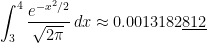





 subintervals provides a better approximation to
  than the normalcdf function.
 Mean Green Math