Engaging students: Inverse Functions

In my capstone class for future secondary math teachers, I ask my students to come up with ideas for engaging their students with different topics in the secondary mathematics curriculum. In other words, the point of the assignment was not to devise a full-blown lesson plan on this topic. Instead, I asked my students to think about three different ways of getting their students interested in the topic in the first place.

I plan to share some of the best of these ideas on this blog (after asking my students’ permission, of course).

This student submission again comes from my former student Allison Myers. Her topic, from Algebra II: inverse functions.

green line

CURRICULUM

How can this topic be used in your students’ future courses in mathematics or science?

Functions are a composition of one or more actions that maps one object onto another (each input maps to one output). Inverse functions are a composition of reverse actions that “undo” the actions of the original function.

Inverse functions have real-world applications, but also students will use this concept in future math classes such as Pre-Calculus, where students will find inverse trigonometric functions. Inverse trigonometric functions have a whole new set of real-world applications, such as finding the angle of elevation of the sun, or anything which models harmonic motion.

Students will also see this concept again in Calculus, where they will differentiate inverse trigonometric functions to solve real-world applications involving rate of angular rotation or the rate of change of angular size.

green lineTECHNOLOGY

How can technology be used to effectively engage students with this topic?

In the past, I taught a lesson where the Explore portion of the lesson utilized dry erase markers and transparency sheets to allow students to discover what happens graphically when computing an inverse (trigonometric) function. My goal was for my students to understand why we compute inverses the way we do. To my horror, my theoretical 15-minute, super insightful Explore became messy, full of problems, and confusing to my students.

While reflecting after the lesson, I began to consider how using technology would have better served my students (in their understanding) and myself (in my goals for the lesson). I found Glencoe’s directions for using the TI-Nspire to compute inverse functions (see image below). Using the TI-Nspire, I would start the lesson with a real-world example and data and have my students complete Step 1. Next, I would explain our need to “undo/reverse” the data, and allow the students to come up with different ways to do so. After that, I would ask the students to make conjectures about possible formulas. Using the TI-Nspire would be less messy and time-consuming (as compared to my experience with markers and transparencies), and would also allow the teacher to be within the context of a real-world problem. I believe if we used this (or similar) technology, combined with the constructivist-style teaching, students would come away with not only a better understanding for computing inverse functions but also their real-world applications.

TIInspireSource: http://glencoe.com/sites/common_assets/mathematics/alg2_2010/other_cal_keystrokes/TI-Nspire/Nspire_423_424_C07L2B_888482.pdf

green lineCULTURE

How has this topic appeared in pop culture (movies, TV, current music, video games, etc.)?

Inverse functions are used every day in real life. For example, when a computer reads a number you type in, it converts the number to binary for internal storage, then it prints the number out again onto the screen that you see – it’s utilizing an inverse function. A basic example involves converting temperature from Fahrenheit to Celsius.

Another example, if one considers music notes on paper to be a function of the sound produced, then the software Sibelius can be considered the inverse function, as it takes a musician’s music and converts it back to music notes.

Am I Going to Die This Year?

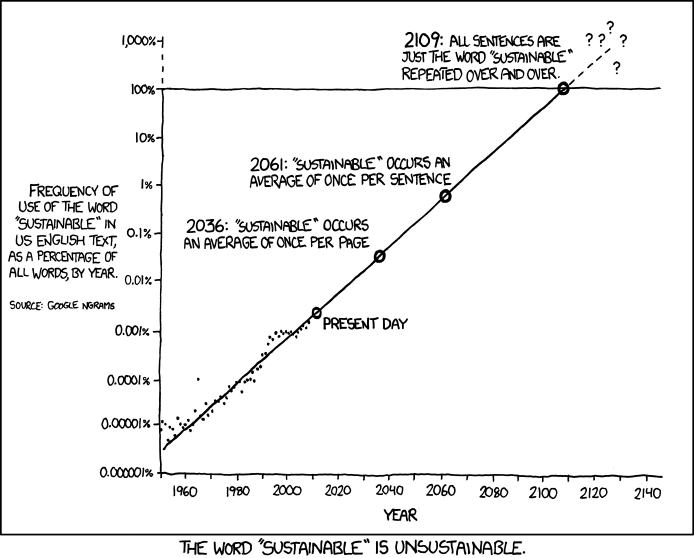
Here’s an unexpected application of exponential growth that I only learned about recently: the Gompertz Law of Human Mortality. It dictates that “your probability of dying in a given year doubles every eight years.”

Here’s the article that I read from NPR: http://www.npr.org/blogs/krulwich/2014/01/08/260463710/am-i-going-to-die-this-year-a-mathematical-puzzle?sc=tw&cc=share.

Engaging students: Pascal’s triangle

In my capstone class for future secondary math teachers, I ask my students to come up with ideas for engaging their students with different topics in the secondary mathematics curriculum. In other words, the point of the assignment was not to devise a full-blown lesson plan on this topic. Instead, I asked my students to think about three different ways of getting their students interested in the topic in the first place.

I plan to share some of the best of these ideas on this blog (after asking my students’ permission, of course).

This student submission comes from my former student Roderick Motes. His topic, from Precalculus: Pascal’s triangle.

green line

History – What are the contributions of various cultures to this topic?

Through doing this project I learned that the history of Pascal’s triangle is actually pretty fascinating, and could be an excellent talking point for students.

Pascal’s Triangle was named after Blaise Pascal, who published the right angled version of the triangle, the binomial theorem, and the proof that n choose k corresponds to the kth element of the nth row of the triangle. But this wasn’t the first time interesting results about the triangle had been published, not even in the west.

The triangle was actually independently developed and worked on as early as the 11’th century in both China and modern day Iran. In China two mathematicians, Chia Hsien and Yang Hui, worked on the triangle and it’s applications to solving polynomials. Hsien used the triangle to aid in solving for cubic roots. Hui built upon the work of Hsien and actually gave us the first visual model of the triangle and used the triangle to aid in solving higher degree roots.

Pascals_triangle_China

Independently Omar Khayyam in Persia (modern Iran) used the triangle and binomial theorem (which was known to Arabic mathematicians at the time) to solve nth roots of polynomials.

In addition the triangle was used before Pascal to solve cubic equations, and in Europe in particular we get to the old controversy of Cardano and Del Ferro of ‘who found the general formula for cubic roots’ because another Italian man by the name of Niccolo Tartaglia claimed to have used the triangle to solve cubics and dervice the formula before Cardano published his formula.

So there were a variety of cultures who all independently recognized the significance of the triangle and used it well before Pascal. Consequently the triangle is called many things in many cultures. In China it is referred to as Yang Hui’s triangle, in Iran it is still called the Khayyam-Pascal triangle. All this goes to show that the history we think we know of mathematics may not be quite so true, and that mathematical understanding is the product of many cultures over many years.

green line

Technology- How can you effectively use technology to engage students on this subject?

There are a variety of technological resources you could use to craft a lesson. In particular I’m fond of the Texas Instruments exploration lessons. The lessons are available for free at education.ti.com and come with a slew of materials and handouts prepared for you. I’ve used the TI Nspire to teach the Law of Sines and the activity went tremendously well.

For Pascal’s Triangle and Binomial Theorem there are equivalent lessons with the TI Nspire and TI 84. The links are included at the end of this. The lessons allow the students to see Pascal’s triangle side by side with the triangle of coefficients which they are generating on the calculator. This could be backed up with having the students physically create the triangles on paper and see that they match up. The lesson then has the students conjecture what they believe the binomial theorem is.

This could be a powerful lesson for engaging learners of various strengths. Kinetic learners will love the physical action of the calculator, visual learners will love seeing the triangles update in real time.

green line

Curriculum- How can this topic be extended to your students future math courses?

Pascal’s triangle has a large relationship to probability and statistics. There are a variety of ways you can tie statistics lessons back to Pascal’s triangle and the binomial theorem. In particular we can examine how we might game a Pachinko machine in order to maximize our winnings.

Pachinko (or Plinko or a variety of other things depending on where you are) is fairly simple in idea.

You have a rectangular grid of pegs in which each row is slightly offset from the row above it. You drop a disc or puck of some kind down and attempt to get it into one of the small bins at the bottom. Sometimes prizes will be attached to certain bins (this is a popular carnival game) and sometimes money will (this is also a popular gambling game.)

The bin in which the puck will land follows a normal distribution based on the starting position. This is unsurprising and can be introduced very easily in a Statistics class when you’re teaching about probability distributions and normal distributions. What is more interesting is that this is very deeply related to Pascal’s Triangle.

Overlaying the triangle on top of the machine yields a triangle which shows the number of possible paths to get to each point. You can use this to make a statistical analysis and actually assign values to the probability of landing in a given spot. Using this knowledge you can game the machine and maximize your odds of getting the giant teddy bear or the fat stack of cash.

This application of Pascal’s triangle and its relationship to elementary combinatorics (which should hearken back to Middle School mathematics in addition to being extendable into Statistics,) is looked at in depth in a paper by Katie Asplund of Iowa State University. I have included this paper below. In addition to this suggestions she also relates a specific activity useful in the exploration where the students look at the various options of n choose k and relate the possibilities back to Pascal’s Triangle. I could not get the link for that specific activity as it requires access to Mathematics Teacher which I was unable to find using the UNT Library Resources.

plinko

References and Other Such Things

http://www.math.iastate.edu/thesisarchive/MSM/AsplundCCSS09.pdf

–          This paper is written by Katie Asplund. In it she explores a variety of patterns and connections between Pascal’s Triangle and various parts of the high school math curriculum. In particular she is interested in seeing how she can relate the patterns to her own high school pre calculus class. I recommend reading this entirely because it is simply illuminating and has quite a few suggestions you could implement.

http://pages.csam.montclair.edu/~kazimir/history.html

–          This website has a quick history of Pascal’s triangle as well as several applications. Using this and Wikipedia I was able to learn about the histories and cultures which led to our modern understanding of the triangle. In particular Omar Khayyam is a very interesting person to talk about if you feel like injecting some history of the Islamic Golden Age and the history of Mathematics after the fall of Rome. Khayyam was a Poet as well as a mathematician, and was one of the first to openly question Euclid’s use of the Parallel Postulate.

http://education.ti.com/calculators/downloads/US/Activities/Detail?id=11139&ref=%2fcalculators%2fdownloads%2fUS%2fActivities%2fSearch%2fKeywords%3fk%3dPascal

–          This is the TI Nspire activity on the Binomial Theorem and Pascal’s Triangle. It’s fairly straightforward but, like many of the TI Activities, it has some nice tricks that it uses the calculator to accomplish.

Graphing a function by plugging in points

I love showing this engaging example to my students to emphasize the importance of the various curve-sketching techniques that are taught in Precalculus and Calculus.

Problem. Sketch the graph of f(x) = x^5 - 5x^3 + 4x + 6.

“Solution”. Let’s plug in some convenient points, graph the points, and then connect the dots to produce the graph.

  • f(-2) = (-32) - 5(-8) + 4(-2) + 6 = 6
  • f(-1) = (-1) - 5(-1) + 4(-1) + 6 = 6
  • f(0) = (0) - 5(0) + 4(0) + 6 = 6
  • f(1) = (1) - 5(1) + 4(1) + 6 = 6
  • f(2) = (32) - 5(8) + 4(2) + 6 = 6

That’s five points (shown in red), and surely that’s good enough for drawing the picture. Therefore, we can obtain the graph by connecting the dots (shown in blue). So we conclude the graph is as follows.

linearquinticgreen line

Of course, the above picture is not the graph of f(x) = x^5 - 5x^3 + 4x + 6, even though the five points in red are correct. I love using this example to illustrate to students that there’s a lot more to sketching a curve accurately than finding a few points and then connecting the dots.

Engaging students: Powers and exponents

In my capstone class for future secondary math teachers, I ask my students to come up with ideas for engaging their students with different topics in the secondary mathematics curriculum. In other words, the point of the assignment was not to devise a full-blown lesson plan on this topic. Instead, I asked my students to think about three different ways of getting their students interested in the topic in the first place.

I plan to share some of the best of these ideas on this blog (after asking my students’ permission, of course).

This student submission comes from my former student Kayla (Koenig) Lambert. Her topic, from Pre-Algebra: powers and exponents.

green line

A) Applications: What interesting word problems using this topic can your students do now?


I chose the problem below from http://www.purplemath.com because I think that solving a problem that deals with disease would be interesting to my students. People have to deal with sickness and disease everyday and I think that solving a real world problem would entice the students into wanting to learn more.

A biologist is researching a newly-discovered species of bacteria. At time t = 0 hours, he puts one hundred bacteria into what he has determined to be a favorable growth medium. Six hours later, he measures 450 bacteria. Assuming exponential growth, what is the growth constant “k” for the bacteria? (Round k to two decimal places.)

For this exercise, the units on time t will be hours, because the growth is being measured in terms of hours. The beginning amount P is the amount at time t = 0, so, for this problem, P = 100. The ending amount is A = 450 at t = 6. The only variable I don’t have a value for is the growth constant k, which also happens to be what I’m looking for. So I’ll plug in all the known values, and then solve for the growth constant:

A = Pe^{kt}

450 = 100 e^{6k}

4.5 = e^{6k}

\ln(4.5) = 6k

k = \displaystyle \frac{\ln(4.5)}{6} = 0.250679566129\dots

The growth constant is 0.25/hour.

I think this kind of problem would be beneficial to students because it would help them understand how bacteria grows and how easily they can get catch something and get sick.


green line

C) Culture: How has this topic appeared in pop culture?

Exponents and powers are everywhere around us without the students knowledge. Many movies and video games have ideas related to powers and exponents. Take, for example, the movie Contagion that was released in September 2011. This movie is about “the threat posed by a deadly disease and an international team of doctors contracted by the CDC to deal with the outbreak” (http://www.imdb.com/title/tt1598778). In this movie, there is a scene where the doctors are using mathematical equations with exponents to find out how fast the disease spreads and how much time they have left to save the majority of the population. There are many movies like this that involve powers and exponents, Contagion is just one example. There are also popular video games that deal with the spread of disease. For example, in the video game Call Of Duty: World At War the player is a soldier in WWII and his mission is to kill zombies, and zombie populations grow exponentially. Now, my brother plays this game and I know for a fact that he doesn’t think about the mathematics behind it, but I think talking about pop culture while teaching would really bring some excitement to the classroom and get the students thinking.


green line

D) History: Who were some of the people who contributed to the discovery of this topic?

Exponents and powers have been among humans since the time of the Babylonians in Egypt. “Babylonians already knew the solution to quadratic equations and equations of the second degree with two unknowns and could also handle equations to the third and fourth degree” (Mathematics History). The Egyptians also had a good idea about powers and exponents around 3400 BC. They used their “hieroglyphic numeral system” which was based on the scale of 10. When using their system, the Egyptians expressed any number using their symbols, with each symbol being “repeated the required number of times” (Mathematics History). However, the first actual recorded use of powers and exponents was in a book called “Artihmetica Integra” written by English author and Mathematician Michael Stifel in 1544 (History of Exponents). In the 14th century Nicole Oresme used “numbers to indicate powering”(Jeff Miller Pages). Also, James Hume used Roman Numerals as exponents in the book L’Algebre de Viete d’vne Methode Novelle in 1636. Exponents were used in modern notation be Rene Descartes in 1637. Also, negative integers as exponents were “first used in modern notation” by Issac Newton in 1676 (Jeff Miller Pages).


Works Cited

Ayers, Chuck. “The History of Exponents | eHow.com.” eHow | How to Videos, Articles & More – Discover the expert in you. | eHow.com. N.p., n.d. Web. 25 Jan. 2012. http://www.ehow.com/about_5134780_history-exponents.html.

“Contagion (2011) – IMDb.” The Internet Movie Database (IMDb). N.p., n.d. Web. 25 Jan. 2012. http://www.imdb.com/title/tt1598778/.

“Exponential Word Problems.” Purplemath. N.p., n.d. Web. 25 Jan. 2012. http://www.purplemath.com/modules/expoprob2.htm.

“Mathematics History.” ThinkQuest : Library. N.p., n.d. Web. 25 Jan. 2012. http://library.thinkquest.org/22584/.

juxtaposition.. “Earliest Uses of Symbols of Operation.” Jeff Miller Pages. N.p., n.d. Web. 25 Jan. 2012. http://jeff560.tripod.com/operation.html.