My Favorite One-Liners: Part 69

In this series, I’m compiling some of the quips and one-liners that I’ll use with my students to hopefully make my lessons more memorable for them.

This story, that I’ll share with my Precalculus students, comes from Fall 1996, my first semester as a college professor. I was teaching a Precalculus class, and the topic was vectors. I forget the exact problem (believe me, I wish I could remember it), but I was going over the solution of a problem that required finding \tan^{-1}(7). I told the class that I had worked this out ahead of time, and that the approximate answer was 82^o. Then I used that angle for whatever I needed it for and continued until obtaining the eventual solution.

(By the way, I now realize that I was hardly following best practices by computing that angle ahead of time. Knowing what I know now, I should have brought a calculator to class and computed it on the spot. But, as a young professor, I was primarily concerned with getting the answer right, and I was petrified of making a mistake that my students could repeat.)

After solving the problem, I paused to ask for questions. One student asked a good question, and then another.

Then a third student asked, “How did you know that \tan^{-1}(7) was 82^o?

Suppressing a smile, I answered, “Easy; I had that one memorized.”

The class immediately erupted… some with laughter, some with disbelief. (I had a terrific rapport with those students that semester; part of the daily atmosphere was the give-and-take with any number of exuberant students.) One guy in the front row immediately challenged me: “Oh yeah? Then what’s \tan^{-1}(9)?

I started to stammer, “Uh, um…”

“Aha!” they said. “He’s faking it.” They start pulling out their calculators.

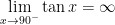
Then I thought as fast as I could. Then I realized that I knew that \tan 82^o \approx 7, thanks to my calculation prior to class. I also knew that \displaystyle \lim_{x \to 90^-} \tan x = \infty since the graph of y = \tan x has a vertical asymptote at x = \pi/2 = 90^o. So the solution to \tan x = 9 had to be somewhere between 82^o and 90^o.

So I took a total guess. “84^o,” I said, faking complete and utter confidence.

Wouldn’t you know it, I was right. (The answer is about 83.66^o.)

In stunned disbelief, the guy who asked the question asked, “How did you do that?”

I was reeling in shock that I guessed correctly. But I put on my best poker face and answered, “I told you, I had it memorized.” And then I continued with the next example. For the rest of the semester, my students really thought I had it memorized.

To this day, this is my favorite stunt that I ever pulled off in front of my students.

My Favorite One-Liners: Part 68

In this series, I’m compiling some of the quips and one-liners that I’ll use with my students to hopefully make my lessons more memorable for them.

When discussing the Laws of Logarithms, I’ll make a big deal of the fact that one law converts a multiplication problem into a simpler addition problem, while another law converts exponentiation into a simpler multiplication problem.

After a few practice problems — and about 3 minutes before the end of class — I’ll inform my class that I’m about to tell the world’s worst math joke. Here it is:

After the flood, the ark landed, and Noah and the animals got out. And God said to Noah, “Go forth, be fruitful, and multiply.” So they disembarked.

Some time later, Noah went walking around and saw the two dogs with their baby puppies and the two cats with their baby kittens. However, he also came across two unhappy, frustrated, and disgruntled snakes. The snakes said to Noah, “We’re having some problems here; would you mind knocking down a tree for us?”

Noah says, “OK,” knocks down a tree, and goes off to continue his inspections.

Some time later, Noah returns, and sure enough, the two snakes are surrounding by baby snakes. Noah asked, “What happened?”

The snakes replied, “Well, you see, we’re adders. We need logs to multiply.”

After the laughter and groans subside, I then dismiss my class for the day:

Go forth, and multiply (pointing to the door of the classroom). For most of you, don’t be fruitful yet, but multiply. You’re dismissed.

My Favorite One-Liners: Part 67

In this series, I’m compiling some of the quips and one-liners that I’ll use with my students to hopefully make my lessons more memorable for them.

Here are a couple of similar problems that arise in Precalculus:

  1. Convert the point (5,-5) from Cartesian coordinates into polar coordinates.
  2. Convert the complex number 5 - 5i into trigonometric form.

For both problems, a point is identified that is 5 steps to the right of the origin and then 5 steps below the x-axis (or real axis). To make this more kinesthetic, I’ll actually walk 5 paces in front of the classroom, turn right face, and then walk 5 more paces to end up at the point.

I then ask my class, “Is there a faster way to get to this point?” Naturally, they answer: Just walk straight to the point. After some work with the trigonometry, we’ll establish that

  1. (5,-5) in Cartesian coordinates is equivalent to (5\sqrt{2}, -\pi/4) in polar coordinates, or
  2. $5-5i$ can be rewritten as 5\sqrt{2} [ \cos(-\pi/4) + i \sin (-\pi/4)] in trigonometric form.

Once this is obtained, I’ll walk it out: I’ll start at the origin, turn clockwise by 45 degrees, and then take 5\sqrt{2} \approx 7 steps to end up at the same point as before.

Continuing the lesson, I’ll ask if the numbers 5\sqrt{2} and -\pi/4, or if some other angle and/or distance could have been chosen. Someone will usually suggest a different angle, like 7\pi/4 or 15\pi/4. I’ll demonstrate these by turning 315 degrees counterclockwise and walking 7 steps and then turning 675 degrees and walking 7 steps (getting myself somewhat dizzy in the process).

Finally, I’ll suggest turning only 135 degrees clockwise and then taking 7 steps backwards. Naturally, when I do this, I’ll do a poor man’s version of the moonwalk:

For more information, please see my series on complex numbers.

My Favorite One-Liners: Part 63

In this series, I’m compiling some of the quips and one-liners that I’ll use with my students to hopefully make my lessons more memorable for them.

I’ll use today’s one-liner to explain why mathematicians settled on a particular convention that could have been chosen differently. For example, let’s consider the definition of  y = \sin^{-1} x by first looking at the graph of f(x) = \sin x.

sine1

Of course, we can’t find an inverse for this function; colloquially, the graph of f fails the horizontal line test. More precisely, there exist two numbers x_1 and x_2 so that x_1 \ne x_2 but f(x_1) = f(x_2). Indeed, there are infinitely many such pairs.

So how will we find the inverse of f? Well, we can’t. But we can do something almost as good: we can define a new function g that’s going look an awful lot like f. We will restrict the domain of this new function g so that g satisfies the horizontal line test.

For the sine function, there are plenty of good options from which to choose. Indeed, here are four legitimate options just using the two periods of the sine function shown above. The fourth option is unorthodox, but it nevertheless satisfies the horizontal line test (as long as we’re careful with \pm 2\pi.

sine2So which of these options should we choose? Historically, mathematicians have settled for the interval [-\pi/2, \pi/2].

So, I’ll ask my students, why have mathematicians chosen this interval? That I can answer with one word: tradition.

For further reading, see my series on inverse functions.


My Favorite One-Liners: Part 59

In this series, I’m compiling some of the quips and one-liners that I’ll use with my students to hopefully make my lessons more memorable for them.

Often I’ll cover a topic in class that students really should have learned in a previous class but just didn’t. For example, in my experience, a significant fraction of my senior math majors have significant gaps in their backgrounds from Precalculus:

  • About a third have no memory of ever learning the Rational Root Test.
  • About a third have no memory of ever learning synthetic division.
  • About half have no memory of ever learning Descartes’ Rule of Signs.
  • Almost none have learned the Conjugate Root Theorem.

Often, these students will feel somewhat crestfallen about these gaps in their background knowledge… they’re about to graduate from college with a degree in mathematics and are now discovering that they’re missing some pretty basic things that they really should have learned in high school. And I don’t want them to feel crestfallen. Certainly, these gaps need to be addressed, but I don’t want them to feel discouraged.

Hence one of my favorite motivational one-liners:

It’s not your fault if you don’t know what you’ve never been taught.

I think this strikes the appropriate balance between acknowledging that there’s a gap that needs to be addressed and assuring the students that I don’t think they’re stupid for having this gap.


My Favorite One-Liners: Part 56

In this series, I’m compiling some of the quips and one-liners that I’ll use with my students to hopefully make my lessons more memorable for them.

This really awful pun comes from a 1980s special by the comedian Gallagher; I would share a video clip here, but I couldn’t find it. I’ll tell this joke the first time that the Greek letters \alpha, \beta, \gamma, or \delta appears in a course. For the discussion below, let’s say that \alpha appears for the first time.

Where does the symbol \alpha come from?

[Students answer: “The Greek alphabet.”]

Good. Now, where did the Greeks get it from?

[Students sit in silence.]

The answer is, ancient cavemen. The sounds in the Greek alphabet correspond to the first sounds that the caveman said when he first stepped out the cave, so you can tell a lot about human psychology based on the Greek alphabet.

The caveman stepped out of the cave, saw a nice bright, sunny day, and said, “Ayyyyy!”

[Students groan.]

So, “Ahhh.” What’s the second sound?

[Students: “buh” or “bee”]

Good, the second sound is “buh.” What’s the third sound?

[Students: “guh” or “cee”]

Don’t forget, it’s the Greek alphabet. “Guh.” What’s the fourth sound?

[Students: “duh”]

Good. Now let’s put these all together to see what the caveman was saying. “Ah buh guh day.”

“Have a good day!”

[Students laugh and/or groan deeply.]

One year, when I told this story, I had a student in the front row who was carefully taking notes as I told this story; she felt very silly when I finally reached the punch line.

My Favorite One-Liners: Part 54

In this series, I’m compiling some of the quips and one-liners that I’ll use with my students to hopefully make my lessons more memorable for them.

The complex plane is typically used to visually represent complex numbers. (There’s also the Riemann sphere, but I won’t go into that here.) The complex plane looks just like an ordinary Cartesian plane, except the “x-axis” becomes the real axis and the “y-axis” becomes the imaginary axis. It makes sense that this visualization has two dimensions since there are two independent components of complex numbers. For real numbers, only a one-dimensional visualization is needed: the number line that (hopefully) has been hammered into my students’ brains ever since elementary school.

While I’m on the topic, it’s unfortunate that “complex numbers” are called complex, as this often has the connotation of difficult. However, that’s not why our ancestors chose the word complex was chosen. Even today, there is a second meaning of the word: a group of associated buildings in close proximity to each other is often called an “apartment complex” or an “office complex.” This is the real meaning of “complex numbers,” since the real and imaginary parts are joined to make a new number.

When I teach my students about complex number, I tell the following true story of when my daughter was just a baby, and I was extremely sleep-deprived and extremely desperate for ways to get her to sleep at night.

I tried counting monotonously, moving my finger to the right on a number line with each number:

1, 2, 3, 4, ...

That didn’t work, so I tried counting monotonously again, but this time moving my finger to the left on a number line with each number:

-1, -2, -3, -4, ...

That didn’t work either, so I tried counting monotonously once more, this time moving my finger up the imaginary axis:

i, 2i, 3i, 4i...

For the record, that didn’t work either. But it gave a great story to tell my students.


My Favorite One-Liners: Part 48

In this series, I’m compiling some of the quips and one-liners that I’ll use with my students to hopefully make my lessons more memorable for them.

One of the techniques commonly taught in Algebra II or Precalculus is the Rational Root Test, which is a way of making a list of candidates of rational numbers that might (emphasis, might) be roots of the polynomial. This is a commonly taught method for finding the roots of polynomials whose degree is higher than 3. (Other techniques that are typically taught to students are Descartes’ Rule of Signs and (less commonly) the Upper and Lower Bound Rules.) For example, for the polynomial f(x) = 2x^3 + 5 x^2 - 2x - 15.

  • The factors of the constant term are \pm 1, \pm 3, \pm 5 and \pm 15, and so the numerator of any rational root must be one of these numbers.
  • The factors of the leading coefficient are \pm 1 and \pm 2, and so the denominator of any rational root must be one of these numbers.
  • In conclusion, if there’s a rational root, then it’s \pm 1, \pm 3, \pm 5, \pm 15, \pm \frac{1}{2}, \pm \frac{3}{2}, \pm \frac{5}{2} and \pm \frac{15}{2}. In other words, we have a list of 16 possible rational roots. Not all of them will be roots, of course, since the cubic polynomial only has at most three distinct roots. Also, there’s no guarantee that any of them will be roots. The only way to find out if any of them work is by testing them, usually using synthetic division.

So, after a practice problem or two, I’ll ask my students,

What guarantee do you have that at least one of the possible rational roots will actually work?

After letting them think for a few seconds, I give them the answer:

The benevolence of your instructor.

In other words, there is no guarantee that any of the possible rational roots will actually work, except that the instructor (or author of the textbook) has rigged things so that it happens.

My Favorite One-Liners: Part 43

In this series, I’m compiling some of the quips and one-liners that I’ll use with my students to hopefully make my lessons more memorable for them. q Q

Years ago, my first class of students decided to call me “Dr. Q” instead of “Dr. Quintanilla,” and the name has stuck ever since. And I’ll occasionally use this to my advantage when choosing names of variables. For example, here’s a typical proof by induction involving divisibility.

Theorem: If n \ge 1 is a positive integer, then 5^n - 1 is a multiple of 4.

Proof. By induction on n.

n = 1: 5^1 - 1 = 4, which is clearly a multiple of 4.

n: Assume that 5^n - 1 is a multiple of 4.

At this point in the calculation, I ask how I can write this statement as an equation. Eventually, somebody will volunteer that if 5^n-1 is a multiple of 4, then 5^n-1 is equal to 4 times something. At which point, I’ll volunteer:

Yes, so let’s name that something with a variable. Naturally, we should choose something important, something regal, something majestic… so let’s choose the letter q. (Groans and laughter.) It’s good to be the king.

So the proof continues:

n: Assume that 5^n - 1 = 4q, where q is an integer.

n+1. We wish to show that 5^{n+1} - 1 is also a multiple of 4.

At this point, I’ll ask my class how we should write this. Naturally, I give them no choice in the matter:

We wish to show that 5^{n+1} - 1 = 4Q, where Q is some (possibly different) integer.

Then we continue the proof:

5^{n+1} - 1 = 5^n 5^1 - 1

= 5 \times 5^n - 1

= 5 \times (4q + 1) - 1 by the induction hypothesis

= 20q + 5 - 1

= 20q + 4

= 4(5q + 1).

So if we let Q = 5q +1, then 5^{n+1} - 1 = 4Q, where Q is an integer because q is also an integer.

QED

green line

On the flip side of braggadocio, the formula for the binomial distribution is

P(X = k) = \displaystyle {n \choose k} p^k q^{n-k},

where X is the number of successes in n independent and identically distributed trials, where p represents the probability of success on any one trial, and (to my shame) q is the probability of failure.


My Favorite One-Liners: Part 42

In this series, I’m compiling some of the quips and one-liners that I’ll use with my students to hopefully make my lessons more memorable for them.

The function f(x) = a^x typically exhibits exponential growth (if a > 1) or exponential decay (if a < 1). The one exception is if a = 1, when the function is merely a constant. Which often leads to my favorite blooper from Star Trek. The crew is trying to find a stowaway, and they get the bright idea of turning off all the sound on the ship and then turning up the sound so that the stowaway’s heartbeat can be heard. After all, Captain Kirk boasts, the Enterprise has the ability to amplify sound by 1 to the fourth power.