
Category: Humor
Depressing mathematical metaphors for Valentine’s Day
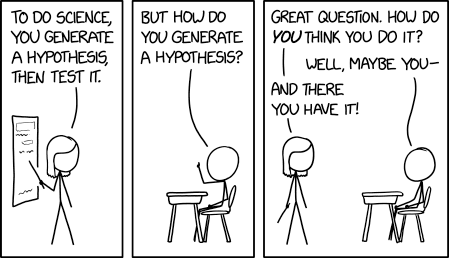
Constructing the Null and Alternate Hypotheses
Fun with units
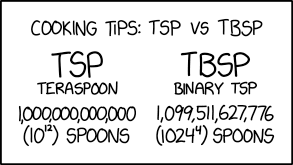
Source: https://xkcd.com/2526/
Bayes’ Theorem
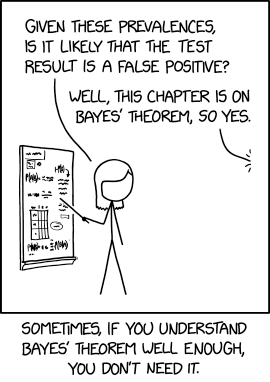
Source: https://xkcd.com/2545/
Fun with statistical significance
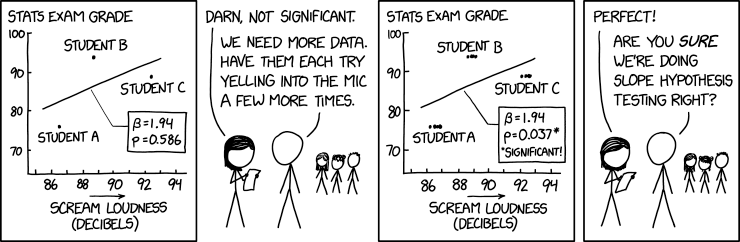
Source: https://xkcd.com/2533/
Useful geometric formulas
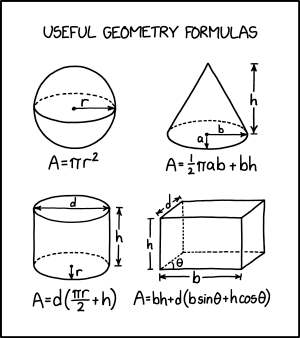
Geometry textbooks always try to trick you by adding decorative stripes and dotted lines.
If you’re having trouble getting the formulas behind the joke, please see https://www.explainxkcd.com/wiki/index.php/2509:_Useful_Geometry_Formulas.
Speed

My Favorite One-Liners: Part 122
Once in my probability class, a student asked a reasonable question — could I intuitively explain the difference between “uncorrelated” and “independent”? This is a very subtle question, as there are non-intuitive examples of random variables that are uncorrelated but are nevertheless dependent. For example, if 


and hence 
However, in most practical examples that come up in real life, “uncorrelated” and “independent” are synonymous, including the important special case of a bivariate normal distribution.
This was my expert answer to my student: it’s like the difference between “mostly dead” and “all dead.”
My Favorite One-Liners: Part 121
I’ll use this one-liner when I ask my students to do something that’s a little conventional but nevertheless within their grasp. For example, consider the following calculation using a half-angle trigonometric identity:
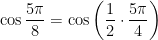
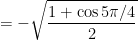
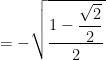
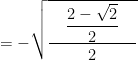
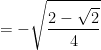

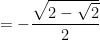
That’s certainly a very complicated calculation, with plenty of predictable places where a student might make an inadvertent mistake.
In my experience, one somewhat surprising place that can trip up students seeing such a calculation for the first time is the very first step: changing 

So I try to make this explicitly clear to my students. A lot of times, we want to make a complicated expression simple. Sometimes, we have to go the other direction and make a simple expression more complicated. Students should be able to do both. And, to try to make this memorable for my students, I use my one-liner:
“In the words of the great philosopher, you gotta know when to hold ’em and know when to fold ’em.”
Yes, that’s an old song reference. My experience is that most students have heard the line before but unfortunately can’t identify the singer: the late, great Kenny Rogers.
 Mean Green Math