
From The Guardian: http://www.theguardian.com/science/alexs-adventures-in-numberland/gallery/2014/may/14/beauty-visions-mathematics-pictures?CMP=fb_gu
How our 1,000-year-old math curriculum cheats America’s kids
A colleague recently pointed out an op-ed piece written by Prof. Edward Frenkel, a mathematics professor at the University of California. From his concluding paragraphs:
Of course, we still need to teach students multiplication tables, fractions and Euclidean geometry. But what if we spent just 20% of class time opening students’ eyes to the power and exquisite harmony of modern math? What if we showed them how these fascinating concepts apply to the real world, how the abstract meets the concrete? This would feed their natural curiosity, motivate them to study more and inspire them to engage math beyond the basic requirements — surely a more efficient way to spend class time than mindless memorization in preparation for standardized tests.
In my experience, kids are ready for this. It’s the adults that are hesitant. It’s not their fault — our math education is broken. But we have to take charge and finally break this vicious circle. With help from professional mathematicians, all of us should make an effort to learn something about the true masterpieces of mathematics, to be able to see big-picture math, the way we see art, literature and other sciences. We owe this to the next generations.
Here’s the whole editorial: http://www.latimes.com/opinion/op-ed/la-oe-adv-frenkel-why-study-math-20140302-story.html
I also should point out the thoughtful critiques of this article from mathematics educators that were published by the Los Angeles Times: http://www.latimes.com/opinion/op-ed/la-le-0308-saturday-math-teaching-20140308-story.html
Every math major should take a public-speaking course
Harvey Mudd College requires their math majors to take a public-speaking course specifically intended for math majors. From http://horizonsaftermath.blogspot.com/2014/04/every-math-major-should-take-public.html:
No matter what we all do after college . . . [we] will have to speak to people. Every one of us will have a limited amount of time that we can convince someone else to see our point of view.
I recommend reading the whole article.
Collaborative Mathematics: Challenge 10, Part 3
Another healthy challenge using all 10 digits:
Collaborative Mathematics: Challenge 10, Part 2
I’m late in sharing this, but this is a good challenge.
Collaborative Mathematics: Challenge 10, Part 1
I’m a little late in sharing this, but this is a nice puzzle:
Engaging students: Defining angles and measures of angles
In my capstone class for future secondary math teachers, I ask my students to come up with ideas for engaging their students with different topics in the secondary mathematics curriculum. In other words, the point of the assignment was not to devise a full-blown lesson plan on this topic. Instead, I asked my students to think about three different ways of getting their students interested in the topic in the first place.
I plan to share some of the best of these ideas on this blog (after asking my students’ permission, of course).
This student submission again comes from my former student Katie Pelzel. Her topic, from Geometry: defining angles and measures of angles.

C1).How has this topic appeared in pop culture?
Video games are a huge deal in pop culture today. Not only kids play them, teenagers and adults frequently play video games. Angles show up in video games whether we see them or not. They are there. For example, in the game MLB 2K10 they are given three cameras – pitcher, pitcher 2 and pitcher 3. The pitcher view is a higher- angle shot that gets more of the mound and base paths into the frame so that the pitcher and the strike zone is smaller than in the pitcher 3 view. The pitcher 3 is a lower angle which is zoomed in more. The view from pitcher 2 shows what is between the pitcher and pitcher 3. The steeper the positions or angles will help the game be easier to see. Most “gamers” would not think about how these actual angles are used in the mathematical world. Realistically these views are placed into angles so that the game can appear real to the “gamers” playing the game. Angles are used to help make any game look better. Similarly, angles are also used in movies and television to help improve the views that people see when watching them. They take special angles so that the view is better. They angle the camera to acute, obtuse and right angles so that the view is not just point blank range. Also, they measure out the angles so that they can make note of the correct angle that gives them the greatest view. They use the angles to emphasize on important views of the show to have a more dramatic effect.
C2). How has this topic appeared in high culture?
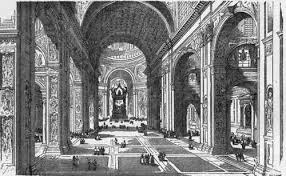
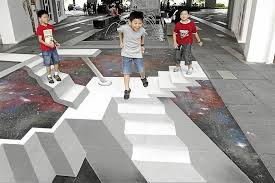
Angles are used in high culture quite regularly. The Greeks and Romans used angles to create beautiful architecture. For example, they measured out angles to make statues, buildings and coliseums. By creating these angles in their work, the Greeks and Romans brought about more character and life to the architecture. Learning how to use angles require a familiarity with basic math concepts and how to put them together when creating a building or bridge. Also, these angles can be used to help make buildings and bridges safer. In situations where there are natural disasters, angles can help keep the buildings and bridges from collapsing. Also, without the usage of angles architects and engineers would not be able to have the correct height of a ceiling or the correct angle of the road from a bridge. Angles are very important when it comes to building things. Angles are also used in art. Angles are used to give paintings/drawings the illusion of the portrait being 3-dimensional. Angles are drawn or created to make the pictures or objects appear 3-D. Artists have to drawn and measure out accurate angles in order to portray the ultimate 3-D art.
D2). How was the topic adopted by the mathematical community?
Angles were not invented but rather discovered. The term angle comes from the Latin word angulus, which means corner. Archimedes of Syracuse, a Greek mathematician, is credited with the discovery of angles. This is how the topic was adopted by the mathematical community. Euclid came next, he defined a “plane angle as the inclination to each other, in a plane, of two lines which meet each other, and do not like straight with respect to each other.” The first concept was used by Eudemus. He noted an angle as a deviation from a straight line. The second concept was used by Carpus of Antioch, he regarded an angle as the interval or space between intersecting lines. Finally, Euclid adopted the third concept, which is where we get the definitions of right, acute, and obtuse angles.
References
https://www.newworldencyclopedia.org/entry/Angle_(mathematics)
Engaging students: Proving that the angles of a convex n-gon sum to 180(n-2) degrees
In my capstone class for future secondary math teachers, I ask my students to come up with ideas for engaging their students with different topics in the secondary mathematics curriculum. In other words, the point of the assignment was not to devise a full-blown lesson plan on this topic. Instead, I asked my students to think about three different ways of getting their students interested in the topic in the first place.
I plan to share some of the best of these ideas on this blog (after asking my students’ permission, of course).
This student submission again comes from my former student Jessica Trevizo. Her topic, from Geometry: Proving that the angles of a convex 

E.1 How can technology be used to effectively engage students with this topic?
This website allows the students to see that any polygon, whether regular, concave, or convex, the sum of the interior angles will not change. The students are able to drag any angle of their choice and either enlarge, shrink, or rotate the figure. As the student is able to change the figure, the angles automatically change and are shown on the right hand side of the screen. All of the angles are color coordinated so students are able to easily observe which angle measure goes with the corresponding angle they are moving. Also, this activity allows the students to explore with six different polygons which include the triangle, quadrilateral, pentagon, hexagon, heptagon, and octagon. The triangle and the quadrilateral include an animated clip which consists of a visual proof for the value of the angle sum. It is a simple proof that students will be able to see and understand at their level.
http://illuminations.nctm.org/Activity.aspx?id=3546
A1. How could you as a teacher create an activity or project that involves your topic?
Using geoboards will help the students derive the sum of interior angles formula on their own. For the activity every student will need a geoboard and a couple of rubber bands. The students will be asked to create a specific shape on the geoboard using the rubber bands. Once every student has completed the figure they will be asked to dissect the figure into triangles. Whenever the teacher gives the students the task he/she needs to make sure to state the rules before they begin. The rules are that the rubber bands cannot cross each other, and the rubber bands must start and end at a vertex of the figure. The students will need to fill out the worksheet provided in the link below. The worksheet is arranged to help them see the pattern after they do a couple of examples with different shapes. The goal is to try to help the student realize that the number of triangles that can be created in a certain figure will be (n-2), n being the number of sides. A higher level question for the students could be, “Why are you only able to create (n-2) triangles?”
http://www.scribd.com/doc/60173215/2-4-Finding-the-sum-of-interior-angles-of-polygons-Worksheet

D1. What interesting things can you say about the people who contributed to the discovery and/or the development of this topic?
Euclid was a famous Greek mathematician that enjoyed the beauty of mathematics. He created a book called Euclid’s Elements where he gathered the knowledge of other famous mathematicians about the logical development of geometry. Pythagoras, Aristotle, Eudoxus, and Thales were some of the other men that influenced his work. Euclid’s Elements is compressed of 13 different volumes that are filled with geometrical theories. He proved the theories by using definitions as well as the axioms used in math.
Euclid was known as the “Father of Geometry” because he discovered geometry and gave it its value. The book contains over 467 propositions and they all include their proof. One of his propositions is about interior and exterior angles which is relevant to the sum of the interior angles topic. Proposition 32 states that an exterior angle is equal to the sum of the two opposite interior angles of a triangle, as well as the three interior angles of a triangle add up to two right angles. Since Euclid proves that a triangle is equal to 180ᵒ, it proves why we need to multiply (n-2)*180.
Engaging students: Introducting translation, rotation, and reflection of figures
In my capstone class for future secondary math teachers, I ask my students to come up with ideas for engaging their students with different topics in the secondary mathematics curriculum. In other words, the point of the assignment was not to devise a full-blown lesson plan on this topic. Instead, I asked my students to think about three different ways of getting their students interested in the topic in the first place.
I plan to share some of the best of these ideas on this blog (after asking my students’ permission, of course).
This student submission again comes from my former student Isis Flores. Her topic, from Geometry: introducing translation, rotation, and reflection of figures.
B2: How does this topic extend what your students should have learned in previous courses?
In order for students to be able to be successful understanding, performing, and identifying translations, rotations and reflections there are a few things that they must have a grasp on from previous classes. Included in these topics is understanding the Cartesian plane and the different relationships between each quadrant. Knowledge of the plane will be extended when students began to work with different degrees of rotations around the plane. Students should also be able to perform several different tasks on the plane such as, plotting points and lines. Being able to perform such tasks will ease the transition of now working with more complex shapes on the plane. Since the topic deals with transformations of figures students must also have an understanding of the basic geometric figures and their different characteristics and classifications. Having a base knowledge of geometric shapes will aid the students when comparing different types of transformations. In previous courses students should also have acquired knowledge of the basic mathematical operations, (addition, subtraction, multiplication, division), which will enable them to perform specific dictated transformations better. The concept of basic mathematical operations will be extended to students as they explore how these operations may play out on a coordinate plane with geometric figures.
C2. How has this topic appeared in high culture (art, classical music, theatre, etc.)?
In any classroom there is always a variety of students with a variety of interests. One of these interests may include art, which can lend itself quite easily to the exploration of different transformations. A specific type of art which uses translations, rotations and reflections is called Geometric Abstraction. Geometric Abstraction became widely popular in the early 20th century making it an even closer connection for students. The art form uses different types of geometric shapes to create abstract and quite modern looking pieces of work. The fact that the art form is quite new compared to other forms of art does not prevent pieces from being high end items, and the monetary aspect may be another way to engage students. Showing students different pieces of art which were composed using geometric transformations and also showing how highly priced they are, is a great way to show the relevancy and demand for the topic.



A2. How could you as a teacher create an activity or project that involves your topic?
As a teacher at times it is difficult to get students motivated and excited about a specific topic. A great way to give students motivation towards an activity is to give them a bit of autonomy. For translations, rotations and reflections a project that students may perform may be their own art work which would display their knowledge of the content. To even personalize the project even more students may be ask to include an object which is personal to them, for example if a student play soccer then a soccer ball would be an appropriate object for their art work. Students may be asked to also provide directions on their art work so that a classmate may replicate it. Perhaps to take a step further students may analyze each other’s art pieces and try to figure out what order of transformations created the finished piece. For students who may not feel as artistically inclined, or even as another class project, the option of going and finding a real life depiction of transformations may be offered. Students should provide evidence of their findings with an image. The task can be furthered challenged by asking students to find something in their school which depicts transformations. The first project will require students to show their proficiency in performing the transformation, while the second will call on them to show their understanding of what each transformation looks like.
References:
http://www.artspace.com/assume_vivid_astro_focus/starburst
http://www.artspace.com/magazine/art_101/art_101_geometric_abstraction
Vans
Whenever I see this logo, I feel compelled to find the answer by squaring.
 (Shamelessly stolen from a friend.)

