I enjoyed reading the blogpost What Level of Teaching Is Right for Me? from Math With Bad Drawings, with thoughts on the relative importance of content knowledge and pedagogy at different educational levels.
I enjoyed reading the blogpost What Level of Teaching Is Right for Me? from Math With Bad Drawings, with thoughts on the relative importance of content knowledge and pedagogy at different educational levels.
I love this quote from Math With Bad Drawings about why students should learn math:
In every walk of life, humans need to reason. So of course, they can learn these intellectual skills in other places. You don’t need math. But gosh, does math make it easier!
You can learn to taxonomize in biology, by considering the classification of organisms. But your taxonomies will never be perfect, because life doesn’t fit into neat little boxes. (I’m looking at you, protists.)
Life doesn’t… but math does.
Or you can learn to dissect arguments in civics. But emotions will flare. It’ll be tough to agree on premises. And even if you do, words like “justice,” “freedom,” and “common good” are subject to fuzzy interpretations and subtle misunderstandings. All words are like that: a little vague, tricky to pin down.
Except in math.
Logic shows up everywhere. But in math, it’s the whole game. Math isolates the operations of logic and reason so that we can master them.
In short: math is the playground of reason.
I recommend the entire article: https://mathwithbaddrawings.com/2016/06/08/a-quadratic-of-solace-or-maybe-math-class-has-a-purpose-question-mark/
Textbooks have included the occasional awful problem ever since Pebbles Flintstone and Bamm-Bamm Rubble chiseled their homework on slate tablets while attending Bedrock Elementary. But even with the understanding that there have been children have been doing awful homework problems since the dawn of time (and long before the advent of the Common Core), this one is a doozy.
While the ball is on the 20-yard line, a defensive end is suddenly cursed so that he commits a penalty every down that causes the following:
a. The ball is moved half the distance to the goal line, and
b. The down is replayed.Show that the ball will eventually travel the entire 20-yard distance to the goal.
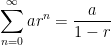
Sigh. The textbook expects students to use the formula for an infinite geometric series
with 

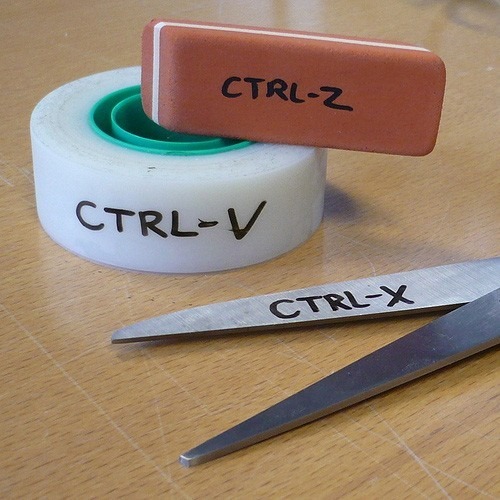
Here’s the new T-shirt for the University of North Texas Math Club:

If you can’t read the equation, it’s

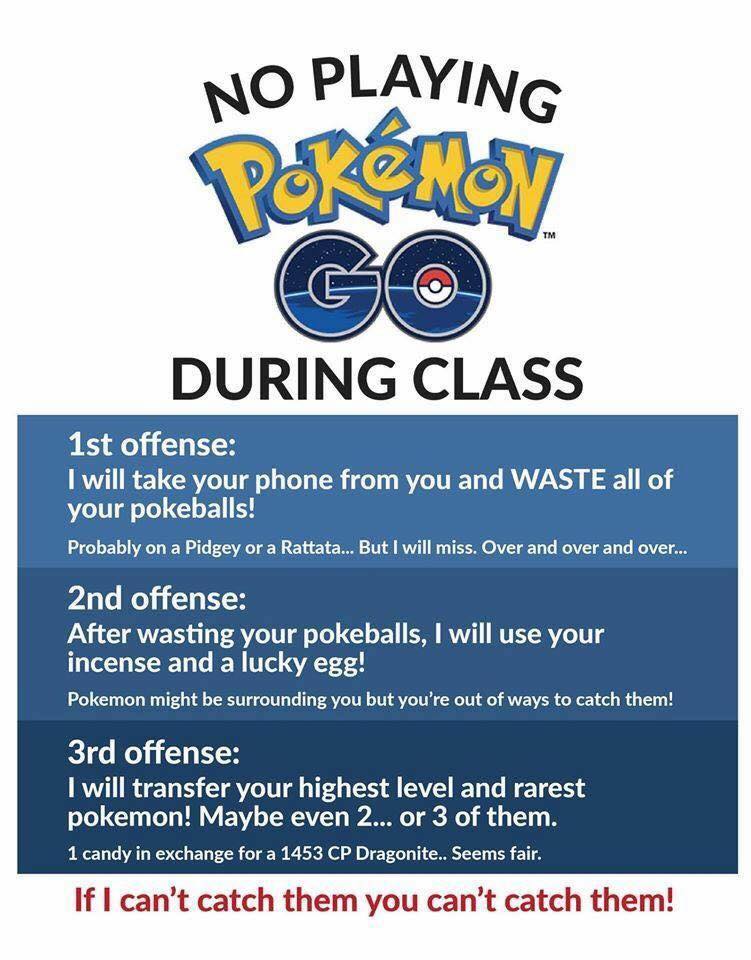
This is definitely going on my course syllabus this semester:
Math with Bad Drawings has an excellent post on how the blind use of descriptive statistics can be deceptive. I’ll definitely be sharing a few these with my students. Here’s one of several examples; I recommend reading the whole thing.


Let
measure how well
can do
. Translate the logical statement
.
This needs no further introduction:

Context: This semester, I taught discrete mathematics for the first time. Part of the discrete mathematics course includes an introduction to predicate and propositional logic for our math majors. As you can probably guess from their names, students tend to think these concepts are dry and uninteresting even though they’re very important for their development as math majors.
In an effort to making these topics more appealing, I spent a few days mining the depths of popular culture in a (likely futile) attempt to make these ideas more interesting to my students. In this series, I’d like to share what I found. Naturally, the sources that I found have varying levels of complexity, which is appropriate for students who are first learning prepositional and predicate logic.
When I actually presented these in class, I either presented the logical statement and had my class guess the statement in actual English, or I gave my students the famous quote and them translate it into predicate logic. However, for the purposes of this series, I’ll just present the statement in predicate logic first.