
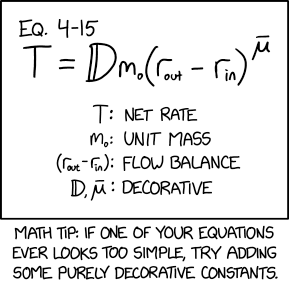
Decorative Constants
I received quite a jolt when I received the most recent issue of Mathematics Magazine, one of the mathematical journals that I subscribe to. The article contains an interesting article on combinatorics and train tickets entitled The Lucky Tickets; here’s the first page.

But I was a little surprised when I saw the pithy description of this article on the magazine’s front cover:
Yes, they really wrote “Getting lucky on a long train ride” on the cover of the magazine.
As this is a mathematical journal, it’s impossible to tell if this was a deliberate double entendre or an honest mistake borne of, in the words of Betsy Devine and Joel E. Cohen in Absolute Zero Gravity, a certain otherworldly innocence.
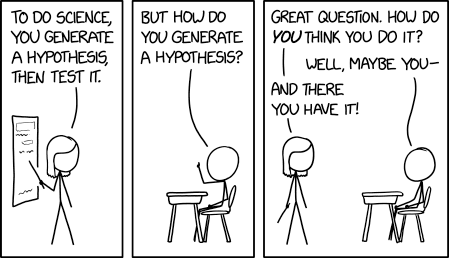
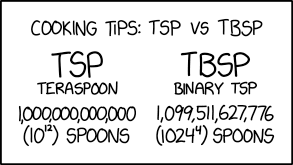
Source: https://xkcd.com/2526/
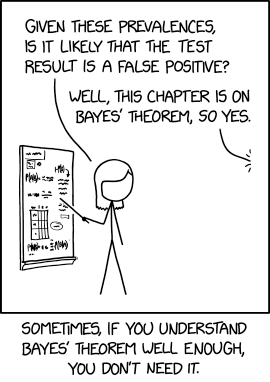
Source: https://xkcd.com/2545/
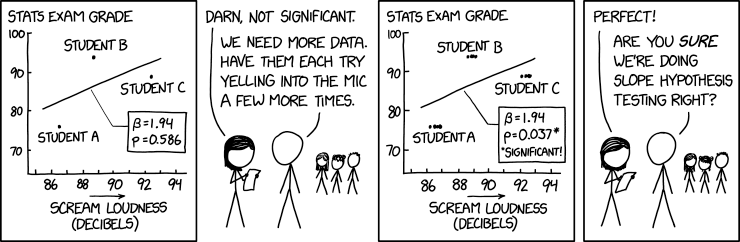
Source: https://xkcd.com/2533/
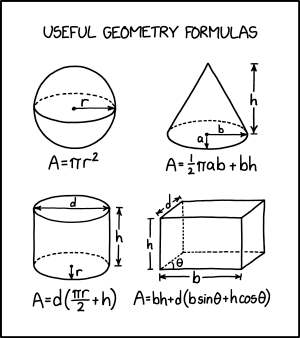
Geometry textbooks always try to trick you by adding decorative stripes and dotted lines.
If you’re having trouble getting the formulas behind the joke, please see https://www.explainxkcd.com/wiki/index.php/2509:_Useful_Geometry_Formulas.


