
This excellent and engaging video describes how sine and cosine functions can be applied to music.
This excellent and engaging video describes how sine and cosine functions can be applied to music.
Every so often, I’ll publicize through this blog an interesting article that I’ve found in the mathematics or mathematics education literature that can be freely distributed to the general public. Today, I’d like to highlight Jo Clay Olson , Sandy Cooper & Tom Lougheed (2011) Influences of Teaching Approaches and Class Size on Undergraduate Mathematical Learning, PRIMUS: Problems, Resources, and Issues in Mathematics Undergraduate Studies, 21:8, 732-751, DOI: 10.1080/10511971003699694
Here’s the abstract:
An issue for many mathematics departments is the success rate of precalculus students. In an effort to increase the success rate, this quantitative study investigated how class size and teaching approach influenced student achievement and students’ attitudes towards learning mathematics. Students’ achievement and their attitudes toward learning mathematics were compared across four treatments of a precalculus course. The four treatments were (a) traditional lecture-based structure, (b) traditional lecture-based structure with a reduced class size, (c) instruction that engaged students in problem solving, and (d) instruction that included opportunities for small collaborative groups. The achievement of students engaged in problem-based learning (PBL) was significantly higher than the other treatments. These findings suggest that undergraduates benefit from instruction that encourages reflection on prior knowledge while developing new ideas through problem solving. Surprisingly, students in the PBE treatment did not continue to outperform students in the other treatments in calculus. These findings suggest the need for longitudinal studies that investigate the long-term effect of teaching approach and small class size on student learning and student success in advanced mathematics courses.
The full article can be found here: http://dx.doi.org/10.1080/10511971003699694
This is a story that I like to tell my probability and statistics students when we cover the law of averages.
One of my favorite sports is golf, and one spring afternoon in my senior year I went out to play a round. I was assigned a tee time with two other students (that I didn’t know), and off we went.
Unfortunately, the group in front of us were, as I like to say, getting their money’s worth out of the round. Somebody would be stuck in a sand trap and then blast the ball into the sand trap on the other side of the green. Then he’d go to blast the ball out of that sand trap, and the ball would go back to the original one.
Golf etiquette dictates that slow-playing groups should let faster groups play through. However, this group never offered to let us pass them. And so, hole after hole, we would wait and wait and wait.
On hole #9, a player walking by himself came up from behind us. I’m not sure how that happened — perhaps the foursome that had been immediately behind us was even slower than the foursome in front of us — and he courteously asked if he could play through. I told him that we’d be happy to let him play through, but that the group in front of us hadn’t let us through, and so we were all stuck.
As a compromise, he asked if he could join our group. Naturally, we agreed.
This solo golfer did not introduce himself, but I recognized him because his picture had been in the student newspaper a few weeks earlier. He was Notah Begay III, then a hot-shot freshman on the Stanford men’s golf team. Though I didn’t know it then, he would later become a three-time All-American and, with Tiger Woods as a teammate, would win the NCAA championship. As a professional, he would win on the PGA Tour four times and was a member of the 2000 President’s Cup team.
Of course, all that lay in the future. At the time, all I knew was that I was about to play with someone who was really, really good.

We ended up playing five holes together… numbers 10 through 14. After playing 14, it started to get dark and I decided to call it quits (as the 14th green was fairly close to the course’s entrance).
So Notah tees off on #10. BOOM! I had never been so close to anyone who hit a golf ball so far. The guys I was paired with started talking about which body parts they would willingly sever if only they could hit a tee shot like that.
And I thought to myself, Game on.
I quietly kept score of how I did versus how Notah did. And for five holes, I shot 1-over par, while he shot 2-over par. And for five holes, I beat a guy who would eventually earn over $5 million on the PGA Tour.
 How did the 9-handicap amateur beat the future professional? Simple: we only played five holes.
Back then, if I shot 1-over par over a stretch of five holes, I would be pretty pleased with my play, but it wouldn’t be as if I had never done it before. And I’m sure Notah was annoyed that he was 2-over par for those five holes (he chili-dipped a couple of chip shots; I imagine that he was experimenting with a new chipping technique), but even the best golfers in the world will occasionally have a five-hole stretch where they go 2-over par or more.
Of course, a golf course doesn’t have just five holes; it has 18.
My all-time best score for a round of golf was a four-over par 76.; I can count on one hand the number of times that I’ve broken 80. That would be a lousy score for a Division I golfer. So, to beat Notah for a complete round of golf, it would take one of my absolute best days happening simultaneously with one of his worst.
Furthermore, a stroke-play golf tournament is not typically decided in only one round of golf. A typical professional golf tournament, for those who make the cut, lasts four rounds. So, to beat Notah at a real golf tournament, I would have to have my absolute best day four days in a row at the same time that Notah had four of worst days.
That’s simply not going to happen.
So I share this anecdote with my students to illustrate the law of averages. (I also use a spreadsheet simulating flipping a coin thousands of times to make the same point.) If you do something enough times, what ought to happen does happen. However, if instead you do something only a few times, then unexpected results can happen. A 9-handicap golfer can beat a much better player if they only play 5 holes.
To give a more conventional illustration, a gambler can make a few dozen bets at a casino and still come out ahead. However, if the gambler stays at the casino long enough, he is guaranteed to lose money.
In my capstone class for future secondary math teachers, I ask my students to come up with ideas for engaging their students with different topics in the secondary mathematics curriculum. In other words, the point of the assignment was not to devise a full-blown lesson plan on this topic. Instead, I asked my students to think about three different ways of getting their students interested in the topic in the first place.
I plan to share some of the best of these ideas on this blog (after asking my students’ permission, of course).
This student submission comes from my former student Tracy Leeper. Her topic, from Pre-Algebra: finding points on the coordinate plane.
How could you as a teacher create an activity or project that involves your topic?
After introducing the topic to the students, I will inform the students that we will be playing a game on the computer. After pulling up the game on the screen and demonstrating how it works, I will then issue a challenge using the maze game. The challenge will be to see how many mines they can avoid while using the least number of moves. Before class, I will play to get my best score, to show the students what I am looking for, and then I will see who can beat my score. To encourage the students to try their best, I will offer extra credit to anyone who can get through the same number of mines, with fewer moves. Multiple attempts are possible, and I will allow students to turn in their best game by the end of the week. By offering extra credit, it will encourage the students to play the game at home as well as in the classroom. This game will be fun for the students, as well as support the topic of finding points on the coordinate plane. A common struggle is confusing the x and y axis, so by playing the game it will reinforce the proper name for the corresponding axis, and which coordinate goes first in the ordered pair.
How can this topic be used in your students’ future courses in mathematics or science?
Finding points on the coordinate plane is used in a variety of disciplines. Any type of graph used to represent data, with the exception of a pie chart, uses at least one quadrant of the coordinate plane. Typically, it is quadrant 1, since both numbers are positive. The graph is just labeled to reflect the data shown, instead of using x and y. Scientist use graphs to represent data that has been collected from either observation or experimentation, usually labeled as time and the correlating measurement. In math the coordinate plane is used to represent any function, with x as the input and y as the output, as well as helping to graph things that are not functions, such as circles, and other polygons. As well as adding a third dimension, and including a z axis for graphing 3D objects, such as spheres and cubes. The coordinate plane is also used in other disciplines, such as geography, for determining map coordinates.
How has this topic appeared in pop culture (movies, TV, current music, video games, etc.)?
Video games have changed tremendously since the days of Pong. The graphics, storylines, characters, and amount of programming required has become much more intricate. One aspect of the games that appeals to players is the moving background that changes and shifts according to where the character is in the game, and how the camera angle is changed by the player. This enables different scenery and perspectives throughout the game. This is done by using points on a 3D graph, and as the character moves, the reference changes according to their position. The fundamental skill for being able to build the game this way, is to first learn how to plot points on a 2D graph. Since most teenagers like video games, and the graphics involved, this would be a good point to make, so the students could see the connection between the math they are learning, and something they really enjoy doing. This same skill is used for calculating GPS coordinates on our phones and computers.
References:
http://www.shodor.org/interactivate/activities/MazeGame/

Source: http://www.xkcd.com/1184/
Further comments, from Nicholas Vanserg, “Mathmanship,” The American Scientist, Vol. 46, No. 3 (1958):
In an article published a few years ago, the writer intimated with befitting subtlety that since most concepts of science are relatively simple (once you understand them), any ambitious scientist must, in self-preservation, prevent his colleagues from discovering that his ideas are simple too…
The object of… Mathmanship is to place unsuspected obstacles in the way of the pursuer until he is obliged, by a series of delays and frustrations, to give up the chase and concede his mental inferiority to the author…
[U]se a superscript as a key to a real footnote. The knowledge seeker reads that
is
calories and thinks, “Gee what a whale of a lot of calories,” until he reads to the bottom of the page, finds footnote 14 and says, “oh.”
In my capstone class for future secondary math teachers, I ask my students to come up with ideas for engaging their students with different topics in the secondary mathematics curriculum. In other words, the point of the assignment was not to devise a full-blown lesson plan on this topic. Instead, I asked my students to think about three different ways of getting their students interested in the topic in the first place.
I plan to share some of the best of these ideas on this blog (after asking my students’ permission, of course).
This student submission comes from my former student Tiffany Wilhoit. Her topic: probability and odds.
How could you as a teacher create an activity or project that involves your topic?
A fun project to be used with the topic would be to fake a disaster and have the students determine their chance of surviving. This could even be tied in with a history class lesson. For example, if the students were discussing the Titanic (or any other disaster) you could have the students determine their chance of surviving the shipwreck. The students could be given data (Bonus points if they have to find the data themselves!), and from the data apply the information to the class. The students could then solve to find out the chances of each student surviving the disaster.
Another project is to set up a series of races or competitions. There could be separate heats which lead to a final race. The students could then see who wins, and calculate the probability of that person winning. They could also use the information to discover the chances of coming in the top three or top half. This would allow the students to have a “hands on” engagement before applying the knowledge they learned.
How can this topic be used in your students’ future courses in mathematics or science?
Probability and odds is a very relevant topic when discussing genetics. In the students’ future biology class they will discuss Punnett squares. The Punnett square shows the possible combinations of genes an offspring will inherit from its parents. Through using Punnett squares, the students will need to discover the odds or probability of a certain trait being shown in the offspring. By already mastering this topic, the students will have a greater understanding of the information given by the Punnett squares. This will also allow the students to determine how likely certain diseases will be passed on from generation to generation. Once they master the Punnett square involving one trait, the students will then be able to use their knowledge of permutations, combinations, and compound events to find the probability of multiple traits showing up at the same time.
How has this topic appeared in pop culture?
March Madness has become wildly popular since the contest for the Million Dollar Bracket began. While some fill the bracket out randomly, the use of odds and probability can help you choose the best team to pick. Also, we constantly hear about how the chances of winning are so low. Using probability and odds, the exact chance can be determined. The odds of choosing the winning team can also be determined. The students can use similar techniques to determine the chances of the school team winning a game or tournament. This knowledge is applicable in other areas too. We see it predominantly in gambling. You must determine your chances of winning to make a smart bet in a variety of games such as blackjack, poker, roulette, or even horse races such as the Kentucky Derby.
References:
http://pages.uoregon.edu/aarong/teaching/G4075_Outline/node15.html
In my capstone class for future secondary math teachers, I ask my students to come up with ideas for engaging their students with different topics in the secondary mathematics curriculum. In other words, the point of the assignment was not to devise a full-blown lesson plan on this topic. Instead, I asked my students to think about three different ways of getting their students interested in the topic in the first place.
I plan to share some of the best of these ideas on this blog (after asking my students’ permission, of course).
This student submission comes from my former student Nada Al Ghussain. Her topic, from Pre-Algebra: solving for unknown parts of rectangles and triangles.
How has this topic appeared in high culture (art, classical music, theatre, etc.)?
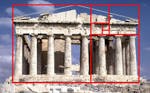
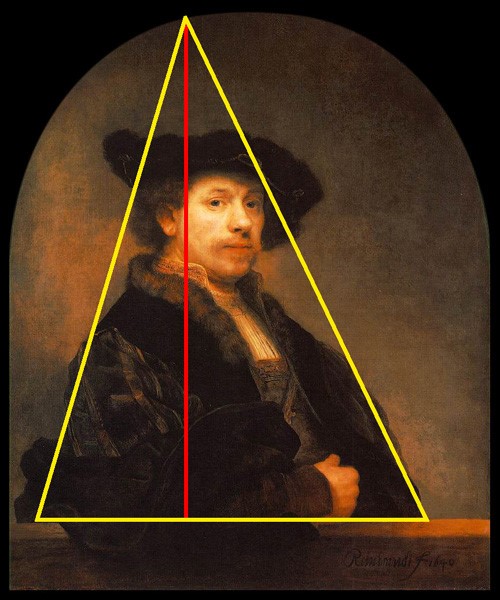
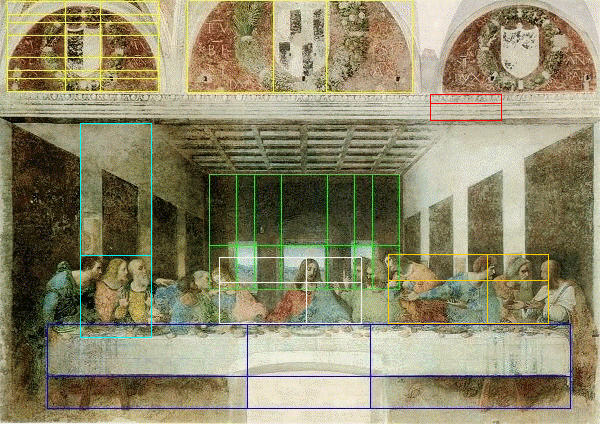
In the mathematical classroom it is always easier to engage the left-brainers who excel in numbers, reasoning and logic. My right brainers on the other hand can also shine when engaging them through the underlying foundation of the arts. The Golden ratio 
How does this topic extend what your students should have learned in previous courses?
Beginning Geometry students, Can with little and quick computational work solve for the unknown parts of any given rectangle and triangle. A great starter for a Pythagorean lesson is to get them to find missing parts using their shoes! Middle school students can take off their shoes as they work in groups and form the two legs of a right triangle. Once they compute the hypotenuse students can check it by adding the right amount of shoes. This lets students interact with each other and with the right triangle. They can see which triangle theorems can be formed, and discuss the type of angles found with the right triangle. Going beyond that, students can shoe in the missing sides of the squares. This sets up The Pythagorean theorem. This engagement can be quick or take a whole lesson. Students find different calculations, theorems, and set them up for figuring out the Pythagorean theorem.
How can technology (YouTube, Khan Academy [khanacademy.org], Vi Hart, Geometers Sketchpad, graphing calculators, etc.) be used to effectively engage students with this topic? Note: It’s not enough to say “such-and-such is a great website”; you need to explain in some detail why it’s a great website.
Technology is information at our fingertips. Calculator Soup has a Triangle Theorems calculator that can calculate AAA, AAS, ASA, ASS, SAS, and SSS. This would be a great and quick way for students to explore triangles. As a teacher I would ask the students to make an acute SSS triangle using the digits 1through 10 for the sides. I then can ask them if a given side was 20 and the other two were between 1through 10, would I still have an acute triangle? Many quick questions can be used from this calculator. It has the students think about the relationship of the sides and angles as they form triangles. There are also Square, Rectangle, Parallelogram, and a Polygon calculator too. For the parallelogram, different angle measurements can be given to change the side length. Good ways to have students differentiate between rhombus and parallelograms. Calculator Soup is quick visual for students to help them understand the relations between different squares and triangles.
References:
http://www.goldennumber.net/art-composition-design/
http://britton.disted.camosun.bc.ca/goldslide/jbgoldslide.htm
http://psychology.about.com/od/cognitivepsychology/a/left-brain-right-brain.htm
http://www.mathsisfun.com/activity/pythagoras-theorem-shoes.html
http://www.regentsprep.org/regents/math/algebra/at1/pythag.htm
http://www.calculatorsoup.com/calculators/geometry-plane/triangle-theorems.php
In my capstone class for future secondary math teachers, I ask my students to come up with ideas for engaging their students with different topics in the secondary mathematics curriculum. In other words, the point of the assignment was not to devise a full-blown lesson plan on this topic. Instead, I asked my students to think about three different ways of getting their students interested in the topic in the first place.
I plan to share some of the best of these ideas on this blog (after asking my students’ permission, of course).
This student submission comes from my former student Kristin Ambrose. Her topic, from Pre-Algebra: adding and subtracting fractions with unequal denominators.
What interesting (i.e., uncontrived) word problems using this topic can your students do now?
Cooking is a great example of where you frequently add and subtract fractions with unequal denominators. For example, here is a real-world word problem I came up with for adding and subtracting fractions in cooking:
You are making dinner tonight and you’re having Lemon Chicken with Scalloped Potatoes. The recipes for these can be found below (and yes they are real recipes that you can use in real life).
Lemon Chicken: ½ lb. boneless chicken breasts 1/8 cup flour ¼ tsp. salt 1 tbsp. butter ½ tsp. lemon pepper seasoning ½ cup of asparagus 1 lemon Instructions:
|
You only have a half a cup of flour left in your pantry. Looking at the recipes above, do you have enough flour to make dinner? Or do you need to go to the grocery store to buy more flour?
In order to solve this problem students would first have to add the different amounts of flour for each recipe (1/4 + 1/8 = 3/8). Then students would have to subtract this amount from the amount of flour they had to see if they would have enough (1/2 – 3/8 = 1/8). Since 1/8 cup of flour would be left, they have enough flour to make dinner.
How can this topic be used in your students’ future courses in mathematics or science?
It would be difficult to do mathematics without knowing how to add and subtract fractions with unequal denominators. In mathematics when adding or subtracting fractions, it doesn’t always work out nicely where the denominators are the same, so it’s important to be able to solve problems even when the denominators are different. One example of this is summations. Take 


How can technology (YouTube, Khan Academy [khanacademy.org], Vi Hart, Geometers Sketchpad, graphing calculators, etc.) be used to effectively engage students with this topic?
YouTube can be a good source for finding videos to engage students in a topic. In particular, I found a short, funny video that reminds students of the significance of fractions. Here is the link to the video: https://www.youtube.com/watch?v=CBy8QbZyzy4. It makes a difference when a superhero only saves half of your stuff and not all of it. Just like you wouldn’t want only half your things saved, you wouldn’t want to add 2/3 of a cup of flour to a recipe that only calls for 1/4 a cup, or you wouldn’t want to fill up 2/3 of your tank of gas if it was already 1/2 of a tank full. Understanding fractions and how to add and subtract them is an important part of daily life.
I also found another video that demonstrates where fractions can come into play in science. Here is the link to the video: https://www.youtube.com/watch?v=hLGDJFGAmic. The YouTube channel ‘Numberphile’ in particular has many interesting videos involving numbers and mathematics, and would be a great resource for finding interesting videos to engage students.


 Mean Green Math