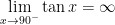
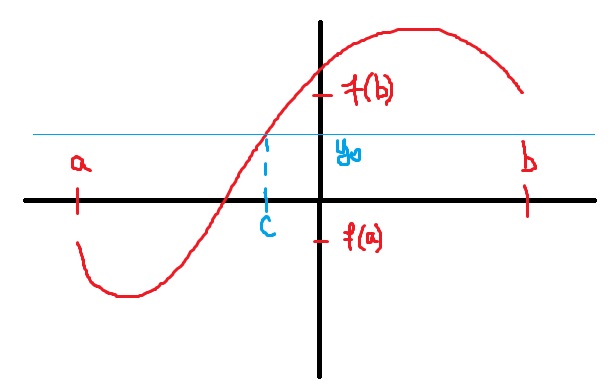
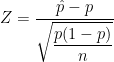
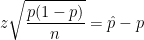
And I have a great story that goes along with this principle, from 30 years ago.
I forget the exact question out of Apostol’s calculus, but there was some equation that I had to prove on my weekly homework assignment that, for the life of me, I just couldn’t get. And for no good reason, I had a flash of insight: subtract the left- and right-hand sides. While it was very difficult to turn the left side into the right side, it turned out that, for this particular problem, was very easy to show that the difference was zero. (Again, I wish I could remember exactly which question this was so that I could show this technique and this particular example to my own students.)
So I finished my homework, and I went outside to a local basketball court and worked on my jump shot.
Later that week, I went to class, and there was a great buzz in the air. It took ten seconds to realize that everyone was up in arms about how to do this particular problem. Despite the intervening 30 years, I remember the scene as clear as a bell. I can still hear one of my classmates ask me, “Quintanilla, did you get that one?”
I said with great pride, “Yeah, I got it.” And I showed them my work.
And, either before then or since then, I’ve never heard the intensity of the cussing that followed.
Truth be told, probably the only reason that I remember this story from my adolescence is that I usually was the one who had to ask for help on the hardest homework problems in that Honors Calculus class. This may have been the one time in that entire two-year calculus sequence that I actually figured out a homework problem that had stumped everybody else.
In this series, I’m compiling some of the quips and one-liners that I’ll use with my students to hopefully make my lessons more memorable for them. Today’s post is certainly not a one-liner but instead is my pseudohistory for how the roots of polynomials were found.
When I teach Algebra II or Precalculus (or train my future high school teachers to teach these subjects), we eventually land on the Rational Root Test and Descartes’ Rule of Signs as an aid for finding the roots of cubic equations or higher. Before I get too deep into this subject, however, I like to give a 10-15 minute pseudohistory about the discovery of how polynomial equations can be solved. Historians of mathematics will certain take issue with some of this “history.” However, the main purpose of the story is not complete accuracy but engaging students with the history of mathematics. I think the story I tell engages students while remaining reasonably accurate… and I always refer students to various resources if they want to get the real history.
To begin, I write down the easiest two equations to solve (in all cases, :
and
These are pretty easy to solve, with solutions well known to students:
and
In other words, there are formulas that you can just stick in the coefficients and get the answer out without thinking too hard. Sure, there are alternate ways of solving for that could be easier, like factoring, but the worst-case scenario is just plugging into the formula.
These formulas were known to Babylonian mathematicians around 2000 B.C. (When I teach this in class, I write the date, and all other dates and discoverers, next to the equations for dramatic pedagogical effect.) Though not written in these modern terms, basically every ancient culture on the globe that did mathematics had some version of these formulas: for example, the ancient Egyptians, Greeks, Chinese, and Mayans.
Naturally, this leads to a simple question: is there a formula for the cubic:
Is there some formula that we can just plug , , , and to just get the answer? The answer is, Yes, there is a formula. But it’s nasty. The formula was not discovered until 1535 A.D., and it was discovered by a man named Tartaglia. During the 1500s, the study of mathematics was less about the dispassionate pursuit of truth and more about exercising machismo. One mathematician would challenge another: “Here’s my cubic equation; I bet you can’t solve it. Nyah-nyah-nyah-nyah-nyah.” Then the second mathematician would solve it and challenge the first: “Here’s my cubic equation; I bet you can’t solve it. Nyah-nyah-nyah-nyah-nyah.” And so on. Well, Tartaglia came up with a formula that would solve every cubic equation. By plugging in , , , and , you get the answer out.
Tartaglia’s discovery was arguably the first triumph of the European Renaissance. The solution of the cubic was perhaps the first thing known to European mathematicians in the Middle Ages that was unknown to the ancient Greeks.
In 1535, Tartaglia was a relatively unknown mathematician, and so he told a more famous mathematician, Cardano, about his formula. Cardano told Tartaglia, why yes, that is very interesting, and then published the formula under his own name, taking credit without mention of Tartaglia. To this day, the formula is called Cardano’s formula.
So there is a formula. But it would take an entire chalkboard to write down the formula. That’s why we typically don’t make students learn this formula in high school; it’s out there, but it’s simply too complicated to expect students to memorize and use.
This leads to the next natural question: what about quartic equations?
The solution of the quartic was discovered less than five years later by an Italian mathematician named Ferrari. Ferrari found out that there is a formula that you can just plug in , , , , and , turn the crank, and get the answers out. Writing out this formula would take two chalkboards. So there is a formula, but it’s also very, very complicated.
Of course, Ferrari had some famous descendants in the automotive industry.
So now we move onto my favorite equation, the quintic. (If you don’t understand why it’s my favorite, think about my last name.)
After solving the cubic and quartic in rapid succession, surely there should also be a formula for the quintic. So they tried, and they tried, and they tried, and they got nowhere fast. Finally, the problem was solved nearly 300 years later, in 1832 (for the sake telling a good story, I don’t mention Abel) by a French kid named Evariste Galois. Galois showed that there is no formula. That takes some real moxie. There is no formula. No matter how hard you try, you will not find a formula that can work for every quintic. Sure, there are some quintics that can be solved, like . But there is no formula that will work for every single quintic.
Galois made this discovery when he was 19 years old… in other words, approximately the same age as my students. In fact, we know when wrote down his discovery, because it happened the night before he died. You see, he was living in France in 1832. What was going on in France in 1832? I ask my class, have they seen Les Miserables?
France was torn upside-down in 1832 in the aftermath of the French Revolution, and young Galois got into a heated argument with someone over politics; Galois was a republican, while the other guy was a royalist. More importantly, both men were competing for the hand of the same young woman. So they decided to settle their differences like honorable Frenchmen, with a duel. So Galois wrote up his mathematical notes one night, and the next day, he fought the duel, he lost the duel, and he died.
Thus giving complete and total proof that tremendous mathematical genius does not prevent somebody from being a complete idiot.
For the present, there are formulas for cubic and quartic equations, but they’re long and impractical. And for quintic equations and higher, there is no formula. So that’s why we teach these indirect methods like the Rational Root Test and Descartes’ Rule of Signs, as they give tools to use to guess at the roots of higher-order polynomials without using something like the quadratic formula.
In this series, I’m compiling some of the quips and one-liners that I’ll use with my students to hopefully make my lessons more memorable for them.
One of the techniques commonly taught in Algebra II or Precalculus is the Rational Root Test, which is a way of making a list of candidates of rational numbers that might (emphasis, might) be roots of the polynomial. This is a commonly taught method for finding the roots of polynomials whose degree is higher than 3. (Other techniques that are typically taught to students are Descartes’ Rule of Signs and (less commonly) the Upper and Lower Bound Rules.) For example, for the polynomial .
The factors of the constant term are and , and so the numerator of any rational root must be one of these numbers.
The factors of the leading coefficient are and , and so the denominator of any rational root must be one of these numbers.
In conclusion, if there’s a rational root, then it’s and . In other words, we have a list of 16 possible rational roots. Not all of them will be roots, of course, since the cubic polynomial only has at most three distinct roots. Also, there’s no guarantee that any of them will be roots. The only way to find out if any of them work is by testing them, usually using synthetic division.
So, after a practice problem or two, I’ll ask my students,
What guarantee do you have that at least one of the possible rational roots will actually work?
After letting them think for a few seconds, I give them the answer:
The benevolence of your instructor.
In other words, there is no guarantee that any of the possible rational roots will actually work, except that the instructor (or author of the textbook) has rigged things so that it happens.
In this series, I’m compiling some of the quips and one-liners that I’ll use with my students to hopefully make my lessons more memorable for them.
When I was a student, I always appreciated when my professors returned graded exams soon after I took the test. Now that I’m a professor, it’s a courtesy that I try to extend to my students as time permits. That said, grading is no fun at all and takes a fair amount of time and effort to do well. Nevertheless, as I explain to my students,
Grading is like going to the dentist: It’s painful, but it’s still best to get it over with as soon as possible.
In this series, I’m compiling some of the quips and one-liners that I’ll use with my students to hopefully make my lessons more memorable for them. Today’s one-liner is something I’ll use after completing some monumental calculation. For example, if , the proof of the triangle inequality is no joke, as it requires the following as lemmas:
With all that as prelude, we have
In other words,
.
Since and are both positive, we can conclude that
.
QED
In my experience, that’s a lot for students to absorb all at once when seeing it for the first time. So I try to celebrate this accomplishment:
Anybody ever watch “Home Improvement”? This is a Binford 6100 “more power” mathematical proof. Grunt with me: RUH-RUH-RUH-RUH!!!
In this series, I’m compiling some of the quips and one-liners that I’ll use with my students to hopefully make my lessons more memorable for them.
One of my favorite pedagogical techniques is deliberating showing students a wrong way of solving a certain math problem, discussing why it’s the wrong way, and then salvaging the solution to construct the right way of doing the problem. I think this keeps students engaged in the lesson as opposed to learning a new technique by rote memorization.
Earlier in my teaching career, I noticed an unintended side-effect of this pedagogical technique. A student came to me for help in office hours because she couldn’t understand something that she had written in her notes. Lo and behold, she had written down the wrong way of doing the problem and had forgotten that it was the wrong way. Naturally, I clarified this for her.
This got me to thinking: I still would like to use this method of teaching from time to time, but I don’t want to cause misconceptions to arise because somebody was dutifully taking notes but didn’t mark that he/she was writing down an incorrect technique. So I came across the following one-liner that I now use whenever I’m about to start this technique:
Don’t write down what I’m about to say; it’s wrong.
Hopefully this prevents diligent students from taking bad notes as well as tips them off that they need to start paying attention to see where the logic went wrong and thus construct the proper technique.
In this series, I’m compiling some of the quips and one-liners that I’ll use with my students to hopefully make my lessons more memorable for them.
Today’s quip is something that I’ll use to emphasize that the meaning of the word “or” is a little different in mathematics than in ordinary speech. For example, in mathematics, we could solve a quadratic equation for :
In this example, the word “or” means “one or the other or maybe both.” It could be that both statements are true, as in the next example:
However, in plain speech, the word “or” typically means “one or the other, but not both.” Here the quip I’ll use to illustrate this:
At the end of “The Bachelor,” the guy has to choose one girl or the other. He can’t choose both.
In this series, I’m compiling some of the quips and one-liners that I’ll use with my students to hopefully make my lessons more memorable for them. q Q
Years ago, my first class of students decided to call me “Dr. Q” instead of “Dr. Quintanilla,” and the name has stuck ever since. And I’ll occasionally use this to my advantage when choosing names of variables. For example, here’s a typical proof by induction involving divisibility.
Theorem: If is a positive integer, then is a multiple of 4.
Proof. By induction on .
: , which is clearly a multiple of 4.
: Assume that is a multiple of 4.
At this point in the calculation, I ask how I can write this statement as an equation. Eventually, somebody will volunteer that if is a multiple of 4, then is equal to 4 times something. At which point, I’ll volunteer:
Yes, so let’s name that something with a variable. Naturally, we should choose something important, something regal, something majestic… so let’s choose the letter . (Groans and laughter.) It’s good to be the king.
So the proof continues:
: Assume that , where is an integer.
. We wish to show that is also a multiple of 4.
At this point, I’ll ask my class how we should write this. Naturally, I give them no choice in the matter:
We wish to show that , where is some (possibly different) integer.
Then we continue the proof:
by the induction hypothesis
.
So if we let , then , where is an integer because is also an integer.
QED
On the flip side of braggadocio, the formula for the binomial distribution is
,
where is the number of successes in independent and identically distributed trials, where represents the probability of success on any one trial, and (to my shame) is the probability of failure.
March 14, 2015 has been labeled the Pi Day of the Century because of the way this day is abbreviated, at least in America: 3/14/15.
I was recently asked an interesting question: did any of our ancestors observe Pi Day about 400 years ago on 3/14/1592? The answer is, I highly doubt it.
My first thought was that $latex pi$ may not have been known to that many decimal places in 1592. However, a quick check on Wikipedia (see also here), as well as the book “$latex pi$ Unleashed,” verifies that my initial thought was wrong. In China, 7 places of accuracy were obtained by the 5th century. By the 14th century, $latex pi$ was known to 13 decimal places in India. In the 15th century, $latex pi$ was calculated to 16 decimal places in Persia.
It’s highly doubtful that the mathematicians in these ancient cultures actually talked to…
In this series, I’m compiling some of the quips and one-liners that I’ll use with my students to hopefully make my lessons more memorable for them.
The function typically exhibits exponential growth (if ) or exponential decay (if ). The one exception is if , when the function is merely a constant. Which often leads to my favorite blooper from Star Trek. The crew is trying to find a stowaway, and they get the bright idea of turning off all the sound on the ship and then turning up the sound so that the stowaway’s heartbeat can be heard. After all, Captain Kirk boasts, the Enterprise has the ability to amplify sound by 1 to the fourth power.