

Category: Theorems
Goodbye Aberration: Physicist Solves 2,000-Year-Old Optical Problem
This was a nice write-up (with some entertaining interspersed snark) of the solution of the the Wasserman-Wolf problem concerning the construction of a perfect lens (like a camera lens). Some quotes:
[L]enses are made from spherical surfaces. The problem arises when light rays outside the center of the lens or hitting at an angle can’t be focused at the desired distance in a point because of differences in refraction.
Which makes the center of the image sharper than the corners…
In a 1949 article published in the Royal Society Proceedings, Wasserman and Wolf formulated the problem—how to design a lens without spherical aberration—in an analytical way, and it has since been known as the Wasserman-Wolf problem…
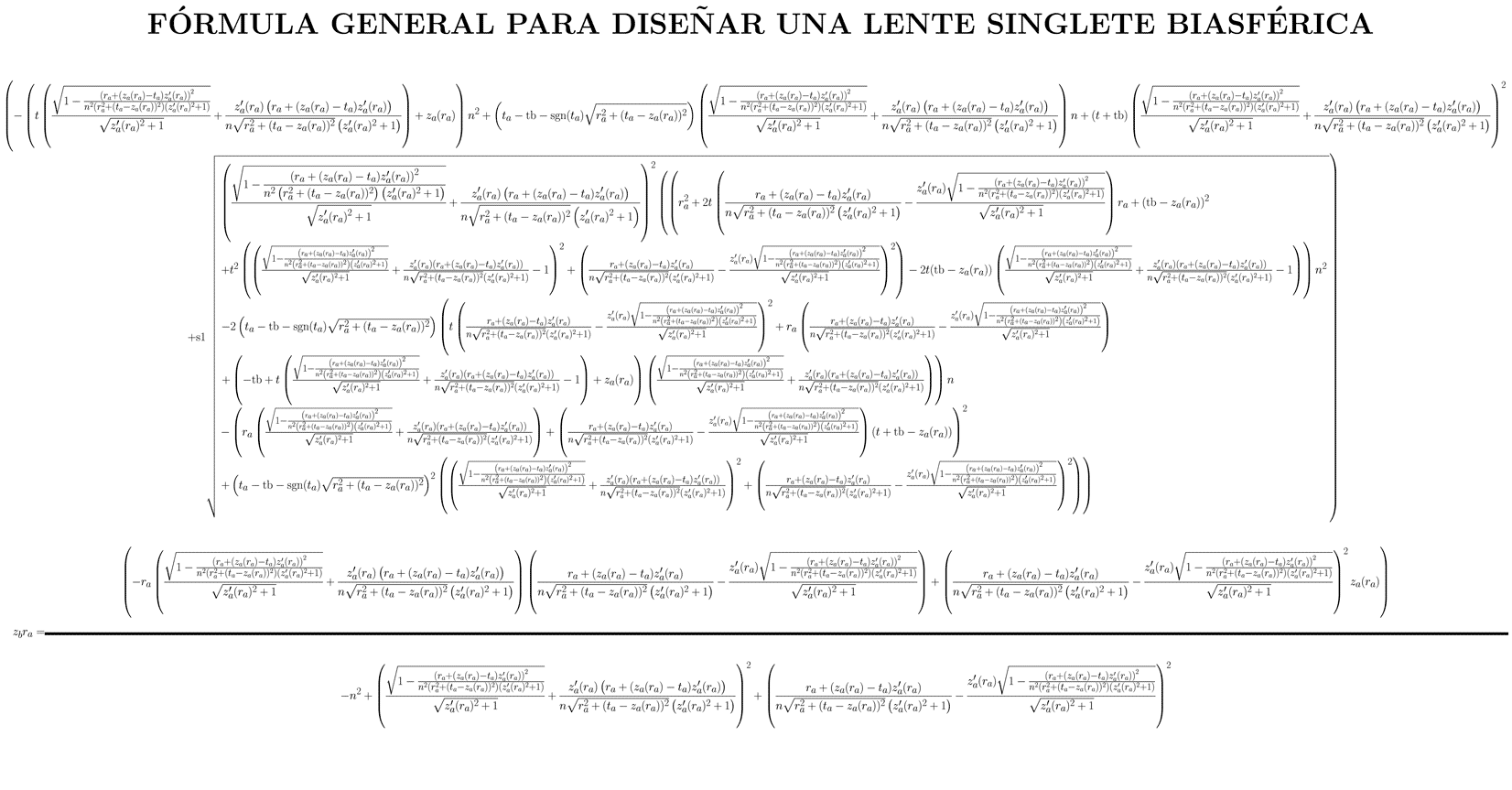
The problem was solved in 2018 by doctoral students in Mexico. For those fluent in Spanish, the university press release can be found here. As an added bonus, here’s the answer:
My Favorite One-Liners: Part 119

Adding by a Form of 0 (Part 4)
In my previous post, I wrote out a proof (that an even number is an odd number plus 1) that included the following counterintuitive steps:
A common reaction that I get from students, who are taking their first steps in learning how to write mathematical proofs, is that they don’t think they could produce steps like these on their own without a lot of coaching and prompting. They understand that the steps are correct, and they eventually understand why the steps were necessary for this particular proof (for example, the conversion from 
![[2k - 1 -1]+1](https://s0.wp.com/latex.php?latex=%5B2k+-+1+-1%5D%2B1&bg=ffffff&fg=000000&s=0&c=20201002)
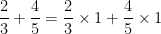
Not all students initially struggle with this concept, but some do. I’ve found that the following illustration is psychologically reassuring to students struggling with this concept. I tell them that while they may not be comfortable with adding and subtracting the same number (net effect of adding by 0), they should be comfortable with multiplying and dividing by the same number because they do this every time that they add or subtract fractions with different denominators. For example:
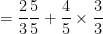


In the same way, we’re permitted to change 

Hopefully, connecting this proof technique to this familiar operation from 5th or 6th grade mathematics — here in Texas, it appears in the 5th grade Texas Essential Knowledge and Skills under (3)(H) and (3)(K) — makes adding by a form of 0 in a proof somewhat less foreign to my students.
Adding by a Form of 0 (Part 3)
As part of my discrete mathematics class, I introduce my freshmen/sophomore students to various proof techniques, including proofs about sets. Here is one of the examples that I use that involves adding and subtracting a number twice in the same proof.
Theorem. Let 

Then 
Proof (with annotations). Before starting the proof, I should say that I expect my students to use the formal definitions of even and odd:
- An integer
is even if
for some integer
.
- An integer
for some integer
To prove that 

Part 1. Let 
To show that 


![= ([2k - 1 - 1] + 1) + 1](https://s0.wp.com/latex.php?latex=%3D+%28%5B2k+-+1+-+1%5D+%2B+1%29+%2B+1&bg=ffffff&fg=000000&s=0&c=20201002)
![= ([2k-2] + 1) + 1](https://s0.wp.com/latex.php?latex=%3D+%28%5B2k-2%5D+%2B+1%29+%2B+1&bg=ffffff&fg=000000&s=0&c=20201002)
![= (2[k-1] + 1) + 1](https://s0.wp.com/latex.php?latex=%3D+%282%5Bk-1%5D+%2B+1%29+%2B+1&bg=ffffff&fg=000000&s=0&c=20201002)
By the closure axioms, 
![2[k-1] + 1](https://s0.wp.com/latex.php?latex=2%5Bk-1%5D+%2B+1&bg=ffffff&fg=000000&s=0&c=20201002)
The above part of the proof can be a bit much to swallow for students first learning about proofs. For completeness, let me also include Part 2 (which, in my experience, most students can produce without difficulty).
Part 2. Let 


For what it’s worth, this is the review problems for which I recorded myself talking through the solution for the benefit of my students.
In my opinion, the biggest conceptual barriers in this proof are these steps from Part 1:
![2k = (2k - 1) + 1 = ([2k - 1 - 1] + 1) + 1](https://s0.wp.com/latex.php?latex=2k+%3D+%282k+-+1%29+%2B+1+%3D+%28%5B2k+-+1+-+1%5D+%2B+1%29+%2B+1&bg=ffffff&fg=000000&s=0&c=20201002)
These steps are undeniably awkward. Back in high school algebra, students would get points taken off for making the expression more complicated instead of simplifying the answer. But this is the kind of jump that I need to train my students to do so that they can master this technique and be successful in their future math classes.
Adding by a Form of 0 (Part 2)
Often intuitive appeals for the proof of the Product Rule rely on pictures like the following:

The above picture comes from https://mrchasemath.com/2017/04/02/the-product-rule/, which notes the intuitive appeal of the argument but also its lack of rigor.
My preferred technique is to use the above rectangle picture but make it more rigorous. Assuming that the functions 


In other words,
![f(x+h) g(x+h) - f(x) g(x) = f(x+h) [g(x+h) - g(x)] + [f(x+h) - f(x)] g(x)](https://s0.wp.com/latex.php?latex=f%28x%2Bh%29+g%28x%2Bh%29+-+f%28x%29+g%28x%29+%3D+f%28x%2Bh%29+%5Bg%28x%2Bh%29+-+g%28x%29%5D+%2B+%5Bf%28x%2Bh%29+-+f%28x%29%5D+g%28x%29&bg=ffffff&fg=000000&s=0&c=20201002)
or

This gives a geometrical way of explaining this otherwise counterintuitive step for students not used to adding by a form of 0. I make a point of noting that we took one term, 



![[(fg)(x)]' = \displaystyle \lim_{h \to 0} \frac{f(x+h) g(x+h) - f(x) g(x)}{h}](https://s0.wp.com/latex.php?latex=%5B%28fg%29%28x%29%5D%27+%3D+%5Cdisplaystyle+%5Clim_%7Bh+%5Cto+0%7D+%5Cfrac%7Bf%28x%2Bh%29+g%28x%2Bh%29+-+f%28x%29+g%28x%29%7D%7Bh%7D&bg=ffffff&fg=000000&s=0&c=20201002)
![\displaystyle = \lim_{h \to 0} \frac{f(x+h) [g(x+h) - g(x)]}{h} + \lim_{h\ to 0} \frac{[f(x+h) - f(x)] g(x)}{h}](https://s0.wp.com/latex.php?latex=%5Cdisplaystyle+%3D+%5Clim_%7Bh+%5Cto+0%7D+%5Cfrac%7Bf%28x%2Bh%29+%5Bg%28x%2Bh%29+-+g%28x%29%5D%7D%7Bh%7D+%2B+%5Clim_%7Bh%5C+to+0%7D+%5Cfrac%7B%5Bf%28x%2Bh%29+-+f%28x%29%5D+g%28x%29%7D%7Bh%7D&bg=ffffff&fg=000000&s=0&c=20201002)


For what it’s worth, a Google Images search for proofs of the Product Rule yielded plenty of pictures like the one at the top of this post but did not yield any pictures remotely similar to the green and blue rectangles above. This suggests to me that the above approach of motivating this critical step of this derivation might not be commonly known.
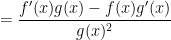
Once students have been introduced to the idea of adding by a form of 0, my experience is that the proof of the Quotient Rule is much more palatable. I’m unaware of a geometric proof that I would be willing to try with students (a description of the best attempt I’ve seen can be found here), and so adding by a form of 0 becomes unavoidable. The proof begins
![\left[\left( \displaystyle \frac{f}{g} \right)(x) \right]' = \displaystyle \lim_{h \to 0} \frac{ \displaystyle \frac{f(x+h)}{ g(x+h)} - \frac{f(x)}{ g(x)}}{h}](https://s0.wp.com/latex.php?latex=%5Cleft%5B%5Cleft%28+%5Cdisplaystyle+%5Cfrac%7Bf%7D%7Bg%7D+%5Cright%29%28x%29+%5Cright%5D%27+%3D+%5Cdisplaystyle+%5Clim_%7Bh+%5Cto+0%7D+%5Cfrac%7B+%5Cdisplaystyle+%5Cfrac%7Bf%28x%2Bh%29%7D%7B+g%28x%2Bh%29%7D+-+%5Cfrac%7Bf%28x%29%7D%7B+g%28x%29%7D%7D%7Bh%7D&bg=ffffff&fg=000000&s=0&c=20201002)


At this point, I ask my students what we should add and subtract this time to complete the derivation. Given the previous experience with the Product Rule, students are usually quick to chose one factor from the first term and another factor from the second term, usually picking 
![[(fg)(x)]' = \displaystyle \lim_{h \to 0} \frac{ \displaystyle \frac{f(x+h) g(x) - f(x) g(x+h)}{h }}{g(x) g(x+h)}](https://s0.wp.com/latex.php?latex=%5B%28fg%29%28x%29%5D%27+%3D+%5Cdisplaystyle+%5Clim_%7Bh+%5Cto+0%7D+%5Cfrac%7B+%5Cdisplaystyle+%5Cfrac%7Bf%28x%2Bh%29+g%28x%29+-+f%28x%29+g%28x%2Bh%29%7D%7Bh+%7D%7D%7Bg%28x%29+g%28x%2Bh%29%7D&bg=ffffff&fg=000000&s=0&c=20201002)


![= \displaystyle \lim_{h \to 0} \frac{ \displaystyle \frac{[f(x+h) - f(x)] g(x)}{h} - \frac{f(x) [g(x+h) - g(x)]}{h }}{g(x) g(x+h)}](https://s0.wp.com/latex.php?latex=%3D+%5Cdisplaystyle+%5Clim_%7Bh+%5Cto+0%7D+%5Cfrac%7B+%5Cdisplaystyle+%5Cfrac%7B%5Bf%28x%2Bh%29+-+f%28x%29%5D+g%28x%29%7D%7Bh%7D+-+%5Cfrac%7Bf%28x%29+%5Bg%28x%2Bh%29+-+g%28x%29%5D%7D%7Bh+%7D%7D%7Bg%28x%29+g%28x%2Bh%29%7D&bg=ffffff&fg=000000&s=0&c=20201002)

 P.S.
P.S.
- The website https://mrchasemath.com/2017/04/02/the-product-rule/ also suggests an interesting pedagogical idea: before giving the formal proof of the Product Rule, use a particular function and the limit definition of a derivative so that students can intuitively guess the form of the rule. For example, if
:

- See also this previous post for another way of deriving the Product Rule without adding or subtracting the same quantity.
Adding by a Form of 0 (Part 1)
Adding by a form of 0, or adding and subtracting the same quantity, is a common technique in mathematical proofs. For example, this technique is used in the second step of the standard proof of the Product Rule in calculus:

![\displaystyle = \lim_{h \to 0} \left[ \frac{f(x+h) g(x+h) - f(x+h) g(x)}{h} + \frac{f(x+h) g(x) - f(x) g(x)}{h} \right]](https://s0.wp.com/latex.php?latex=%5Cdisplaystyle+%3D+%5Clim_%7Bh+%5Cto+0%7D+%5Cleft%5B+%5Cfrac%7Bf%28x%2Bh%29+g%28x%2Bh%29+-+f%28x%2Bh%29+g%28x%29%7D%7Bh%7D+%2B+%5Cfrac%7Bf%28x%2Bh%29+g%28x%29+-+f%28x%29+g%28x%29%7D%7Bh%7D+%5Cright%5D&bg=ffffff&fg=000000&s=0&c=20201002)

Or the proof of the Quotient Rule:
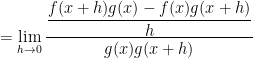
This is a technique that we expect math majors to add to their repertoire of techniques as they progress through the curriculum. I forget the exact proof, but I remember that, when I was a student in honors calculus, we had some theorem that required an argument of the form


But while this is a technique that expect students to master, there’s no doubt that this looks utterly foreign to a student first encountering this technique. After all, in high school algebra, students would simplify something like 

In this brief series, I’d like to give some thoughts on getting students comfortable with this technique.
Wason Selection Task: Index
I’m doing something that I should have done a long time ago: collecting a series of posts into one single post. The following links comprised my series on the Wason Selection Task.
Part 1: Statement of the problem.
Part 2: Answer of the problem.
Part 3: Pedagogical thoughts about the problem, including variants.
Engaging students: Completing the square
In my capstone class for future secondary math teachers, I ask my students to come up with ideas for engaging their students with different topics in the secondary mathematics curriculum. In other words, the point of the assignment was not to devise a full-blown lesson plan on this topic. Instead, I asked my students to think about three different ways of getting their students interested in the topic in the first place.
I plan to share some of the best of these ideas on this blog (after asking my students’ permission, of course).
This student submission comes from my former student Victor Acevedo. His topic, from Algebra: completing the square.
How does this topic extend what your students should have learned in previous courses?
Completing the square is an Algebra II topic that builds on students’ prior knowledge of areas and shapes. With a given quadratic equation, students can make a visual representation of what it looks like by using Alge-blocks or Algebra tiles. The x-squared term becomes the starting point for the model. The x term gets split in half and placed on 2 adjacent sides of the x-squared term. The next step in the process requires the student fill in what is missing of the square. Students use their knowledge of squares and packing to complete the square and make the quadratic equation easily factorable.
How can technology be used to effectively engage students with this topic?
Eddie Woo is an Australian High School Math teacher that also uploads videos to YouTube. He uploads his class lectures that he thinks will help others appreciate and understand math concepts better. He made this video where he makes a visual representation and informal proof for why the “Completing the Square” method works. By using the student’s knowledge of equations and shapes he can construct the square that appears when completing the square for a quadratic equation. The moment that he puts the blocks together you can hear the amazement by his students. Many of his videos have this some feeling to them in which he explores the beauty of math and makes logical connections between what students already know and what they need to know.
What interesting things can you say about the people who contributed to the discovery and/or the development of this topic?
Completing the square was a method that was discovered in order to solve quadratic equations. This method was discovered by Muhammad ibn Musa al-Khwarizmi, a Persian mathematician, astronomer, and geographer. Al-Khwarizmi, also known as the father of Algebra, wrote “The Compendious Book on Calculation by Completion and Balancing” in which he presented systematic solutions to solving linear and quadratic equations. At the time Al-Khwarizmi’s goal was to simplify any quadratic equation to be expressed with squares, roots, and numbers (ax2, bx, and c constants respectively) to one of six standard forms. The method of completing the square is a simple one to follow, but it had not been put into words formally until Al-Khwarizmi laid out the steps. In his book he progressed through solving simple linear equations and then simple quadratic equations that only required roots. This method only came up once he got to quadratic equations of the form ax2+bx+c=0 that could not be solved simply with roots. The discovery of this method leads to a simpler way of visually representing quadratic equations and applying it to parabolic functions.
References
Hughes, Barnabas. “Completing the Square – Quadratics Using Addition.” MAA Press | Periodical | Convergence, Mathematical Association of America, Aug. 2011, www.maa.org/press/periodicals/convergence/completing-the-square-quadratics-using-addition.
Mastin, Luke. “Al-Khwarizmi – Islamic Mathematics – The Story of Mathematics.” Egyptian Mathematics – The Story of Mathematics, 2010, www.storyofmathematics.com/islamic_alkhwarizmi.html.
My Favorite One-Liners: Part 109
I tried a new joke in class recently; it worked gloriously.
I wrote on the board a mathematical conjecture that has yet to be proven or disproven. To emphasize that nobody knows the answer yet despite centuries of effort, I told the class, “If you figure this out, call me and call me collect,” writing my office phone number on the board.
To complete the joke, I said, “Yeah, this is crazy. So here’s my number…”
I thoroughly enjoyed my students’ coruscating groans before I could complete the punch line.

