
In this series of posts, I explore properties of complex numbers that explain some surprising answers to exponential and logarithmic problems using a calculator (see video at the bottom of this post). These posts form the basis for a sequence of lectures given to my future secondary teachers.
To begin, we recall that the trigonometric form of a complex number 

where 


There’s a shorthand notation for the right-hand side (
In the previous three posts, we discussed De Moivre’s Theorem:
Theorem. If 
![\left[ r (\cos \theta + i \sin \theta) \right]^n = r^n (\cos n \theta + i \sin n \theta)](https://s0.wp.com/latex.php?latex=%5Cleft%5B+r+%28%5Ccos+%5Ctheta+%2B+i+%5Csin+%5Ctheta%29+%5Cright%5D%5En+%3D+r%5En+%28%5Ccos+n+%5Ctheta+%2B+i+%5Csin+n+%5Ctheta%29&bg=ffffff&fg=000000&s=0&c=20201002)
Let’s now use this theorem to solve an algebraic equation.
Find all
so that
.
When I present this to my students, their kneejerk reaction is always to answer “
With enough patience, a student will usually volunteer that 



So the other two roots can be found using the quadratic formula:

So there are indeed three roots. Though I usually won’t take class time to do it, I encourage my students to cube these two answers to confirm that they indeed get 
As an aside, before moving on to the use of De Moivre’s Theorem, I usually point out to my students that there is a formula for factoring the sum of two cubes:

And there’s a formula for the difference of two cubes:

My experience is that even math majors are not familiar with these two formulas. They know the difference of two squares formula, but they’re either not proficient with these two formulas or else they’ve never seen them before. These can be generalized for any odd positive exponent and any positive exponent, respectively.
In tomorrow’s post, I’ll describe how these three roots can be found by using De Moivre’s Theorem.

For completeness, here’s the movie that I use to engage my students when I begin this sequence of lectures.
 : proof by induction.
 : let
: let  , and then use part 1.
 . Students can usually volunteer the successive steps of this special case:
![\left[ r (\cos \theta + i \sin \theta) \right]^{-5} = \displaystyle \frac{1}{ \left[ r (\cos \theta + i \sin \theta) \right]^{5} }](https://s0.wp.com/latex.php?latex=%5Cleft%5B+r+%28%5Ccos+%5Ctheta+%2B+i+%5Csin+%5Ctheta%29+%5Cright%5D%5E%7B-5%7D+%3D+%5Cdisplaystyle+%5Cfrac%7B1%7D%7B+%5Cleft%5B+r+%28%5Ccos+%5Ctheta+%2B+i+%5Csin+%5Ctheta%29+%5Cright%5D%5E%7B5%7D+%7D&bg=ffffff&fg=000000&s=0&c=20201002)


![= r^{-5} (\cos [0-5\theta] + i \sin[0-5\theta] )](https://s0.wp.com/latex.php?latex=%3D+r%5E%7B-5%7D+%28%5Ccos+%5B0-5%5Ctheta%5D+%2B+i+%5Csin%5B0-5%5Ctheta%5D+%29&bg=ffffff&fg=000000&s=0&c=20201002)
![= r^{-5} (\cos [-5\theta] + i \sin[ - 5\theta])](https://s0.wp.com/latex.php?latex=%3D+r%5E%7B-5%7D+%28%5Ccos+%5B-5%5Ctheta%5D+%2B+i+%5Csin%5B+-+5%5Ctheta%5D%29&bg=ffffff&fg=000000&s=0&c=20201002) ,
, , so that
  is equal to (students volunteer)
  . In other words,
 ![\left[ r (\cos \theta + i \sin \theta) \right]^{n} = \displaystyle \frac{1}{ \left[ r (\cos \theta + i \sin \theta) \right]^{-n} }](https://s0.wp.com/latex.php?latex=%5Cleft%5B+r+%28%5Ccos+%5Ctheta+%2B+i+%5Csin+%5Ctheta%29+%5Cright%5D%5E%7Bn%7D+%3D+%5Cdisplaystyle+%5Cfrac%7B1%7D%7B+%5Cleft%5B+r+%28%5Ccos+%5Ctheta+%2B+i+%5Csin+%5Ctheta%29+%5Cright%5D%5E%7B-n%7D+%7D&bg=ffffff&fg=000000&s=0&c=20201002)
 is positive, and so (
![= \displaystyle \frac{1}{ \left[ r (\cos \theta + i \sin \theta) \right]^m }](https://s0.wp.com/latex.php?latex=%3D+%5Cdisplaystyle+%5Cfrac%7B1%7D%7B+%5Cleft%5B+r+%28%5Ccos+%5Ctheta+%2B+i+%5Csin+%5Ctheta%29+%5Cright%5D%5Em+%7D&bg=ffffff&fg=000000&s=0&c=20201002)


![= r^{-m} (\cos [0-m\theta] + i \sin[0-m\theta] )](https://s0.wp.com/latex.php?latex=%3D+r%5E%7B-m%7D+%28%5Ccos+%5B0-m%5Ctheta%5D+%2B+i+%5Csin%5B0-m%5Ctheta%5D+%29&bg=ffffff&fg=000000&s=0&c=20201002)
![= r^{-m} (\cos [-m\theta] + i \sin[ - m \theta])](https://s0.wp.com/latex.php?latex=%3D+r%5E%7B-m%7D+%28%5Ccos+%5B-m%5Ctheta%5D+%2B+i+%5Csin%5B+-+m+%5Ctheta%5D%29&bg=ffffff&fg=000000&s=0&c=20201002)
![= r^{n} (\cos [n\theta] + i \sin[ n \theta])](https://s0.wp.com/latex.php?latex=%3D+r%5E%7Bn%7D+%28%5Ccos+%5Bn%5Ctheta%5D+%2B+i+%5Csin%5B+n+%5Ctheta%5D%29&bg=ffffff&fg=000000&s=0&c=20201002) ,
, . This is trivial, as the left-hand side is
![\left[ r (\cos \theta + i \sin \theta) \right]^0 = 1](https://s0.wp.com/latex.php?latex=%5Cleft%5B+r+%28%5Ccos+%5Ctheta+%2B+i+%5Csin+%5Ctheta%29+%5Cright%5D%5E0+%3D+1&bg=ffffff&fg=000000&s=0&c=20201002) ,
, .
. . On the board, I write the left-hand side on the top and the right-hand side on the bottom, leaving plenty of space in between:
![\left[ r (\cos \theta + i \sin \theta) \right]^{n+1}](https://s0.wp.com/latex.php?latex=%5Cleft%5B+r+%28%5Ccos+%5Ctheta+%2B+i+%5Csin+%5Ctheta%29+%5Cright%5D%5E%7Bn%2B1%7D&bg=ffffff&fg=000000&s=0&c=20201002)

![= r^{n+1} (\cos [n+1] \theta + i \sin [n+1] \theta)](https://s0.wp.com/latex.php?latex=%3D+r%5E%7Bn%2B1%7D+%28%5Ccos+%5Bn%2B1%5D+%5Ctheta+%2B+i+%5Csin+%5Bn%2B1%5D+%5Ctheta%29&bg=ffffff&fg=000000&s=0&c=20201002) .
.![\left[ r (\cos \theta + i \sin \theta) \right]^{n+1} = \left[ r (\cos \theta + i \sin \theta) \right]^n \cdot \left[ r (\cos \theta + i \sin \theta) \right]](https://s0.wp.com/latex.php?latex=%5Cleft%5B+r+%28%5Ccos+%5Ctheta+%2B+i+%5Csin+%5Ctheta%29+%5Cright%5D%5E%7Bn%2B1%7D+%3D+%5Cleft%5B+r+%28%5Ccos+%5Ctheta+%2B+i+%5Csin+%5Ctheta%29+%5Cright%5D%5En+%5Ccdot+%5Cleft%5B+r+%28%5Ccos+%5Ctheta+%2B+i+%5Csin+%5Ctheta%29+%5Cright%5D+&bg=ffffff&fg=000000&s=0&c=20201002)
![= \left[ r^n (\cos n \theta + i \sin n \theta) \right] \cdot \left[ r (\cos \theta + i \sin \theta) \right]](https://s0.wp.com/latex.php?latex=%3D+%5Cleft%5B+r%5En+%28%5Ccos+n+%5Ctheta+%2B+i+%5Csin+n+%5Ctheta%29+%5Cright%5D+%5Ccdot+%5Cleft%5B+r+%28%5Ccos+%5Ctheta+%2B+i+%5Csin+%5Ctheta%29+%5Cright%5D+&bg=ffffff&fg=000000&s=0&c=20201002)
![=r^n \cdot r (\cos [n \theta + \theta] + i \sin [n \theta + \theta])](https://s0.wp.com/latex.php?latex=%3Dr%5En+%5Ccdot+r+%28%5Ccos+%5Bn+%5Ctheta+%2B+%5Ctheta%5D+%2B+i+%5Csin+%5Bn+%5Ctheta+%2B+%5Ctheta%5D%29&bg=ffffff&fg=000000&s=0&c=20201002)
![= r^{n+1} (\cos [n+1]\theta + i \sin [n+1]\theta)](https://s0.wp.com/latex.php?latex=%3D+r%5E%7Bn%2B1%7D+%28%5Ccos+%5Bn%2B1%5D%5Ctheta+%2B+i+%5Csin+%5Bn%2B1%5D%5Ctheta%29&bg=ffffff&fg=000000&s=0&c=20201002) .
.![\left[ r_1 (\cos \theta_1 + i \sin \theta_1) \right] \cdot \left[ r_2 (\cos \theta_2 + i \sin \theta_2) \right] = r_1 r_2 (\cos [\theta_1+\theta_2] + i \sin [\theta_1+\theta_2])](https://s0.wp.com/latex.php?latex=%5Cleft%5B+r_1+%28%5Ccos+%5Ctheta_1+%2B+i+%5Csin+%5Ctheta_1%29+%5Cright%5D+%5Ccdot+%5Cleft%5B+r_2+%28%5Ccos+%5Ctheta_2+%2B+i+%5Csin+%5Ctheta_2%29+%5Cright%5D+%3D+r_1+r_2+%28%5Ccos+%5B%5Ctheta_1%2B%5Ctheta_2%5D+%2B+i+%5Csin+%5B%5Ctheta_1%2B%5Ctheta_2%5D%29&bg=ffffff&fg=000000&s=0&c=20201002) .
. . (When teaching this in class, I usually choose the exponent to be the current year.)
 as
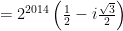
as 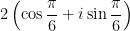 … for reasons that will become apparent later, I tell my students that I’ll use radians and not degrees for this one. Most students can recognize — and this is important, before I formally prove De Moivre’s Theorem — that they need to multiply
  by itself 2014 times and add
  to itself 2014 times. Therefore,
 without a calculator. With some prodding, they’ll recognize that
  , and so they can subtract
  (not
(not  ) without changing the values of sine and cosine. Therefore,

![\displaystyle \frac{ r_1 (\cos \theta_1 + i \sin \theta_1) }{ r_2 (\cos \theta_2 + i \sin \theta_2) } = \displaystyle \frac{r_1}{r_2} (\cos [\theta_1-\theta_2] + i \sin [\theta_1-\theta_2])](https://s0.wp.com/latex.php?latex=%5Cdisplaystyle+%5Cfrac%7B+r_1+%28%5Ccos+%5Ctheta_1+%2B+i+%5Csin+%5Ctheta_1%29+%7D%7B+r_2+%28%5Ccos+%5Ctheta_2+%2B+i+%5Csin+%5Ctheta_2%29+%7D+%3D+%5Cdisplaystyle+%5Cfrac%7Br_1%7D%7Br_2%7D+%28%5Ccos+%5B%5Ctheta_1-%5Ctheta_2%5D+%2B+i+%5Csin+%5B%5Ctheta_1-%5Ctheta_2%5D%29&bg=ffffff&fg=000000&s=0&c=20201002) .
. and
and  terms and then multiplying by the conjugate of the denominator:




![= \displaystyle \frac{r_1}{r_2} (\cos \theta_1 + i \sin \theta_1)( \cos [-\theta_2] + i \sin [-\theta_2])](https://s0.wp.com/latex.php?latex=%3D+%5Cdisplaystyle+%5Cfrac%7Br_1%7D%7Br_2%7D+%28%5Ccos+%5Ctheta_1+%2B+i+%5Csin+%5Ctheta_1%29%28+%5Ccos+%5B-%5Ctheta_2%5D+%2B+i+%5Csin+%5B-%5Ctheta_2%5D%29&bg=ffffff&fg=000000&s=0&c=20201002) ;
; and
and  , they are taught to just distribute (or, using the nomenclature that I don’t like, FOIL it out):
 .
.![\left[ r_1 (\cos \theta_1 + i \sin \theta_1) \right] \cdot \left[ r_2 (\cos \theta_2 + i \sin \theta_2) \right]](https://s0.wp.com/latex.php?latex=%5Cleft%5B+r_1+%28%5Ccos+%5Ctheta_1+%2B+i+%5Csin+%5Ctheta_1%29+%5Cright%5D+%5Ccdot+%5Cleft%5B+r_2+%28%5Ccos+%5Ctheta_2+%2B+i+%5Csin+%5Ctheta_2%29+%5Cright%5D+&bg=ffffff&fg=000000&s=0&c=20201002)

![= r_1 r_2 (\cos \theta_1 \cos \theta_2 - \sin \theta_1 \sin \theta_2 + i[ \sin \theta_1 \cos \theta_2 + \cos \theta_1 \sin \theta_2])](https://s0.wp.com/latex.php?latex=%3D+r_1+r_2+%28%5Ccos+%5Ctheta_1+%5Ccos+%5Ctheta_2+-+%5Csin+%5Ctheta_1+%5Csin+%5Ctheta_2+%2B+i%5B+%5Csin+%5Ctheta_1+%5Ccos+%5Ctheta_2+%2B+%5Ccos+%5Ctheta_1+%5Csin+%5Ctheta_2%5D%29&bg=ffffff&fg=000000&s=0&c=20201002)
![= r_1 r_2 (\cos [\theta_1+\theta_2] + i \sin [\theta_1+\theta_2])](https://s0.wp.com/latex.php?latex=%3D+r_1+r_2+%28%5Ccos+%5B%5Ctheta_1%2B%5Ctheta_2%5D+%2B+i+%5Csin+%5B%5Ctheta_1%2B%5Ctheta_2%5D%29&bg=ffffff&fg=000000&s=0&c=20201002) .
.
![1 + 2i = \sqrt{5} \left( \cos[\tan^{-1} 2] + i \sin[\tan^{-1} 2] \right) \approx \sqrt{5} \left( \cos 63.435^\circ + i \sin 63.435^\circ \right)](https://s0.wp.com/latex.php?latex=1+%2B+2i+%3D+%5Csqrt%7B5%7D+%5Cleft%28+%5Ccos%5B%5Ctan%5E%7B-1%7D+2%5D+%2B+i+%5Csin%5B%5Ctan%5E%7B-1%7D+2%5D+%5Cright%29+%5Capprox+%5Csqrt%7B5%7D+%5Cleft%28+%5Ccos+63.435%5E%5Ccirc+%2B+i+%5Csin+63.435%5E%5Ccirc+%5Cright%29&bg=ffffff&fg=000000&s=0&c=20201002)
 . Indeed,
 .
.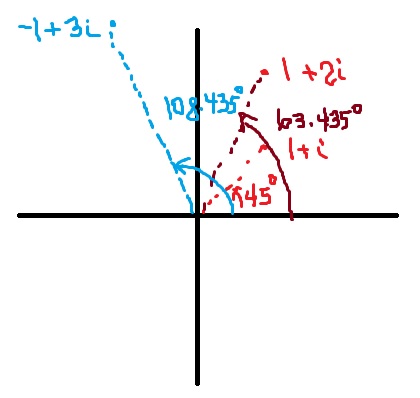
 is in the second quadrant of the complex plane. The modulus is
 .
. , and not
  , appears in the above expression.) Also,
 , so that
 is in the second quadrant, we choose
 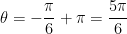 . Therefore,

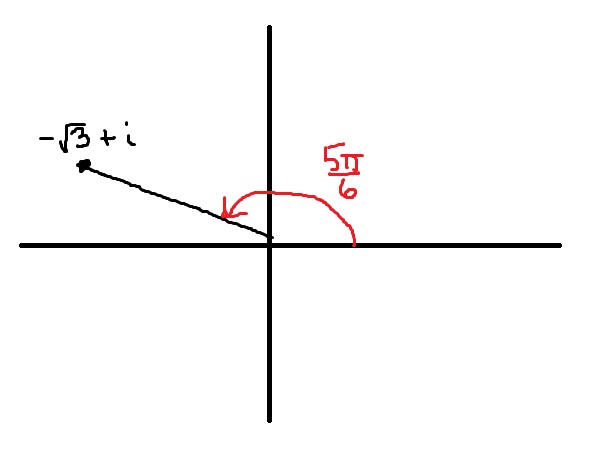
 would also have worked. For example,

 . After all, the arctangent of an angle must lie between
  and
and  , which won’t work for complex numbers in either the second or third quadrant. That said, it is true that
 , and take two steps to arrive at the point
  , and take two steps to arrive at the same point.
 (getting more than a little dizzy while doing so), and take two steps to arrive at the same point.
 , and take two steps backwards (while doing the moonwalk) to arrive at the same point.
 ? Or
? Or  ? Easy, right? Well, let’s plug into a calculator and find out. (Click anywhere in the image below to start the movie. The important stuff is the screen at the top; you can see the keystrokes that I used if you following the mouse arrow toward the bottom.)
