
From the Mathematical Association of America’s Distinguished Lecture Series:
Category: Popular Culture
Applying Science to Speed Training
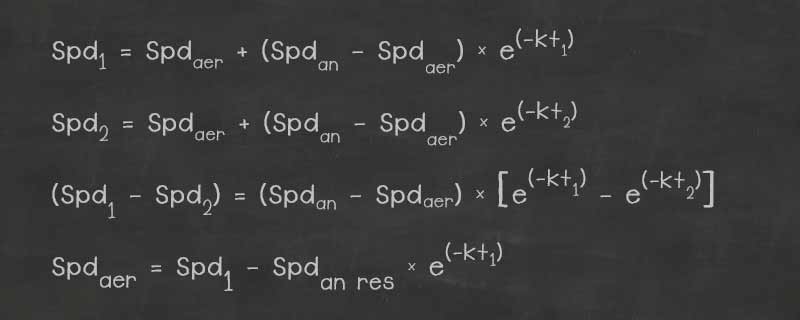
I enjoyed this surprising (well, surprising to me) application of exponential functions: training sprinters and other runners.
Field Guide to Math on the National Mall
For anyone visiting my old stomping grounds of Washington, D.C., this summer, the Mathematical Association of America has compiled its Field Guide to Math on the National Mall. For example:
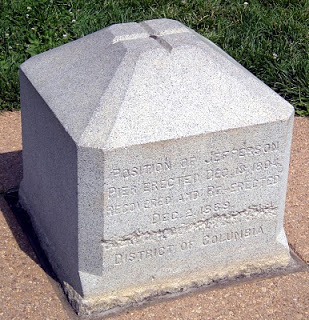
Washington, D.C., was planned around a large right triangle, with the White House at the triangle’s northern vertex and the U.S. Capitol at its eastern vertex, linked by Pennsylvania Avenue (as the hypotenuse). A 1793 survey established the location of the triangle’s 90° vertex, and Thomas Jefferson, when he was Secretary of State, had a wooden post installed to mark the spot. This post was replaced in 1804 by a more substantial marker, which came to be known as the Jefferson Pier.
UCLA mathematicians bring ocean to life for Disney’s ‘Moana’
From the UCLA news service:
UCLA mathematicians bring ocean to life for Disney’s ‘Moana’
From the second paragraph:
“In general, the animators and artists at the studios want as little to do with mathematics and physics as possible, but the demands for realism in animated movies are so high,” [UCLA mathematician Joseph] Teran said. “Things are going to look fake if you don’t at least start with the correct physics and mathematics for many materials, such as water and snow. If the physics and mathematics are not simulated accurately, it will be very glaring that something is wrong with the animation of the material.”
I recommend the whole article.
My Favorite One-Liners: Part 96
In this series, I’m compiling some of the quips and one-liners that I’ll use with my students to hopefully make my lessons more memorable for them.
When assigning homework or a take-home project, my students may ask what the rules are for collaborating with their peers. As a general rule, I want my students to talk to each other and to collaborate on homework, even if that opens the possibility that some student may directly copy their answers from somebody else. (I figure that if any student abuses collaboration, they will get appropriately punished when they take in-class exams.) So, when students ask about rules for collaborating, I tell them:
To quote the great philosopher, “You go talk to your friends, talk to my friends, talk to me.”
My Favorite One-Liners: Part 92
In this series, I’m compiling some of the quips and one-liners that I’ll use with my students to hopefully make my lessons more memorable for them.
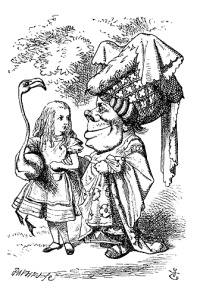
This is one of my favorite quote from Alice in Wonderland that I’ll use whenever discussing the difference between the ring axioms (integers are closed under addition, subtraction, and multiplication, but not division) and the field axioms (closed under division except for division by zero):
‘I only took the regular course [in school,’ said the Mock Turtle.]
‘What was that?’ inquired Alice.
‘Reeling and Writhing, of course, to begin with,’ the Mock Turtle replied; ‘and then the different branches of Arithmetic — Ambition, Distraction, Uglification, and Derision.’
Predicate Logic and Popular Culture (Part 123): Willie Nelson
Let
be the proposition “You were on my mind at time
.” Translate the logical statement
.
Naturally, this matches the classic song by Willie Nelson (though Elvis did record it before him).

Context: This semester, I taught discrete mathematics for the first time. Part of the discrete mathematics course includes an introduction to predicate and propositional logic for our math majors. As you can probably guess from their names, students tend to think these concepts are dry and uninteresting even though they’re very important for their development as math majors.
In an effort to making these topics more appealing, I spent a few days mining the depths of popular culture in a (likely futile) attempt to make these ideas more interesting to my students. In this series, I’d like to share what I found. Naturally, the sources that I found have varying levels of complexity, which is appropriate for students who are first learning prepositional and predicate logic.
When I actually presented these in class, I either presented the logical statement and had my class guess the statement in actual English, or I gave my students the famous quote and them translate it into predicate logic. However, for the purposes of this series, I’ll just present the statement in predicate logic first.
Predicate Logic and Popular Culture (Part 122): Queen
Let
be the proposition “I cross a million rivers,” let
be the proposition “I rode a million miles,” and let
be the proposition “I still am where I started.” Translate the logical statement
.
This matches a line from this classic by Queen.
Context: This semester, I taught discrete mathematics for the first time. Part of the discrete mathematics course includes an introduction to predicate and propositional logic for our math majors. As you can probably guess from their names, students tend to think these concepts are dry and uninteresting even though they’re very important for their development as math majors.
In an effort to making these topics more appealing, I spent a few days mining the depths of popular culture in a (likely futile) attempt to make these ideas more interesting to my students. In this series, I’d like to share what I found. Naturally, the sources that I found have varying levels of complexity, which is appropriate for students who are first learning prepositional and predicate logic.
When I actually presented these in class, I either presented the logical statement and had my class guess the statement in actual English, or I gave my students the famous quote and them translate it into predicate logic. However, for the purposes of this series, I’ll just present the statement in predicate logic first.
Predicate Logic and Popular Culture (Part 121): OneRepublic
Let
be the proposition “
is a right friend,” let
be the proposition “
is a right place,” let
be the proposition “
be the proposition “They have
.
This matches the chorus of this song by OneRepublic.
Context: This semester, I taught discrete mathematics for the first time. Part of the discrete mathematics course includes an introduction to predicate and propositional logic for our math majors. As you can probably guess from their names, students tend to think these concepts are dry and uninteresting even though they’re very important for their development as math majors.
In an effort to making these topics more appealing, I spent a few days mining the depths of popular culture in a (likely futile) attempt to make these ideas more interesting to my students. In this series, I’d like to share what I found. Naturally, the sources that I found have varying levels of complexity, which is appropriate for students who are first learning prepositional and predicate logic.
When I actually presented these in class, I either presented the logical statement and had my class guess the statement in actual English, or I gave my students the famous quote and them translate it into predicate logic. However, for the purposes of this series, I’ll just present the statement in predicate logic first.
Predicate Logic and Popular Culture (Part 120): Crossfade
Let
be the proposition “At time
.
This matches the echo of this song by Crossfade.
Context: This semester, I taught discrete mathematics for the first time. Part of the discrete mathematics course includes an introduction to predicate and propositional logic for our math majors. As you can probably guess from their names, students tend to think these concepts are dry and uninteresting even though they’re very important for their development as math majors.
In an effort to making these topics more appealing, I spent a few days mining the depths of popular culture in a (likely futile) attempt to make these ideas more interesting to my students. In this series, I’d like to share what I found. Naturally, the sources that I found have varying levels of complexity, which is appropriate for students who are first learning prepositional and predicate logic.
When I actually presented these in class, I either presented the logical statement and had my class guess the statement in actual English, or I gave my students the famous quote and them translate it into predicate logic. However, for the purposes of this series, I’ll just present the statement in predicate logic first.
 Mean Green Math