Engaging students: Computing inverse functions

In my capstone class for future secondary math teachers, I ask my students to come up with ideas for engaging their students with different topics in the secondary mathematics curriculum. In other words, the point of the assignment was not to devise a full-blown lesson plan on this topic. Instead, I asked my students to think about three different ways of getting their students interested in the topic in the first place.

I plan to share some of the best of these ideas on this blog (after asking my students’ permission, of course).

This student submission comes from my former student Derek Skipworth. His topic, from Algebra II: computing inverse functions.

green line

B. How can this topic be used in your students’ future courses in mathematics or science?

In essence, an inverse function is supposed to “undo” what the original function did to the original input.  Knowing how to properly create inverse functions gives you the ultimate tool for checking your work, something valuable for any math course.  Another example is Integrals in Calculus.  This is an example of an inverse operation on an existing derivative.  A stronger example of using actual inverse functions is directly applied to Abstract Algebra when inverse matrices are needed to be found.


green line

C. How has this topic appeared in high culture?

The idea of inverse functions can be found in many electronics.  My hobby is 2-channel stereo.  Everyone has stereos, but it is viewed as a “higher culture” hobby when you get into the depths that I have reached at this point.  One thing commonly found is Chinese electronics.  How does this correlate to my topic?  Well, the strength of the Chinese is that they are able to offer very similar products comparable to high-end, high-dollar products at a fraction of the costs.  While it is true that they do skimp on some parts, the biggest reason they are able to do this is because of their reverse engineering.  Through reverse engineering, they do not suffer the massive overhead of R&D that the “respectable” companies have.  Lower overhead means lower cost to the consumer.  Because of the idea of working in reverse, “better” products are available to the masses at cheaper prices, thus improving the opportunity for upgrades in 2-channel.


green line

E. How can technology be used to effectively engage students with this topic?

A few years ago, there was a game released on Xbox 360 arcade called Braid.  It was a commercial and critical success.  The gameplay was designed around a character who could reverse time.  The trick was that there were certain obstacles in each level that prevented the character from reversing certain actions.  To tie technology into a lesson plan, I would choose a slightly challenging level and have the class direct me through the level.  This would tie into a group activity where the students are required to calculate inverse functions to reverse their steps (like Braid) and eventually solve a “master” problem that would complete the activity.  This activity could be loosely based off a second level that could wrap up the class based off the results that each group produced from the activity.

http://braid-game.com/


Engaging students: Factoring quadratic polynomials

In my capstone class for future secondary math teachers, I ask my students to come up with ideas for engaging their students with different topics in the secondary mathematics curriculum. In other words, the point of the assignment was not to devise a full-blown lesson plan on this topic. Instead, I asked my students to think about three different ways of getting their students interested in the topic in the first place.

I plan to share some of the best of these ideas on this blog (after asking my students’ permission, of course).

This student submission comes from my former student Kelsie Teague. Her topic, from Algebra I and II: factoring quadratic polynomials.

green line

What interesting things can you say about the people who contributed to the discovery and/or the development of the topic?

In Renaissance times, polynomial factoring was a royal sport. Kings sponsored contests and the best mathematicians in Europe traveled from court to court to demonstrate their skills. Polynomial factoring techniques were closely guarded secrets.

http://www.ehow.com/info_8651462_history-polynomial-factoring.html

When reading this article, I found the fact that this topic was considered a royal sport very interesting. Students would also find that interesting because it would get their attention with the fact that kings thought this was very important. We could even have our own royal game for it. I think we could start off with a scavenger hunt to work on factoring just basic integers. Also, I think we could use the same idea to start the explore except to do it backwards and give them the polynomial already factored and have them FOIL it and get their polynomial. I want to see if they can see how to do it the other way around without being taught how. This game could show them that factoring is just the reverse of foiling.

green line

How can technology (YouTube, Khan Academy [khanacademy.org], Vi Hart, Geometers Sketchpad, graphing calculators, etc.) be used to effectively engage students with this topic?

I looked up factoring quadratic polynomials on Khan Academy and I found some really great videos. They have videos that show detail steps and also after a few videos they have parts where you can practice what you just watched and see if you understand it.  This website is great for at home practice or in class practice because with the practice sections it tells you if you are correct or not and will also give you hints if you don’t know where to start. Also, if you don’t have a clue how to do the problem given, you can hit “show me solution” and it will redirect you to a similar problem in a video to help out. I think this website is a great tool to let students know about to learn and practice.

Also I found a great video on YouTube it’s a rap about factoring that would certainly get gets engaged.

green line

Curriculum

Students first learn about the basic idea of factoring in elementary school and continue to learn and use this topic all the way through college. You need to factor polynomials in many different contexts in mathematics. It’s a fundamental skill for math in general and can make other calculations much easier. You use factoring for finding solutions of various equations, and such equations can come up in calculus when find maxima, minima, inflection points, solving improper integrals, limits, and partial fractions.  Students will need to know factoring all the way up in to their higher-level math classes in college, and also be able to use it in a career that is related to engineering, physics, chemistry and computer science.


Engaging students: Powers and exponents

In my capstone class for future secondary math teachers, I ask my students to come up with ideas for engaging their students with different topics in the secondary mathematics curriculum. In other words, the point of the assignment was not to devise a full-blown lesson plan on this topic. Instead, I asked my students to think about three different ways of getting their students interested in the topic in the first place.

I plan to share some of the best of these ideas on this blog (after asking my students’ permission, of course).

This student submission comes from my former student Kelsie Teague. Her topic, from Pre-Algebra: powers and exponents.

green line

What interesting word problem using this topic can your students do now?

For the topic of powers and exponents I want to bring in the idea of money, and doubling a salary. The word problem I would give them to start with and to get them thinking would be this:

Two companies were offering you a job. Company A is offering you a salary of $1,000 a day for 30 days and Company B is offering you a salary of $2 the first day and it doubles each day after that for 30 days. Which job is the better offer?

Since this is just my engage problem I’m not expecting them to be able to tell me that the answer is Company B because the answer is 2^{31}-2, but I am hoping they can get to the point of at least knowing that Company B will be paying the most. I want to get his or her attention and everyone loves money.

green line

How can this topic be used in your students’ future courses in Mathematics or Science?

I believe powers and exponents are important knowledge because students will be using them for the rest of their math career. This comes up when teaching functions, learning the graphs of functions, trig, pre-calculus, Calculus and etc. Powers and exponents are used extensively in algebra and it is important that students have a strong understand of how and why they work before continuing onto those higher classes. For example, when you have x^3, and talking about graphing a cubic function or x^2 and how it makes a parabola, and also when talking about factoring. If you have (x-2)^2 = (x-2)(x-2) =(x^2 -4x +4), students need to understand what it means to ^2 something.  Once students get to calculus that also use exponents and powers when doing derivatives and integrals. This isn’t a topic that is only based in math, it is also something used in science, engineering, and physics. Once students start college, no matter their major they will be taking at least one class that require some sort of knowledge with exponents and powers.
green line

What interesting things can you say about the people who contributed to the discovery and/or the development of this topic?

The earliest exponents came from the Babylonians. The number system was extremely different from modern mathematics. The earliest known mention of Babylon was mentioned on a tablet found around 23rd century BC. Even then they were messing with the concept of exponents.

I would show my students this picture and explain to them what the symbols mean and ask them if they feel any better about doing math in modern times rather than working with these symbols to add, subtract, divide, exponents, power and doing equations. This also shows that this concept has been around for many thousands of years and something that is obviously very important if we still use it in modern math. I might also bring up the website least below that talks about modern exponents and works backwards and talks about where they came from to give the students more depth in this knowledge.

Babylonian square

http://www.ehow.com/about_5134780_history-exponents.html

Engaging students: Introducing the two-column, statement-reason paradigm of geometric proofs

In my capstone class for future secondary math teachers, I ask my students to come up with ideas for engaging their students with different topics in the secondary mathematics curriculum. In other words, the point of the assignment was not to devise a full-blown lesson plan on this topic. Instead, I asked my students to think about three different ways of getting their students interested in the topic in the first place.

I plan to share some of the best of these ideas on this blog (after asking my students’ permission, of course).

This student submission comes from my former student Derek Skipworth. His topic, from Geometry: introducing the two-column, statement-reason paradigm of geometric proofs.

green line

A. Applications – How could you as a teacher create an activity or project that involves your topic?

I would have the students get in groups and come up with 5-8 statements on one sheet of paper, numbering each one.  This could be a statement about the weather, something that happened the day before, anything.  My example would be “I wore a long sleeve shirt today”.  After coming up with these statements, I would then have the students create reasons behind these statements on a separate sheet.  For each statement, the students would have to ask “why…”.  For my example, it might be that it was laundry day and it was my only clean shirt, or that it was cold outside.  Upon generating all reasons behind each statement, I would then introduce the proof model.

green line

B. Curriculum – How can this topic be used in your students’ future courses in mathematics or science?

The two-column, statement-reason paradigm is a system that can actually be used in all subjects.  The idea behind it, giving a statement on the right and a reason on the right, can be applied to almost everything.  For problem solving, you can work through an entire problem step by step and explain why you think that is the correct process.  In a class such as Calculus, this could be used to help them memorize derivatives by doing the problem on the left and listing what “tool” they used for each step of the process.  Even for something like social studies, this process could be adapted into a tool similar to the Cornell Notes (http://coe.jmu.edu/LearningToolbox/cornellnotes.html).  In this process, you use the two-column approach.  On the left, you list your main ideas, while the right column “explains” what you know about the idea.

green line

E. Technology – How can Technology be used to effectively engage students with this topic?

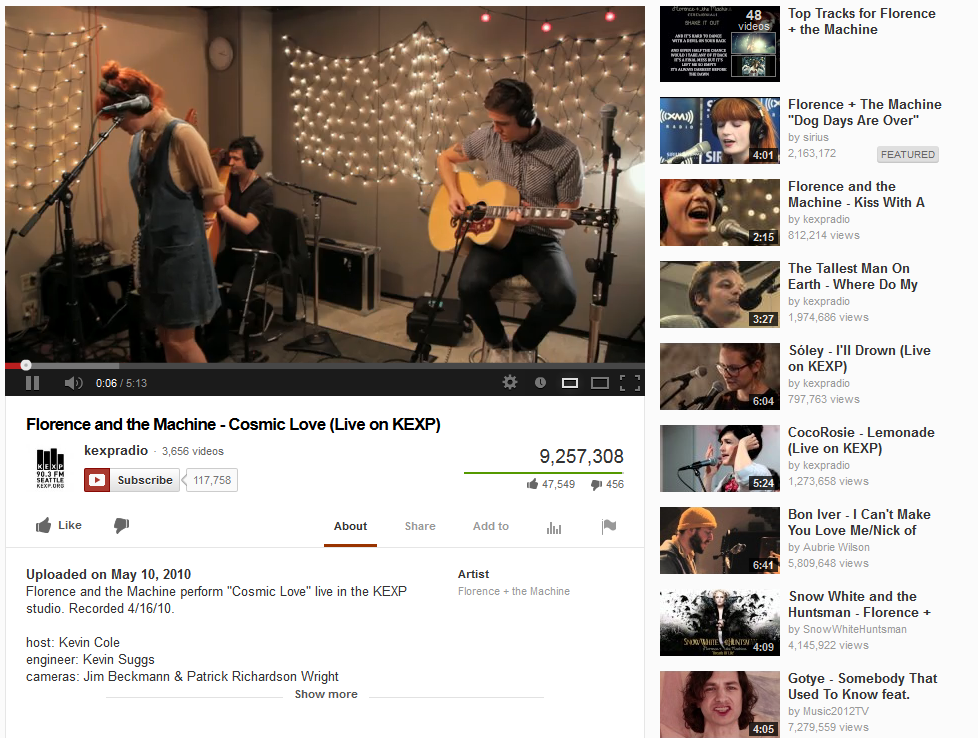
I had issues tying this topic to a third question.  While it’s a good topic, its more of a process than an actual concept.  This would actually qualify as an engage activity, slightly different to the one mentioned above, but I would see it working better as a take-home assignment than an in-class one.  The assignment would be to use YouTube and pull up a video that piques their interest.  Obviously, it needs to be school-appropriate.  This could be their favorite music video, a funny video of cats, whatever it is would work.  They would write the name of the video at the top and provide a link to the video if possible.  Then, they would take the paper and fold it in half, hot-dog style.  On the left, they list the names of videos on the suggested pane to the right, in order as they appear.  On the right, they would add comments about how that video was related to the video they chose and why it was in that order.  The idea is that this should take a bit of thinking since often times the videos appear to be randomly added to that queue.  This would reinforce the model while hopefully developing a better idea of how a website they are familiar with operates.  Though this could be done with any search engine as well, I feel those are just too similar to offer any “investigative” work for the students.

Florence and the Machine

Seen above, one would likely suspect that a Florence and the Machine video would pull up various other Florence videos in the top 9; however, the snapshot shows that this is not the case.  We see that most results have nothing to do with Florence.  We see that there are a few matches based on the KEXP live performance.  When listening to some others, it might be reason to believe they were in the queue not only based on a performance, but also because the genres are very similar.  That would be my main conclusion about Gotye’s music video being included in the list: it’s a very popular song and is in the same genre as Florence.


Engaging students: Congruence

In my capstone class for future secondary math teachers, I ask my students to come up with ideas for engaging their students with different topics in the secondary mathematics curriculum. In other words, the point of the assignment was not to devise a full-blown lesson plan on this topic. Instead, I asked my students to think about three different ways of getting their students interested in the topic in the first place.

I plan to share some of the best of these ideas on this blog (after asking my students’ permission, of course).

This student submission comes from my former student Kelsie Teague. Her topic, from Geometry: congruence.

green line

Application.

Many students in high school go to the county or state fair yearly. I would start off by giving students a picture of a ferris wheel and having them find as many triangles in that ferris wheel that have what seem to be the same sides and angles and see how many different answers I get. After defining congruence, I would continue to ask the students if they thought this ferris wheel could be constructed without the idea of congruence. If the shapes in this ferris wheel were different sizes would it still work properly? I would then use this as a basis of what people need the idea of congruence to do their job.

ferriswheel

green lineCulture.

Congruence shows up in art work all over the place. It can show up in photography with taking picture of identical twins. Those twins are congruent but they are not the same person therefore they are not equal. I would post some pictures of art work and talk about the differences and have the student explain to me what they see. The bottom piece is made using the exact same shape and the idea of congruence. I would show my students some pictures and how the lesson for that day can be related to art work in real life.

twins

tesselate

green line

Technology

http://www.khanacademy.org/math/geometry/congruent-triangles

The above website is a great hands on activity. It lets the students move triangles around to see if they can form triangles that aren’t the same. It also uses previous knowledge to guide them into the idea of congruence. Khanacademy.org also has other activities that can help with previous knowledge and then activities that take the concept of congruence and build on it. The activity I did was really good, it let me drop and stretch triangles to try and make them non congruent. It also gives one where you can’t lengthen the side but you can move it around and try to make a triangle out of it. I think this activity could show students about congruence in a different kind of way.

Engaging students: Solving for unknown parts of triangles and rectangles

In my capstone class for future secondary math teachers, I ask my students to come up with ideas for engaging their students with different topics in the secondary mathematics curriculum. In other words, the point of the assignment was not to devise a full-blown lesson plan on this topic. Instead, I asked my students to think about three different ways of getting their students interested in the topic in the first place.

I plan to share some of the best of these ideas on this blog (after asking my students’ permission, of course).

This student submission comes from my former student Michelle McKay. Her topic, from Algebra I: solving for unknown parts of triangles and rectangles.

green line

A. How could you as a teacher create an activity or project that involves your topic?

There are several different ideas that immediately come to mind on how to center a lesson around solving for unknown parts of rectangles and triangles. I would like to focus on and describe one. For this particular lesson, the student will start by making a prediction of which side(s) of a shape (triangle or rectangle) has the greatest length. Then, with a partner, they will use rulers and a handout to record the dimensions of both shapes. On the handout, they will work to fill out the chart provided. Then, we will reconvene as a class and talk about the discoveries made. For rectangles, I would ask first about what we found to be consistent for every rectangle. Using what we know, how we could find or solve for the length of one side if we only had certain parts of information? Similarly for triangles, I would begin by asking how each side differed from one another. Did the general shapes of the triangles make a difference? What was special about the right triangles? After these questions, I would introduce Pythagorean’s Theorem and have them solve for the side of triangles without rulers, then follow up with using rulers to verify their information.

green line

D. What interesting things can you say about the people who contributed to the discovery and/or the development of this idea?

Pythagoras of Samos: During Pythagoras’ time, math was considered to be a mixture of both religious and scientific beliefs and was often associated with secret societies and only those of very high social standing. As Pythagoras was one of the more influential mathematicians of his time, most details of his life were kept secret until centuries after his death, leaving very little reliable information to be pieced together in form of a biography. It is generally accepted that he was born on the island of Samos, which is now incorporated into the country of Greece. Little is known about his childhood, but most agree that he was very well educated and was acquainted with geometry before he traveled to Egypt. He was known to be almost sacrosanct and divine to those alive during his time and even a few well after his death. He founded a religious, and simultaneously mathematical, movement called Pythagoreanism, which consisted of two schools of thought: the “learners” and the “listeners”.

green line

D. What are the contributions of various cultures to this topic?

Time Period

Civilization

Contribution

Earliest known references:

23rd Century B.C.

Babylonians

–          Had rules for generating Pythagorean triples.

–          Comprehended the relationship of a right triangle’s sides.

–          Discovered the relationship of \sqrt{2}.


500 – 200 B.C.

Chinese

–          Gives a statement and geometrical demonstration of the Pythagorean Theorem (possibly before Pythagoras’ time).


570 – 495 B.C.

Greek

–          Golden rectangles were very vaguely referenced by Plato.

–          Euclid wrote a clear definition of what a rectangle is.

–          Pythagoras discovered a relationship between the sides of right triangles.


Earliest known references:
800 – 600 B.C.

Indian

–          Pythagorean Theorem was utilized in forming the proper dimensions for religious altars.

It is very hard to for historians to pinpoint with exact certainty which civilization was the first to discover what we know now as the Pythagorean Theorem. Many of the civilizations listed above existed during the same time period, but were geographically located on opposite ends of the map. Also due to loss of information from translations, damaged or completely destroyed texts, these dates and the authenticity of certain contributions are still debated to this day.

 Sources

  1. http://www-history.mcs.st-and.ac.uk/Biographies/Pythagoras.html
  2. http://ualr.edu/lasmoller/pythag.html
  3. http://www-history.mcs.st-and.ac.uk/Biographies/Euclid.html
  4. http://plato.stanford.edu/entries/pythagoreanism/

Engaging students: Venn diagrams

In my capstone class for future secondary math teachers, I ask my students to come up with ideas for engaging their students with different topics in the secondary mathematics curriculum. In other words, the point of the assignment was not to devise a full-blown lesson plan on this topic. Instead, I asked my students to think about three different ways of getting their students interested in the topic in the first place.

I plan to share some of the best of these ideas on this blog (after asking my students’ permission, of course).

This student submission comes from my former student Michelle McKay. Her topic, from Probability: Venn diagrams.

green line

A. What interesting word problems using this topic can your students do now?

In my opinion, you can create a word problem with Venn diagrams on just about anything. To make a word problem more interesting, you can relate the problem to an upcoming event or holiday, make a cultural reference, or even discuss students’ hobbies (i.e. video games, books, etc.).

On Valentine’s Day, a survey of what gifts a women received from their significant other yielded surprising results.

76% of the women surveyed received a card.

72% received chocolate.

49% received flowers.

21% received chocolate and a card.

5% received a card and flowers.

7% received chocolate and flowers.

33% received chocolate, a card, and flowers.

If a woman from the survey was selected at random, what would the probability of her having not received a Valentine’s Day gift be? What is the probability that she received any combination of two gifts? What is the probability that she received a card and flowers, but not chocolate?

green line

B.     How can this topic be used in your students’ future courses in mathematics or science?

Venn diagrams are an excellent way to organize information. They can organize and be a visual representation of gathered statistics (like in the above section). They can also organize general ideas and concepts, distinguishing them as unique or shared amongst other ideas/concepts. A student can use Venn diagrams in either of these manners for both math and science classes of any difficulty.


green line

B. How does this topic extend what your students should have learned in previous courses?

When using Venn diagrams to represent statistics, it reinforces the idea that parts cannot be larger than the whole. We know when using Venn diagrams for statistical data that the decimals must add up to 1 to represent 100%. Students should realize that adding the decimals and getting a number that is larger than or smaller than 1 means they miscalculated or there is “missing” data. By “missing” data, I mean to say that they did not enter in all the given information correctly.


Engaging students: Deriving the distance formula

In my capstone class for future secondary math teachers, I ask my students to come up with ideas for engaging their students with different topics in the secondary mathematics curriculum. In other words, the point of the assignment was not to devise a full-blown lesson plan on this topic. Instead, I asked my students to think about three different ways of getting their students interested in the topic in the first place.

I plan to share some of the best of these ideas on this blog (after asking my students’ permission, of course).

This student submission comes from my former student Michelle McKay. Her topic, from Algebra II: deriving the distance formula.

green line

C. How has this topic appeared in pop culture?

Numb3rs is a relatively popular TV show that revolves around the character Dr. Charlie Eppes, a mathematician. The show’s plot is primarily centralized around Dr. Eppes’ ability to help the FBI solve various crimes by applying mathematics.

Numb3rs

In the pilot episode, Dr. Eppes uses Rossmo’s Formula to help narrow down the current residence of a criminal to a neighborhood. Rossmo’s Formula is a very interesting in that it predicts the probability that a criminal might live in various areas. In the Numb3rs episode, Charlie manipulates the formula and projects the results onto a map to show the hot spot, or rather, the location where the criminal is most likely to be living in.

Rossmo’s Formula, however, would not be complete without including what we know as a Manhattan distance formula, which is just a derivation of the Euclidian distance formula.

green line

From the distance formula we can derive…

The distance formula is a byproduct of Pythagorean’s Theorem. By examining any two points on a two dimensional plane, x and y components could be observed and used to calculate the distance between the points by forming a right triangle and solving for the hypotenuse. Later in time, the distance formula has been adapted to fit many different situations. To name a few, there is distance in Euclidean space and its variations (Euclidean distance, Manhattan or taxicab distance, Chebyshev distance, etc.), distance between objects in more than two dimensions, and distances between a point and a set.

green line

E. Technology

The best way for students to really understand the distance formula is to allow them to make it their discovery. We can handle this in many ways. One of the more obvious explorations is to give them a piece of graph paper and have them plot points. However, this is an instance where technology can serve a great purpose in the classroom.  There are vast amounts of apps online that will allow students to manipulate two points on a grid. After looking at several different apps, I find the one I have listed in the sources to be great for a few reasons. First, students can move two points around a virtual grid. This is a “green” activity and saves paper. Second, while students move the points, a right triangle is automatically drawn for them. Depending on the level of the class, students can make connections between the Pythagorean Theorem and how it leads to the distance formula. Third, above the grid is an interactive equation. It automatically plugs in the values of the points on the grid and finds the distance between them. What is even more impressive is that it solves the equation in steps.

Engaging students: Geometric sequences

In my capstone class for future secondary math teachers, I ask my students to come up with ideas for engaging their students with different topics in the secondary mathematics curriculum. In other words, the point of the assignment was not to devise a full-blown lesson plan on this topic. Instead, I asked my students to think about three different ways of getting their students interested in the topic in the first place.

I plan to share some of the best of these ideas on this blog (after asking my students’ permission, of course).

This student submission comes from my former student Michelle McKay. Her topic, from Precalculus: geometric sequences.

green line

A.     What interesting word problems using this topic can your student do now?

In the movie Pay it Forward (2000), the young boy Trevor has the following idea: He can make the world a better place by encouraging people to help others.

payitforward

If Trevor helps three people and asks that they help three other people instead of repaying him, how can we represent this as a sequence? Write the first 5 terms.  (Hint: Let Trevor be represented by the number 1.)

What is a formula that can give us the amount of people affected after n terms?

When will 177,147 people be affected? 14,348,907 people?

green lineB.     How can this topic be used in your students’ future courses in mathematics or science?

For science classes, geometric sequences can be used to represent data collected for exponential growth or decay of a population or solution over time. Below are some examples of how geometric sequences can appear in a future science class.

Biology: A researcher is determining whether a certain species of mouse is thriving in its environment or becoming endangered. The total population of the mouse is calculated each year. What conclusions can you draw from the data below?

Year

Population

1

240

2

720

3

2,160

4

6,480

5

19,440

Chemistry: A student has been monitoring the amount of Na in a solution. Based off the data collected, when will the Na in the solution be negligible?

Day

Na %

1 95%
2 42.75%
3 19.24%
4 8.65%

Physics: Students in a physics class measure the following heights of a ball that has been dropped from 10 feet in the air. Each measured height is taken at the highest point in the ball’s trajectory.

10

8

6.4

5.12

4.096

Source: http://www.phschool.com/atschool/academy123/english/academy123_content/wl-book-demo/ph-256s.html

green lineA.     Application of geometric sequences.

The following prompt can be used as a short response or in-class debate:

A student is standing a distance of x meters away from the front of the classroom. If he decreases the distance between himself and the front of the classroom by half each time he moves, will he ever reach the front of the classroom? What if instead of a student, we use a point on a line? Justify your answer.


Engaging students: right-triangle trigonometry

In my capstone class for future secondary math teachers, I ask my students to come up with ideas for engaging their students with different topics in the secondary mathematics curriculum. In other words, the point of the assignment was not to devise a full-blown lesson plan on this topic. Instead, I asked my students to think about three different ways of getting their students interested in the topic in the first place.

I plan to share some of the best of these ideas on this blog (after asking my students’ permission, of course).

This student submission comes from my former student Kelsie Teague. Her topic, from Precalculus: right-triangle trigonometry.

green line

How has this topic appeared in popular culture?

In the famous T.V. show Numbers they do an episode using trig to find the angle of origin of the blood spatter. In forensic science they use trig every day to determine where the victim was originally injured. They can also use this to find the angle of impact, area/point of convergence, and area of origin.  The following power point goes into more detail: http://cmb.physics.wisc.edu/people/gault/Blood%20Splatter%20Trig.pdf

 If the blood was dropped by a 90-degree angle, the stain will appear to be an almost perfect circle.

We could get out some long paper and colored water and experiment with the idea of change of angle in the drop of blood and calculate the angles.

Angle of Impact =Sin (theta)= Width of drop/Length of drop.

green line

How can technology (YouTube, Khan Academy [khanacademy.org], Vi Hart, Geometers Sketchpad, graphing calculators, etc.) be used to effectively engage students with this topic?

YouTube is a great website for engagement because you can find many videos to start the lesson off with some previous knowledge that they will be using for that days lesson. The following video would be a good way to engage the students when talking about right triangle trig.

It’s to a song that they probably have already heard and it’s teaching them something they already know. Since the students already have knowledge of this, the video isn’t teaching them the topic but refreshing their memory in a entertaining fashion.

When looking for a good video, I ran across many that would work for this lesson, but this one seemed like it would grab the student’s attention more and keep their attention.

The above video is also a good one, and it shows the lyrics in the description so you can make sure what they are saying is mathematically correct so it doesn’t give the students any misconceptions.

green line

How could you as a teacher create an activity or project that involves your topic?

If I was teaching at a school that was close to a hill or a mountain outside I could take my students outside and have them figure out how far up the mountain they would have to walk to get to the top. We could use a tap measure to measure how high they had the protractor in the air and then we could look up the height and distance away of the mountain. They then could use the protractor to find the angle between themselves and the top of the mountain. We could then use this information inside the classroom to solve how far to travel up the mountain.

mountaintrigSimilar to the above picture except they will know the height of the mountain.  This would show the length of the hypotenuse of the right triangle. They will have to subtract the height they have the protractor at from the height of the mountain to be accurate since the height of the mountain is from the ground up.