Let me take a one-day break from my current series of posts to wish everyone a Happy Pythagoras Day! Today is 8/17/15 (or 17/8/15 in other parts of the world), and .
Bonus points if you can figure out (without Googling) when the next four Pythagoras Days will be. One of the next four is easy, two others aren’t so hard, but the fourth might take some thought.
We are approaching the 70th anniversary of VJ Day (August 14, 1945), which marked the end of World War II. And perhaps the iconic photograph of that day is the picture of two anonymous strangers kissing in New York City’s Times Square celebrating the end of the war.
And a question that is still unresolved after 70 years is: Who are they?
The short answer is, Nobody knows for certain. But in a clever bit of geometric and astronomical forensics, physicists at Texas State University (Donald Olson and Russell Doescher) and Iowa State University (Steven D. Kawaler) recently pinpointed the exact time that the photograph was taken: 5:51 pm, or about an hour before President Truman formally announced that the war was over. From the press release:
Overlooked in the right hand background of the photo is the Bond Clothes clock. The minute hand of this clock is clear, but the oblique angle of view and the clock’s unusually short hour hand makes a definitive reading of the time difficult. The clock might show a time near 4:50, 5:50, or 6:50 p.m. A prominent shadow falls across the Loew’s Building just beyond the clock, however, and this shadow could potentially give just as accurate a time reading as the clock.
Every tall building in Manhattan acts as a sundial, its cast shadow moving predictably as the sun traverses the sky. In this case, the Texas State team studied hundreds of photographs and maps from the 1940s to identify the source of the shadow, considering, in turn, the Paramount Building, the Hotel Lincoln and the Times Building. The breakthrough came when a photograph of the Astor Hotel revealed a large sign shaped like an inverted L that advertised the Astor Roof garden.
Calculations showed that only the Astor Roof sign could have cast the shadow, but to be certain, Olson and Doescher built a scale model of the Times Square buildings with a mirror to project the sun’s rays. The location, size and shape of the shadow on the model exactly matched the shadow in Eisenstaedt’s kiss photographs.
So who are the kissers? Again from the press release:
Over the years, dozens of men and women have come forward claiming to be the persons in the photograph. All have different stories, but the one thing they share in common is kissing a stranger in Times Square that fateful day.
“All those people have said they were there and identify themselves in the photograph,” Olson said. “Who’s telling the truth? They all could be telling the truth about kissing someone. They were probably all there, and kisses were common in Times Square on VJ Day.
“I can tell you some things about the picture, and I can rule some people out based on the time of day,” he said. “We can show that some of the accounts are entirely inconsistent with the astronomical evidence”…
“Astronomy alone can’t positively identify the participants, but we can tell you the precise moment of the photograph,” Olson said. “Some of the accounts are inconsistent with the astronomical evidence, and we can rule people out based on the position of the sun. The shadows were the key to unlocking some of the secrets of the iconic VJ Day images–we know when the famous kiss happened, and that gives us some idea of who might or might not have been in the picture.”
“There are probably 50 or 60 sailors who have come forward and say, ‘That’s me! I’m the guy in the photograph.’ Fewer women, maybe five or six women, have said they’re the woman in white. There are articles all over the internet advocating for one [or] the other,” Olson said.
Olson can’t say who is correct, but he can rule out a few.
“What we can do is calculate the precise time, 5:51 p.m., when the photograph was taken. That does appear to rule out some of the widely accepted candidates,” he said.
The full article has been published in the August 2015 issue of Sky and Telescope magazine (sorry, you’ll have to buy a copy in you want to read the article). I also recommend clicking through the photographs in the press release; the captions of the photographs give many details of how the time of 5:51 pm was pinpointed.
We now have a winner for the worst math education video on YouTube:
My personal favorite part is demonstrating that 140*9 is a multiple of 9 by casting out nines.
Why is this so awful? There are two essential ideas that make this work:
Humans have chosen a convention that there are 360 degrees in a circle. There’s nothing particularly magical about 360; that’s just the number that humanity has chosen for measuring angles with degrees. Notice that 360 happens to be a multiple of 9.
The first part of the video shows that, when 360 degrees is successively bisected, the digits of the resulting angle still sum to 9. That’s because dividing by 2 is the same as multiplying by 5 and then dividing by 10. Dividing by 10 is unimportant for the purpose of adding digits, so the only operation that’s important is multiplying by 5. And of course, if a multiple of 9 is multiplied by 5, the product is still a multiple of 9.
Notice that’s important that the angles are successively bisected. If the angles were trisected instead, this would fail (360/3 = 120, which is not a multiple of 9.)
The second part of the video notes that the sum of the angles in a convex polygon is a multiple of 9. That’s because the sum of the angles is (in degrees) , which of course is a multiple of 9. Furthermore, this formula is a consequence of the human convention of choosing 360 degrees to measure a complete rotation. From this number, the measure of a straight angle is 180 degrees. From this, the sum of the angles in a triangle is determined to be 180 degrees, and from this the sum of the angles in a convex polygon is found to be degrees. All this to say, there’s nothing mystical about this. The second part of the video is a logical consequence of choosing 360 degrees for measuring circles.
In a recent class with my future secondary math teachers, we had a fascinating discussion concerning how a teacher should respond to the following question from a student:
Is it ever possible to prove a statement or theorem by proving a special case of the statement or theorem?
Usually, the answer is no. In this series of posts, we’ve seen that a conjecture could be true for the first 40 cases or even the first cases yet not always be true. We’ve also explored the computational evidence for various unsolved problems in mathematics, noting that even this very strong computational evidence, by itself, does not provide a proof for all possible cases.
However, there are plenty of examples in mathematics where it is possible to prove a theorem by first proving a special case of the theorem. For the remainder of this series, I’d like to list, in no particular order, some common theorems used in secondary mathematics which are typically proved by first proving a special case.
5. Theorem. For any rational number , we have .
This theorem is typically proven using the Chain Rule (in the guise of implicit differentiation) and the following lemma:
Lemma. For any integer , we have .
Clearly, the lemma is a special case of the main theorem. However, the lemma can be proven without using the main theorem:
Proof of Lemma (Case 1). If is a positive integer, then
Case 1 can also be proven using the Product Rule and mathematical induction.
Proof of Lemma (Case 2). If , then the theorem is trivially true since , and the derivative of a constant is zero.
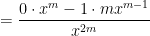
Proof of Lemma (Case 3). If is a negative integer, then write , where is a positive integer. Then, using the Quotient Rule,
QED
Now that the lemma has been proven, the main theorem can be proven using the lemma.
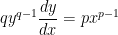
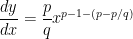
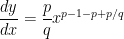
Proof of Theorem. Suppose that , where and are integers. Suppose that . Then:
In a recent class with my future secondary math teachers, we had a fascinating discussion concerning how a teacher should respond to the following question from a student:
Is it ever possible to prove a statement or theorem by proving a special case of the statement or theorem?
Usually, the answer is no. In this series of posts, we’ve seen that a conjecture could be true for the first 40 cases or even the first cases yet not always be true. We’ve also explored the computational evidence for various unsolved problems in mathematics, noting that even this very strong computational evidence, by itself, does not provide a proof for all possible cases.
However, there are plenty of examples in mathematics where it is possible to prove a theorem by first proving a special case of the theorem. For the remainder of this series, I’d like to list, in no particular order, some common theorems used in secondary mathematics which are typically proved by first proving a special case.
1. Theorem. The sum of the angles in a convex n-gon is degrees.
This theorem is typically proven after first proving the following lemma:
Lemma. The sum of the angles in a triangle is degrees.
Clearly the lemma is a special case of the main theorem: for a triangle, and so . The proof of the lemma uses alternate interior angles and the convention that the angle of a straight line is 180 degrees.
Using this, the main theorem follows by using diagonals to divide a convex n-gon into triangles. (For example, drawing a diagonal divides a quadrilateral into two triangles.) The sum of the angles of the n-gon must equal the sum of the angles of the triangles.
So it is possible to prove a theorem by proving a special case of the theorem. Using the sum of the angles of a triangle to prove the formula for the sum of the angles of a convex n-gon is qualitatively different than the previous computational examples seen earlier in this series.
In my capstone class for future secondary math teachers, I ask my students to come up with ideas for engaging their students with different topics in the secondary mathematics curriculum. In other words, the point of the assignment was not to devise a full-blown lesson plan on this topic. Instead, I asked my students to think about three different ways of getting their students interested in the topic in the first place.
I plan to share some of the best of these ideas on this blog (after asking my students’ permission, of course).
This student submission comes from my former student Emily Bruce. Her topic, from Geometry: deriving the proportions of a 30-60-90 triangle.
How could you as a teacher create an activity or project that involves your topic?
There is a great activity for deriving the ratio of the sides of a 30-60-90 triangle that uses an equilateral triangle with known side lengths. If you draw the line that bisects one of the angles in the triangle, it is then perpendicular to the side opposite the bisected angle. This creates two triangles with a corresponding 30-degree angle (from the bisected angle), a congruent corresponding side (the line drawn through the triangle), and a corresponding right angle (from the perpendicular line). From this information the two triangles are congruent by the ASA rule. Students might also use the SAS rule by recognizing that the sides of an equilateral triangle are the same lengths, so the two sides adjacent to the bisected 60-degree angle will be congruent. Since the two smaller triangles are congruent, we can show that the smaller sides of the triangle are half the length of the hypotenuse. Using the Pythagorean theorem, the students can find out what the ratio of the sides will be. This is a great activity because it uses students’ prior knowledge about equilateral triangles, angle bisectors, perpendicular lines, and congruent triangles to derive the ratio on their own.
Serra, Michael. Discovering Geometry. Emeryville: Ker Curriculum Press, 2008. Print.
How can this topic be used in your students’ future courses in mathematics and science?
Memorizing the ratio of these sides is not critical in mathematics, because they can always be derived; however having these ratios memorized is very helpful for future use in mathematics and science. When students get into precalculus, they learn about trigonometry. 30-60-90 triangles and their side ratios are specifically helpful when it comes to learning about the unit circle. Students will have to learn the different values of the sine, cosine, and tangent functions of common angles like 30, 60 and 90 that correspond to special right triangles. What they will learn is that for a 30-degree angle, the sine function is equal to the opposite angle divided by the hypotenuse. If the students have memorized the 30-60-90 side ratios, computing these values is simple. Another way in which this can be helpful is in physics. One important topic in physics is projectile motion. In order to find out how far a projectile object will go before it hits the ground, the initial velocity, which is usually at a certain angle upward, must first be split up into its vertical and horizontal components. To do this, they set up the problem as a right triangle, with the initial velocity as the hypotenuse and the angle the object is launched as one of the angles of the triangle. In order to find the vertical and horizontal components of the velocity, it is just a matter of finding the other sides of the triangle. If it so happens that the object was shot at a nice angle like 30 or 60 degrees, students can use their ratio to quickly and easily find the vertical and horizontal components of the velocity.
How can technology be used to effectively engage students with this topic?
A great website for learning and practicing with special right triangles is kahnacademy.org. It provides a video for how to derive the ratios for special right triangles. The way they derive the 30-60-90 ratio is very similar to the activity I described above. This is a great resource for students who may want to go back and look at how the activity was done. The website has many other videos with practice problems. It shows a problem and how to solve it. This gives students a visual example of how to solve some of the questions that might appear on homework. Finally, the website includes word problems and more videos that extend what they students are learning and apply it. The application part of a math topic is extremely important because if students can see the importance of what they’re learning, they will be more inclined to learn it well.
In my capstone class for future secondary math teachers, I ask my students to come up with ideas for engaging their students with different topics in the secondary mathematics curriculum. In other words, the point of the assignment was not to devise a full-blown lesson plan on this topic. Instead, I asked my students to think about three different ways of getting their students interested in the topic in the first place.
I plan to share some of the best of these ideas on this blog (after asking my students’ permission, of course).
This student submission comes from my former student Tiffany Wilhoit. Her topic, from Geometry: perimeters of polygons.
How could you as a teacher create an activity or project that involves your topic?
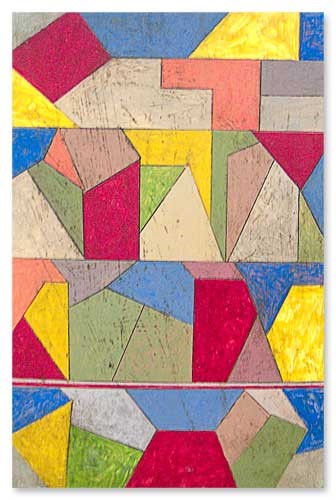
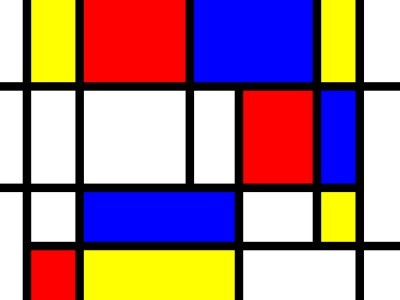
Most activities around the topic of perimeter involve building a fence or a border. However, I feel as if that idea has been overused, and become boring to the students. One activity you could have your students do is to create a piece of art using polygons. There are many artists which create pieces of art using geometric shapes, such as Piet Mondrian. There are two different ways you could do this. The first could be to create a piece of work using polygons of various sizes and structures. The students could then calculate the perimeter of each polygon in their piece of art. There could be a minimum number of polygons the student must use, and you can put extra restrictions on how many different types of polygons the students must use as well. This would provide the students extra practice on determining perimeter of various polygons. Another way to do the project is to have the students create a piece of art using various polygons with the same perimeter. This would allow the students to see how shapes (and area) can change according to how the perimeter is arranged. The students would be able to grasp the idea of two (or more) polygons having the same perimeter, but being different sizes. Either one of these projects would allow the students to discover math while enjoying art.
How does this topic extend what your students should have learned in previous courses?
Students learn about perimeter starting in elementary school. The students learn to add up the four sides of a rectangle or square. Elementary students deal with very basic shapes, and discover the basic meaning of perimeter. As the students go through school the difficulty of the problems increases. The students learn about multiplying the length of one side by the number of sides to find the perimeter of a regular polygon. Soon, the students have to solve for missing sides. First they have to be aware that some sides are equal to other sides, and they just plug in the numbers. Then the students will use algebra to solve for the sides labeled as X or X plus some amount. The students continue to see perimeter throughout calculus. In calculus, the students will be asked to minimize or maximize the perimeter. The students see the topic or perimeter throughout their schooling, so it is necessary for them to have a good understanding of the topic.
How can technology be used to effectively engage students with this topic?
This video was a little silly, but it shared the idea of perimeter of polygons, and I think the students would enjoy it. The graphics are constantly changing which will help keep the attention of the students. This video shows some examples of polygons and their perimeter. However, the video only uses rectangles and triangles. One good point of the video is when it shows how to find the missing sides of different rectangles, however, by high school the students should already have a grasp on this. Nevertheless, it is still an engaging.
This video uses the beat of a song, but changes the words to discuss perimeter. I liked this video because it gave the examples of building a fence or walking around the block. These are examples the student would know already, and they would be able to remember if they needed help distinguishing between area and perimeter. The last half of the song discusses area. You could choose to play the entire video or just the portion on perimeter.
This video is an excellent review all about perimeter. The video goes into the topic pretty deeply, and would make a great review for the students. The video discusses the importance of units since perimeter is a measurement. It goes over a variety of topics, such as using multiplication to find perimeter of regular polygons, how to find missing sides of polygons, irregular polygons, and it even discusses why perimeter is one dimensional. This video is very informative, however, it is not the most engaging video, so it might be better off used as a review, or for the students having trouble.
Erica Flapan (Pomona College) explains why it is important to determine whether a molecule has mirror image symmetry, and discusses the differences between a geometric, chemical, and topological approach to understanding mirror image symmetry.
In my capstone class for future secondary math teachers, I ask my students to come up with ideas for engaging their students with different topics in the secondary mathematics curriculum. In other words, the point of the assignment was not to devise a full-blown lesson plan on this topic. Instead, I asked my students to think about three different ways of getting their students interested in the topic in the first place.
I plan to share some of the best of these ideas on this blog (after asking my students’ permission, of course).
This student submission comes from my former student Delaina Bazaldua. Her topic, from Geometry: introducing proportions.
How can technology (YouTube, Khan Academy [khanacademy.org], Vi Hart, Geometers Sketchpad, graphing calculators, etc.) be used to effectively engage students with this topic?
How has this topic appeared in the news?
Often students don’t realize how important math is in the “real world.” This video: https://www.youtube.com/watch?v=Qhm7-LEBznk is a funny and educational way for students to realize that math isn’t just for the classroom, but it can actually help you become famous if your spouse decides to post your lack of mathematical knowledge on YouTube (this video ended up turning into an interview on ABC News: https://www.youtube.com/watch?v=ordps6MbPhg)! The video is about a husband asking his wife how long it takes someone to get 80 miles if they were going 80 miles per hour. Since this topic is introducing proportions, I would push pause the video right after the question was asked (around 20 seconds into it) and ask the students to attempt the problem that the man is introducing with only their background knowledge of the concept from previous math classes. This is kind of a video of “what not to do” when solving proportions. After the video has concluded and the students get a good laugh, I would continue teaching the lesson and relate it back to the video since this is a real world question and is applicable to the topic. I think this is a good introduction to the lesson because it helps the students grasp the concept quickly and they will also find it humorous to watch.
How could you as a teacher create an activity or project that involves your topic?
I found a really good blog from a teacher through Pinterest: http://mathequalslove.blogspot.com/2012/04/sugar-packets-and-proportions.html. This website is really great because it is posted from a teacher on a blog who actually tried the lesson. The lesson can be adjusted for a geometry class, but it is really remarkable the way it is without changing a thing especially as an introduction to proportions before going into deeper questions that involve geometry. Like the video above, it can be relatable by the audience of students because of how applicable it is to their life. Likewise, it could also help them eat/drink better! The goal of the lesson is to figure out how many packets of sugar are in a variety of food and drinks using proportions between packets of sugar and grams of sugar! The engage would include the video of someone eating packets of sugar, students brainstorming ideas of how many packets of sugar are in a drink, and then would escalate to students putting the drinks in order of most sugar to least sugar without looking at the nutritional label. After that, students would be given the fact that there are approximately 4 packets of sugar in a gram of sugar. They would also be given the nutritional labels to calculate how many packets are in the drinks using proportions. I think this is a good lesson because it engages the students by allowing them to relate to something that happens in everyday life when they drink/eat things. It is also a good way to introduce proportions with something concrete like bottles before introducing something that is somewhat abstract, such as shapes drawn on a paper which is how geometry is often seen.
What interesting things can you say about the people who contributed to the discovery and/or the development of this topic?
Perhaps the most famous proportion in history is known as the “Divine Proportion.” Using the research found on the website: http://www.goldennumber.net/golden-ratio-history/, it can help students realize the history behind proportions because, despite popular belief, students need to learn the history of the concept they are being taught to fully grasp the concept of the topic. The website given is really great because it goes through the different names other than divine proportion, such as Golden Ratio and Fibonacci Sequence, and how it was discovered and rediscovered throughout time which is why there are so many unique names that exist now. I also found that the fact that the names that have the words ‘golden’ and ‘divine’ in the name are because of a spiritual background. Understanding divine proportion is important because it is around us every day and it is only a piece of the whole umbrella that engulfs all of probability. It is also applicable to students because it involves them and their physical body along with objects they interact with everyday. I found the topic of divine proportion very interesting and I would hope my students would as well which is why I think this is an extraordinary engage.


 , which of course is a multiple of 9. Furthermore, this formula is a consequence of the human convention of choosing 360 degrees to measure a complete rotation. From this number, the measure of a straight angle is 180 degrees. From this,
  cases yet not always be true. We’ve also explored the computational evidence for various unsolved problems in mathematics, noting that even this very strong computational evidence, by itself, does not provide a proof for all possible cases.
 , we have
  .
. , we have
  .
.

![= \displaystyle \lim_{h \to 0} \left[ n x^{n-1} + \frac{1}{2} n(n-1) x^{n-2} h + \dots + h^{n-1} \right]](https://s0.wp.com/latex.php?latex=%3D+%5Cdisplaystyle+%5Clim_%7Bh+%5Cto+0%7D+%5Cleft%5B+n+x%5E%7Bn-1%7D+%2B+%5Cfrac%7B1%7D%7B2%7D+n%28n-1%29+x%5E%7Bn-2%7D+h+%2B+%5Cdots+%2B+h%5E%7Bn-1%7D+%5Cright%5D&bg=ffffff&fg=000000&s=0&c=20201002)


 , then the theorem is trivially true since
  , and the derivative of a constant is zero.
 , where
  is a positive integer. Then, using the Quotient Rule,


 , where
  and
and  are integers. Suppose that
  . Then:
![y^q = \displaystyle \left[ x^{p/q} \right]^q](https://s0.wp.com/latex.php?latex=y%5Eq+%3D+%5Cdisplaystyle+%5Cleft%5B+x%5E%7Bp%2Fq%7D+%5Cright%5D%5Eq&bg=ffffff&fg=000000&s=0&c=20201002)

 :
:

![\displaystyle \frac{dy}{dx} = \displaystyle \frac{p}{q} \frac{x^{p-1}}{[x^{p/q}]^{q-1}}](https://s0.wp.com/latex.php?latex=%5Cdisplaystyle+%5Cfrac%7Bdy%7D%7Bdx%7D+%3D+%5Cdisplaystyle+%5Cfrac%7Bp%7D%7Bq%7D+%5Cfrac%7Bx%5E%7Bp-1%7D%7D%7B%5Bx%5E%7Bp%2Fq%7D%5D%5E%7Bq-1%7D%7D&bg=ffffff&fg=000000&s=0&c=20201002)



 degrees.
 and so
  . The
. The 
 triangles. (For example, drawing a diagonal divides a quadrilateral into two triangles.) The sum of the angles of the n-gon must equal the sum of the angles of the


 Mean Green Math