Engaging students: Multiplying binomials

In my capstone class for future secondary math teachers, I ask my students to come up with ideas for engaging their students with different topics in the secondary mathematics curriculum. In other words, the point of the assignment was not to devise a full-blown lesson plan on this topic. Instead, I asked my students to think about three different ways of getting their students interested in the topic in the first place.

I plan to share some of the best of these ideas on this blog (after asking my students’ permission, of course).

This student submission again comes from my former student Andy Nabors. His topic, from Algebra: multiplying binomials.

green line

A2. How could you as a teacher create an activity or project that involves your topic?

Multiplying binomials is an interesting concept because there are so many ways in which this can be done. I can think of five ways that binomials can be multiplied: FOIL, the box method, distribution, vertical multiplication, and with algebra tiles. I would incorporate these methods into one of two different ways. In either case, I would split the class into five groups.

  1. In the first way, I would assign each group a different method of multiplication. The groups would each be responsible for exploring their method, working together to master it. Then each group would be responsible for making a poster describing their method in detail. Then would then present their poster to the class, and the students not presenting would be taking notes. Already having one concept of binomial multiplication, the students would be seeing other methods and deciding which makes most sense to them.
  2. In my second idea, I would have five stations in the classroom each with their own method. The groups would rotate station to station figuring out the different methods collaboratively. The groups would rotate every 7-10 minutes until they had been to every station. Then the class would discuss the strengths/weaknesses of each method compared to the others in a class discussion moderated by the teacher.

These activities rely on the students being able to work and learn in groups effectively, which would present difficulty if the class was not used to group work.

green line

B1. How can this topic be used in your students’ future courses in mathematics or science?

I had the privilege of teaching a multiplying binomial lesson to a freshmen algebra one class in CI last spring. My partner and I focused on the box method first, and then used that to introduce FOIL. The box method was easier to grasp because of the visual nature of it. In fact, it looks a lot like something that the students will definitely see in their biology classes. The box method looks almost identical to gene Punnet Squares in biology. In fact, my partner and I used Punnet Squares in our Engage of that lesson. We reminded the students of what a Punnet Square was, and then showed them a filled out square. We went over how the boxes were filled: the letter on top of each column goes into the boxes below and the letters to the left of the box go in each box to the right. Then we showed them an empty Punnet Square with the same letters before. We inquired about what happens when two variables are multiplied together, then filled out the boxes with multiplication signs in between the letters. The students responded well and were able to grasp the concept fairly well from the onset.

green line

E1. How can technology be used to effectively engage students with this topic?

The internet is fast becoming the only place students will go for helpful solutions to school problems. This activity is designed to be a review of multiplying binomials that would allow students to use some internet resources, but make them report as to why the resource is helpful. The class will go to the computer lab or have laptops wheeled in and they will be given a list of sites that cover binomial multiplication. They will pick a site and write about the following qualities of their chosen site: what kind of site? (calculator, tutorial, manipulative, etc.), how is it presented? (organized/easy to use), was it helpful? (just give an answer opposed to listing the steps), did it describe the method it used?, can you use it to do classwork?, etc.

This is a sample list, I would want more sites, but it gives the general idea I’m going for. (general descriptions in parentheses for this project’s sake)

http://www.mathcelebrity.com/binomult.php (calculator, shows basic steps of FOIL of inputted problem)

http://www.webmath.com/polymult.html (calculator, shows very detailed and specific steps of FOIL of inputted problem)

http://calculator.tutorvista.com/foil-calculator.html (calculator, shows general steps of FOIL, not the inputted problem)

http://www.coolmath.com/crunchers/algebra-problems-multiplying-polynomials-FOIL-1.html (calculator but only problems it gives itself, more of a practice site)

http://www.mathwarehouse.com/algebra/polynomial/foil-method-binomials.php (FOIL tutorial site with practice problems with hidden steps)

http://www.themathpage.com/alg/quadratic-trinomial.htm (wordy explanation, lots of practice problems with hidden answers)

https://www.khanacademy.org/math/algebra/multiplying-factoring-expression/multiplying-binomials/v/multiplying-polynomials-2 (many tutoring videos, just the writing no person)

http://www.zooktutoring.com/now-available-my-very-first-instructional-math-video/ (many tutoring videos, tutor is seen with the work)
http://illuminations.nctm.org/Activity.aspx?id=3482 (algebra tile manipulator)

I will assume as a teacher that my students already look for easy solutions online, so I want to make sure they look in places that will help them gain understanding. I would stress that calculator sites are dangerous because if you just use them then you will not be able to perform on your own, but could be helpful to check your answer if you were worried. At the end of the lesson they would have a greater understanding of how to use internet sources effectively and have reviewed multiplying binomials.


Resources:

http://www.mathcelebrity.com/binomult.php

http://www.webmath.com/polymult.html

http://calculator.tutorvista.com/foil-calculator.html

http://www.coolmath.com/crunchers/algebra-problems-multiplying-polynomials-FOIL-1.html

http://www.mathwarehouse.com/algebra/polynomial/foil-method-binomials.php

http://www.themathpage.com/alg/quadratic-trinomial.htm

https://www.khanacademy.org/math/algebra/multiplying-factoring-expression/multiplying-binomials/v/multiplying-polynomials-2

http://www.zooktutoring.com/now-available-my-very-first-instructional-math-video/
http://illuminations.nctm.org/Activity.aspx?id=3482

Preparation for Industrial Careers in the Mathematical Sciences: Creating More Realistic Animation for Movies

The Mathematical Association of America recently published a number of promotional videos showing various mathematics can be used in “the real world.” Here’s the first pair of videos describing how mathematics is used for computer animation. From the YouTube descriptions:

Dr. Alex McAdams, Senior Software Engineer at Walt Disney Animation Studios, talks about how mathematics is used to make realistic, yet art directable, animations.

Prof. Joseph Teran of the Department of Mathematics at UCLA gives an overview of the numerical linear algebra and iterative method techniques that are used to simulate physical phenomena such as water, fire, smoke, and elastic deformations in the movie and gaming industries.

Engaging students: Deriving the proportions of a 30-60-90 triangle

In my capstone class for future secondary math teachers, I ask my students to come up with ideas for engaging their students with different topics in the secondary mathematics curriculum. In other words, the point of the assignment was not to devise a full-blown lesson plan on this topic. Instead, I asked my students to think about three different ways of getting their students interested in the topic in the first place.

I plan to share some of the best of these ideas on this blog (after asking my students’ permission, of course).

This student submission comes from my former student Emily Bruce. Her topic, from Geometry: deriving the proportions of a 30-60-90 triangle.

green line

How could you as a teacher create an activity or project that involves your topic?


There is a great activity for deriving the ratio of the sides of a 30-60-90 triangle that uses an equilateral triangle with known side lengths. If you draw the line that bisects one of the angles in the triangle, it is then perpendicular to the side opposite the bisected angle. This creates two triangles with a corresponding 30-degree angle (from the bisected angle), a congruent corresponding side (the line drawn through the triangle), and a corresponding right angle (from the perpendicular line). From this information the two triangles are congruent by the ASA rule. Students might also use the SAS rule by recognizing that the sides of an equilateral triangle are the same lengths, so the two sides adjacent to the bisected 60-degree angle will be congruent. Since the two smaller triangles are congruent, we can show that the smaller sides of the triangle are half the length of the hypotenuse. Using the Pythagorean theorem, the students can find out what the ratio of the sides will be. This is a great activity because it uses students’ prior knowledge about equilateral triangles, angle bisectors, perpendicular lines, and congruent triangles to derive the ratio on their own.


Serra, Michael. Discovering Geometry. Emeryville: Ker Curriculum Press, 2008. Print.


green line

How can this topic be used in your students’ future courses in mathematics and science?


Memorizing the ratio of these sides is not critical in mathematics, because they can always be derived; however having these ratios memorized is very helpful for future use in mathematics and science. When students get into precalculus, they learn about trigonometry. 30-60-90 triangles and their side ratios are specifically helpful when it comes to learning about the unit circle. Students will have to learn the different values of the sine, cosine, and tangent functions of common angles like 30, 60 and 90 that correspond to special right triangles. What they will learn is that for a 30-degree angle, the sine function is equal to the opposite angle divided by the hypotenuse. If the students have memorized the 30-60-90 side ratios, computing these values is simple. Another way in which this can be helpful is in physics. One important topic in physics is projectile motion. In order to find out how far a projectile object will go before it hits the ground, the initial velocity, which is usually at a certain angle upward, must first be split up into its vertical and horizontal components. To do this, they set up the problem as a right triangle, with the initial velocity as the hypotenuse and the angle the object is launched as one of the angles of the triangle. In order to find the vertical and horizontal components of the velocity, it is just a matter of finding the other sides of the triangle. If it so happens that the object was shot at a nice angle like 30 or 60 degrees, students can use their ratio to quickly and easily find the vertical and horizontal components of the velocity.

green line

How can technology be used to effectively engage students with this topic?


A great website for learning and practicing with special right triangles is kahnacademy.org. It provides a video for how to derive the ratios for special right triangles. The way they derive the 30-60-90 ratio is very similar to the activity I described above. This is a great resource for students who may want to go back and look at how the activity was done. The website has many other videos with practice problems. It shows a problem and how to solve it. This gives students a visual example of how to solve some of the questions that might appear on homework. Finally, the website includes word problems and more videos that extend what they students are learning and apply it. The application part of a math topic is extremely important because if students can see the importance of what they’re learning, they will be more inclined to learn it well.

Engaging students: Perimeters of polygons

In my capstone class for future secondary math teachers, I ask my students to come up with ideas for engaging their students with different topics in the secondary mathematics curriculum. In other words, the point of the assignment was not to devise a full-blown lesson plan on this topic. Instead, I asked my students to think about three different ways of getting their students interested in the topic in the first place.

I plan to share some of the best of these ideas on this blog (after asking my students’ permission, of course).

This student submission comes from my former student Tiffany Wilhoit. Her topic, from Geometry: perimeters of polygons.

green line

How could you as a teacher create an activity or project that involves your topic?


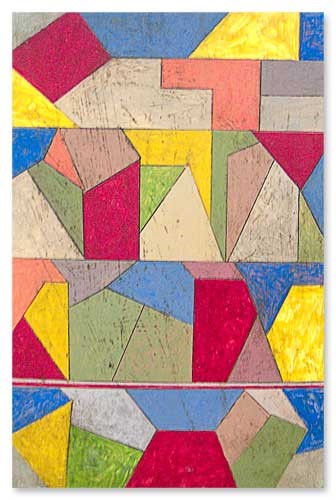
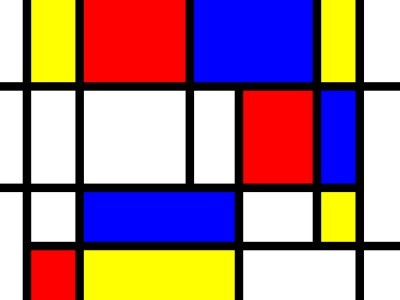
Most activities around the topic of perimeter involve building a fence or a border. However, I feel as if that idea has been overused, and become boring to the students. One activity you could have your students do is to create a piece of art using polygons. There are many artists which create pieces of art using geometric shapes, such as Piet Mondrian. There are two different ways you could do this. The first could be to create a piece of work using polygons of various sizes and structures. The students could then calculate the perimeter of each polygon in their piece of art. There could be a minimum number of polygons the student must use, and you can put extra restrictions on how many different types of polygons the students must use as well. This would provide the students extra practice on determining perimeter of various polygons. Another way to do the project is to have the students create a piece of art using various polygons with the same perimeter. This would allow the students to see how shapes (and area) can change according to how the perimeter is arranged. The students would be able to grasp the idea of two (or more) polygons having the same perimeter, but being different sizes. Either one of these projects would allow the students to discover math while enjoying art.

polygon1polygon2

green line

How does this topic extend what your students should have learned in previous courses?


Students learn about perimeter starting in elementary school. The students learn to add up the four sides of a rectangle or square. Elementary students deal with very basic shapes, and discover the basic meaning of perimeter. As the students go through school the difficulty of the problems increases. The students learn about multiplying the length of one side by the number of sides to find the perimeter of a regular polygon. Soon, the students have to solve for missing sides. First they have to be aware that some sides are equal to other sides, and they just plug in the numbers. Then the students will use algebra to solve for the sides labeled as X or X plus some amount. The students continue to see perimeter throughout calculus. In calculus, the students will be asked to minimize or maximize the perimeter. The students see the topic or perimeter throughout their schooling, so it is necessary for them to have a good understanding of the topic.


green line

How can technology be used to effectively engage students with this topic?


There are several videos on Youtube with songs about perimeter to engage your students. One of the best ones I found was at http://www.youtube.com/watch?v=wynwRcc5q_U.

This video was a little silly, but it shared the idea of perimeter of polygons, and I think the students would enjoy it. The graphics are constantly changing which will help keep the attention of the students. This video shows some examples of polygons and their perimeter. However, the video only uses rectangles and triangles. One good point of the video is when it shows how to find the missing sides of different rectangles, however, by high school the students should already have a grasp on this. Nevertheless, it is still an engaging.


Another video I found to be very engaging can be found at http://www.youtube.com/watch?v=Xk-PyhjFWw4.

This video uses the beat of a song, but changes the words to discuss perimeter. I liked this video because it gave the examples of building a fence or walking around the block. These are examples the student would know already, and they would be able to remember if they needed help distinguishing between area and perimeter. The last half of the song discusses area. You could choose to play the entire video or just the portion on perimeter.


The last video can be found at http://www.youtube.com/watch?v=AAY1bsazcgM.

This video is an excellent review all about perimeter. The video goes into the topic pretty deeply, and would make a great review for the students. The video discusses the importance of units since perimeter is a measurement. It goes over a variety of topics, such as using multiplication to find perimeter of regular polygons, how to find missing sides of polygons, irregular polygons, and it even discusses why perimeter is one dimensional. This video is very informative, however, it is not the most engaging video, so it might be better off used as a review, or for the students having trouble.


Resources:

http://www.theartstory.org/artist-mondrian-piet.htm

http://www.teresacerda.com/teresacerdageometry.html

http://www.youtube.com/watch?v=AAY1bsazcgM

http://www.youtube.com/watch?v=wynwRcc5q_U

http://www.youtube.com/watch?v=Xk-PyhjFWw4