One of my colleagues placed the following problem on an exam for his Calculus II course…
and was impressed by the variety of correct responses that he received. I thought it would be fun to discuss some of the different ways that this limit can be computed.
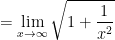
Method #1. The straightforward approach, using only algebra:
I'm a Professor of Mathematics and a University Distinguished Teaching Professor at the University of North Texas. For eight years, I was co-director of Teach North Texas, UNT's program for preparing secondary teachers of mathematics and science.
View all posts by John Quintanilla




 Mean Green Math