
I’m a little late in sharing this, but this is a nice puzzle:
Year: 2014
Engaging students: Defining angles and measures of angles
In my capstone class for future secondary math teachers, I ask my students to come up with ideas for engaging their students with different topics in the secondary mathematics curriculum. In other words, the point of the assignment was not to devise a full-blown lesson plan on this topic. Instead, I asked my students to think about three different ways of getting their students interested in the topic in the first place.
I plan to share some of the best of these ideas on this blog (after asking my students’ permission, of course).
This student submission again comes from my former student Katie Pelzel. Her topic, from Geometry: defining angles and measures of angles.

C1).How has this topic appeared in pop culture?
Video games are a huge deal in pop culture today. Not only kids play them, teenagers and adults frequently play video games. Angles show up in video games whether we see them or not. They are there. For example, in the game MLB 2K10 they are given three cameras – pitcher, pitcher 2 and pitcher 3. The pitcher view is a higher- angle shot that gets more of the mound and base paths into the frame so that the pitcher and the strike zone is smaller than in the pitcher 3 view. The pitcher 3 is a lower angle which is zoomed in more. The view from pitcher 2 shows what is between the pitcher and pitcher 3. The steeper the positions or angles will help the game be easier to see. Most “gamers” would not think about how these actual angles are used in the mathematical world. Realistically these views are placed into angles so that the game can appear real to the “gamers” playing the game. Angles are used to help make any game look better. Similarly, angles are also used in movies and television to help improve the views that people see when watching them. They take special angles so that the view is better. They angle the camera to acute, obtuse and right angles so that the view is not just point blank range. Also, they measure out the angles so that they can make note of the correct angle that gives them the greatest view. They use the angles to emphasize on important views of the show to have a more dramatic effect.
C2). How has this topic appeared in high culture?
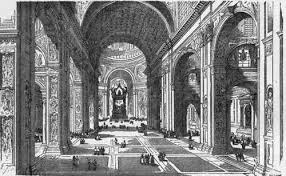
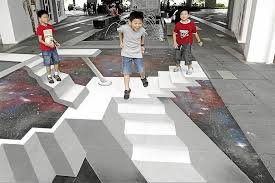
Angles are used in high culture quite regularly. The Greeks and Romans used angles to create beautiful architecture. For example, they measured out angles to make statues, buildings and coliseums. By creating these angles in their work, the Greeks and Romans brought about more character and life to the architecture. Learning how to use angles require a familiarity with basic math concepts and how to put them together when creating a building or bridge. Also, these angles can be used to help make buildings and bridges safer. In situations where there are natural disasters, angles can help keep the buildings and bridges from collapsing. Also, without the usage of angles architects and engineers would not be able to have the correct height of a ceiling or the correct angle of the road from a bridge. Angles are very important when it comes to building things. Angles are also used in art. Angles are used to give paintings/drawings the illusion of the portrait being 3-dimensional. Angles are drawn or created to make the pictures or objects appear 3-D. Artists have to drawn and measure out accurate angles in order to portray the ultimate 3-D art.
D2). How was the topic adopted by the mathematical community?
Angles were not invented but rather discovered. The term angle comes from the Latin word angulus, which means corner. Archimedes of Syracuse, a Greek mathematician, is credited with the discovery of angles. This is how the topic was adopted by the mathematical community. Euclid came next, he defined a “plane angle as the inclination to each other, in a plane, of two lines which meet each other, and do not like straight with respect to each other.” The first concept was used by Eudemus. He noted an angle as a deviation from a straight line. The second concept was used by Carpus of Antioch, he regarded an angle as the interval or space between intersecting lines. Finally, Euclid adopted the third concept, which is where we get the definitions of right, acute, and obtuse angles.
References
https://www.newworldencyclopedia.org/entry/Angle_(mathematics)
Engaging students: Proving that the angles of a convex n-gon sum to 180(n-2) degrees
In my capstone class for future secondary math teachers, I ask my students to come up with ideas for engaging their students with different topics in the secondary mathematics curriculum. In other words, the point of the assignment was not to devise a full-blown lesson plan on this topic. Instead, I asked my students to think about three different ways of getting their students interested in the topic in the first place.
I plan to share some of the best of these ideas on this blog (after asking my students’ permission, of course).
This student submission again comes from my former student Jessica Trevizo. Her topic, from Geometry: Proving that the angles of a convex 

E.1 How can technology be used to effectively engage students with this topic?
This website allows the students to see that any polygon, whether regular, concave, or convex, the sum of the interior angles will not change. The students are able to drag any angle of their choice and either enlarge, shrink, or rotate the figure. As the student is able to change the figure, the angles automatically change and are shown on the right hand side of the screen. All of the angles are color coordinated so students are able to easily observe which angle measure goes with the corresponding angle they are moving. Also, this activity allows the students to explore with six different polygons which include the triangle, quadrilateral, pentagon, hexagon, heptagon, and octagon. The triangle and the quadrilateral include an animated clip which consists of a visual proof for the value of the angle sum. It is a simple proof that students will be able to see and understand at their level.
http://illuminations.nctm.org/Activity.aspx?id=3546
A1. How could you as a teacher create an activity or project that involves your topic?
Using geoboards will help the students derive the sum of interior angles formula on their own. For the activity every student will need a geoboard and a couple of rubber bands. The students will be asked to create a specific shape on the geoboard using the rubber bands. Once every student has completed the figure they will be asked to dissect the figure into triangles. Whenever the teacher gives the students the task he/she needs to make sure to state the rules before they begin. The rules are that the rubber bands cannot cross each other, and the rubber bands must start and end at a vertex of the figure. The students will need to fill out the worksheet provided in the link below. The worksheet is arranged to help them see the pattern after they do a couple of examples with different shapes. The goal is to try to help the student realize that the number of triangles that can be created in a certain figure will be (n-2), n being the number of sides. A higher level question for the students could be, “Why are you only able to create (n-2) triangles?”
http://www.scribd.com/doc/60173215/2-4-Finding-the-sum-of-interior-angles-of-polygons-Worksheet

D1. What interesting things can you say about the people who contributed to the discovery and/or the development of this topic?
Euclid was a famous Greek mathematician that enjoyed the beauty of mathematics. He created a book called Euclid’s Elements where he gathered the knowledge of other famous mathematicians about the logical development of geometry. Pythagoras, Aristotle, Eudoxus, and Thales were some of the other men that influenced his work. Euclid’s Elements is compressed of 13 different volumes that are filled with geometrical theories. He proved the theories by using definitions as well as the axioms used in math.
Euclid was known as the “Father of Geometry” because he discovered geometry and gave it its value. The book contains over 467 propositions and they all include their proof. One of his propositions is about interior and exterior angles which is relevant to the sum of the interior angles topic. Proposition 32 states that an exterior angle is equal to the sum of the two opposite interior angles of a triangle, as well as the three interior angles of a triangle add up to two right angles. Since Euclid proves that a triangle is equal to 180ᵒ, it proves why we need to multiply (n-2)*180.
Engaging students: Introducting translation, rotation, and reflection of figures
In my capstone class for future secondary math teachers, I ask my students to come up with ideas for engaging their students with different topics in the secondary mathematics curriculum. In other words, the point of the assignment was not to devise a full-blown lesson plan on this topic. Instead, I asked my students to think about three different ways of getting their students interested in the topic in the first place.
I plan to share some of the best of these ideas on this blog (after asking my students’ permission, of course).
This student submission again comes from my former student Isis Flores. Her topic, from Geometry: introducing translation, rotation, and reflection of figures.
B2: How does this topic extend what your students should have learned in previous courses?
In order for students to be able to be successful understanding, performing, and identifying translations, rotations and reflections there are a few things that they must have a grasp on from previous classes. Included in these topics is understanding the Cartesian plane and the different relationships between each quadrant. Knowledge of the plane will be extended when students began to work with different degrees of rotations around the plane. Students should also be able to perform several different tasks on the plane such as, plotting points and lines. Being able to perform such tasks will ease the transition of now working with more complex shapes on the plane. Since the topic deals with transformations of figures students must also have an understanding of the basic geometric figures and their different characteristics and classifications. Having a base knowledge of geometric shapes will aid the students when comparing different types of transformations. In previous courses students should also have acquired knowledge of the basic mathematical operations, (addition, subtraction, multiplication, division), which will enable them to perform specific dictated transformations better. The concept of basic mathematical operations will be extended to students as they explore how these operations may play out on a coordinate plane with geometric figures.
C2. How has this topic appeared in high culture (art, classical music, theatre, etc.)?
In any classroom there is always a variety of students with a variety of interests. One of these interests may include art, which can lend itself quite easily to the exploration of different transformations. A specific type of art which uses translations, rotations and reflections is called Geometric Abstraction. Geometric Abstraction became widely popular in the early 20th century making it an even closer connection for students. The art form uses different types of geometric shapes to create abstract and quite modern looking pieces of work. The fact that the art form is quite new compared to other forms of art does not prevent pieces from being high end items, and the monetary aspect may be another way to engage students. Showing students different pieces of art which were composed using geometric transformations and also showing how highly priced they are, is a great way to show the relevancy and demand for the topic.



A2. How could you as a teacher create an activity or project that involves your topic?
As a teacher at times it is difficult to get students motivated and excited about a specific topic. A great way to give students motivation towards an activity is to give them a bit of autonomy. For translations, rotations and reflections a project that students may perform may be their own art work which would display their knowledge of the content. To even personalize the project even more students may be ask to include an object which is personal to them, for example if a student play soccer then a soccer ball would be an appropriate object for their art work. Students may be asked to also provide directions on their art work so that a classmate may replicate it. Perhaps to take a step further students may analyze each other’s art pieces and try to figure out what order of transformations created the finished piece. For students who may not feel as artistically inclined, or even as another class project, the option of going and finding a real life depiction of transformations may be offered. Students should provide evidence of their findings with an image. The task can be furthered challenged by asking students to find something in their school which depicts transformations. The first project will require students to show their proficiency in performing the transformation, while the second will call on them to show their understanding of what each transformation looks like.
References:
http://www.artspace.com/assume_vivid_astro_focus/starburst
http://www.artspace.com/magazine/art_101/art_101_geometric_abstraction
Vans
Whenever I see this logo, I feel compelled to find the answer by squaring.
 (Shamelessly stolen from a friend.)
Math Riots Prove Fun Incalculable
The following column appeared in the Chicago Tribune / DuPage County edition Tuesday June 29 1993 page 2-1.
This one’s dedicated to all mathematicians in cyberspace who can still remember the details surrounding Michael Jordan’s Chicago Bulls’ third straight championship in 6 games over Charles Barkley’s Phoenix Suns in the 1993 NBA Finals.
MATH RIOTS PROVE FUN INCALCULABLE
by Eric Zorn
News Item (June 23) — Mathematicians worldwide were excited and pleased today by the announcement that Princeton University professor Andrew Wiles had finally proved Fermat’s Last Theorem, a 365-year-old problem said to be the most famous in the field.
Yes, admittedly, there was rioting and vandalism last week during the celebration. A few bookstores had windows smashed and shelves stripped, and vacant lots glowed with burning piles of old dissertations. But overall we can feel relief that it was nothing — nothing — compared to the outbreak of exuberant thuggery that occurred in 1984 after Louis DeBranges finally proved the Bieberbach Conjecture.
“Math hooligans are the worst,” said a Chicago Police Department spokesman. “But the city learned from the Bieberbach riots. We were ready for them this time.”
When word hit Wednesday that Fermat’s Last Theorem had fallen, a massive show of force from law enforcement at universities all around the country headed off a repeat of the festive looting sprees that have become the traditional accompaniment to triumphant breakthroughs in higher mathematics.
Mounted police throughout Hyde Park kept crowds of delirious wizards at the University of Chicago from tipping over cars on the midway as they first did in 1976 when Wolfgang Haken and Kenneth Appel cracked the long-vexing Four-Color Problem. Incidents of textbook-throwing and citizens being pulled from their cars and humiliated with difficult story problems last week were described by the university’s math department chairman Bob Zimmer as “isolated.”
Zimmer said, “Most of the celebrations were orderly and peaceful. But there will always be a few — usually graduate students — who use any excuse to cause trouble and steal. These are not true fans of Andrew Wiles.”
Wiles himself pleaded for calm even as he offered up the proof that there is no solution to the equation x^n + y^n = z^n when n is a whole number greater than two, as Pierre de Fermat first proposed in the 17th Century. “Party hard but party safe,” he said, echoing the phrase he had repeated often in interviews with scholarly journals as he came closer and closer to completing his proof.
Some authorities tried to blame the disorder on the provocative taunting of Japanese mathematician Yoichi Miyaoka. Miyaoka thought he had proved Fermat’s Last Theorem in 1988, but his claims did not bear up under the scrutiny of professional referees, leading some to suspect that the fix was in. And ever since, as Wiles chipped away steadily at the Fermat problem, Miyaoka scoffed that there would be no reason to board up windows near universities any time soon; that God wanted Miyaoka to prove it.
In a peculiar sidelight, Miyaoka recently took the trouble to secure a U.S. trademark on the equation x^n + y^n = z^n as well as the now-ubiquitous expression “Take that, Fermat!” Ironically, in defeat, he stands to make a good deal of money on cap and T-shirt sales.
This was no walk-in-the-park proof for Wiles. He was dogged, in the early going, by sniping publicity that claimed he was seen puttering late one night doing set theory in a New Jersey library when he either should have been sleeping, critics said, or focusing on arithmetic algebraic geometry for the proving work ahead.
“Set theory is my hobby, it helps me relax,” was his angry explanation. The next night, he channeled his fury and came up with five critical steps in his proof. Not a record, but close.
There was talk that he thought he could do it all by himself, especially when he candidly referred to University of California mathematician Kenneth Ribet as part of his “supporting cast,” when most people in the field knew that without Ribet’s 1986 proof definitively linking the Taniyama Conjecture to Fermat’s Last Theorem, Wiles would be just another frustrated guy in a tweed jacket teaching calculus to freshmen.
His travails made the ultimate victory that much more explosive for math buffs. When the news arrived, many were already wired from caffeine consumed at daily colloquial teas, and the took to the streets en masse shouting, “Obvious! Yessss! It was obvious!”
The law cannot hope to stop such enthusiasm, only to control it. Still, one has to wonder what the connection is between wanton pillaging and a mathematical proof, no matter how long-awaited and subtle.
The Victory Over Fermat rally, held on a cloudless day in front of a crowd of 30,000 (police estimate: 150,000) was pleasantly peaceful. Signs unfurled in the audience proclaimed Wiles the greatest mathematician of all time, though partisans of Euclid, Descartes, Newton, and C.F. Gauss and others argued the point vehemently.
A warmup act, The Supertheorists, delighted the crowd with a ragged song, “It Was Never Less Than Probable, My Friend,” which included such gloating, barbed verses as
I had a proof all ready
But then I did a choke-a
Made liberal assumptions
Hi! I’m Yoichi Miyaoka.
In the speeches from the stage, there was talk of a dynasty, specifically that next year Wiles will crack the great unproven Riemann Hypothesis (“Rie-peat! Rie-peat!” the crowd cried), and that after the Prime-Pair Problem, the Goldbach Conjecture (“Minimum Goldbach,” said one T-shirt) and so on.
They couldn’t just let him enjoy his proof. Not even for one day. Math people. Go figure ’em.
The 4E X 2: A Structure for Inquiry-Based Instruction
I recently came across the following 17-minute webinar about the 4E x 2 structure for teaching mathematics, which is almost identical to the 5E model that we use at Teach North Texas for preparing secondary teachers of mathematics and science. I recommend it highly.
https://connect.clemson.edu/p1vckxf1295/?launcher=false&fcsContent=true&pbMode=normal
Engaging students: Finding the area of a square or rectangle
In my capstone class for future secondary math teachers, I ask my students to come up with ideas for engaging their students with different topics in the secondary mathematics curriculum. In other words, the point of the assignment was not to devise a full-blown lesson plan on this topic. Instead, I asked my students to think about three different ways of getting their students interested in the topic in the first place.
I plan to share some of the best of these ideas on this blog (after asking my students’ permission, of course).
This student submission again comes from my former student Juan Guerra. His topic, from Geometry: finding the area of a square or rectangle.
E1. How can technology (YouTube, Khan Academy [khanacademy.org], Vi Hart, Geometers Sketchpad, graphing calculators, etc.) be used to effectively engage students with this topic?
The website below contains an activity that relates both perimeter and area. In particular, the activity stimulates the student’s mind by making them think of a way to get the amount of fencing that they would need in order to build the stable for animals. After the character in the game learns about perimeter, he is made to think about the area that would be created from the stable. Then the activity mentions the different possibilities of getting the same perimeter but at the same time, the area of each different possibility is also analyzed. The activity makes students realize that even though all stables have the same perimeter, the area was different most of the time. The activity also has the students practice taking measurements and finding the perimeter and area of rectangles. This activity targets multiple objectives and skills because students learn about perimeter, area, and go over measuring the sides with a virtual ruler. This website contains more interactive games that target multiple skills, which will be helpful to the teachers when planning a lesson. Aside from having interactive games, the website also contains videos on tutorials for some basic computations or definitions of terms in math.
http://www.mathplayground.com/area_perimeter.html
F3. How did people’s conception of this topic change over time?
Ancient civilizations have known how to compute the area of basic figures including the square and the rectangle. These civilizations include the Egyptians, Babylonians, and Hindus. The Babylonians actually had a different formula for the area of a square or rectangle. The formula we know today is a*b, where a and b are the lengths of the figure. The Babylonian formula for multiplying two numbers, which was essentially the same as finding the area was [(a + b)2 – (a – b)2]/4. Looking at the formula, it is clear that they had a different perception of what it was to find the product of two numbers and also the area of a square or rectangle. It turns out that the Babylonians were the only ones who used a different formula for the area of a rectangle or square, which means that they saw area differently than the other two civilizations. Another person that represented area was Euclid. In his book named Euclid’s Elements, he showed how multiplying two numbers would look geometrically, which was by taking a segment with length a and another segment with length b and putting them together so that they form a right angle at the ends and completing the rectangle by adding the other two missing sides. This method was used for visualizing the multiplication of numbers but it was also the representation of what area looked like geometrically although Euclid did not mention in his book that this was called area.
http://en.wikipedia.org/wiki/Egyptian_geometry
http://www-history.mcs.st-and.ac.uk/HistTopics/Babylonian_mathematics.html
B1. How can this topic be used in your students’ future courses in mathematics or science?
In the future, students will need to know the concept of area in general in order to solve other types of problems in courses like calculus. To illustrate a better example, suppose you have the equation 


Engaging students: Area of a triangle
In my capstone class for future secondary math teachers, I ask my students to come up with ideas for engaging their students with different topics in the secondary mathematics curriculum. In other words, the point of the assignment was not to devise a full-blown lesson plan on this topic. Instead, I asked my students to think about three different ways of getting their students interested in the topic in the first place.
I plan to share some of the best of these ideas on this blog (after asking my students’ permission, of course).
This student submission again comes from my former student Erick Cordero. His topic, from Geometry: finding the area of a triangle.
B1. How can this topic be used in your students’ future courses in mathematics or science?
Students in high school usually take geometry during the first or second year, and after that they might not see it again until college. Three years might be the wait until a student sees geometry again, nevertheless, geometry does come back in the form of trigonometry. Trigonometry is a class taken right before pre-calculus and it is here where students truly see geometry again. The importance of the triangle in geometry is enormous and in fact, there would not be any trigonometry if it were not because of triangles. Students learn in this class different ways of getting the area of a triangle because they are no longer given the height and the length of the base, now students are given angles or other information and they have to somehow find the area. The topic of area is also used throughout college in math classes, although we are not always finding the area of a triangle, we are nonetheless finding the area of something. To make everything even better, those students who decide to become teachers have to take a course called foundations of geometry. Now it is here were the student really understands the triangles and the axiomatic method of doing proofs.
D1. What interesting things can you say about the people who contributed to the discovery and/or the development of this topic?
http://www.britannica.com/EBchecked/topic/194880/Euclid
http://aleph0.clarku.edu/~djoyce/java/elements/toc.html
In ancient Greece, mathematicians did not deal with the concept of area as we do today. In fact, numbers were not used in geometry and mathematicians had other creative ways of expressing algebraic expression. The great mathematician, Euclid, whom was born in 300 BC, would be the person who would unify all the geometry that was around at the time. Euclid’s greatest contributions and perhaps the most famous book in the history of mathematics, The Elements, is a book that for hundreds of years was the standard way of doing geometry. Euclid’s approach is what is referred to as axiomatic geometry in which one proves geometric expression on the basis on a few assumptions that are assumed to be obvious. In many of his proofs, Euclid compares different triangles in order to learn more about the situation or scenario he is trying to prove. Euclid has a nice way of defining the area of a triangle. He first proves that one can construct a parallelogram and then he proves that two triangles fit into this parallelogram, and thus the area of a triangle is half a parallelogram.
Thus, Euclid defines the area of a triangle in terms of parallelograms. He proves this by using the basic properties of a parallelogram, such as the fact the opposite angles and sides are congruent, to prove that in fact two congruent triangles can fit into a parallelogram.
E. How can technology be used to effectively engage students with this topic?
http://aleph0.clarku.edu/~djoyce/java/elements/toc.html
The website above is a great website for high school students to look at, but because of the language (sounds ancient) I would prefer to go and explore this website with the students. This website contains Euclid’s elements and although the students would not be expect to know how to do all the proofs, I would expect them to know how to prove the formula for the area of a triangle using Euclidian methods. I think the history that this website contains is amazing and it also has diagrams of the way Euclid did his proofs and students like pictures, especially with math, so this would be good. The wording on the website could cause students some problems but for the immense knowledge they can learn from visiting this website, I believe its worth it. Students will get introduce to this beautiful way of proving geometric theorems, methods that were developed hundreds of years ago and are still being used in universities today. I believe this is something incredibly amazing and every student in geometry should at least be familiar with this method of proving things. I believe students will enjoy this way of doing proofs because it is new (it is new to them) and it is not so rigid and mechanical as algebra might have seemed to them. Also, I believe it is only right that they get to know, from reading some of the proofs, who this great mathematician that we know as Euclid was and the immense influence he had in the history of mathematics.
Engaging students: Using the undefined terms point, line, and plane
In my capstone class for future secondary math teachers, I ask my students to come up with ideas for engaging their students with different topics in the secondary mathematics curriculum. In other words, the point of the assignment was not to devise a full-blown lesson plan on this topic. Instead, I asked my students to think about three different ways of getting their students interested in the topic in the first place.
I plan to share some of the best of these ideas on this blog (after asking my students’ permission, of course).
This student submission again comes from my former student Dorathy Scrudder. Her topic, from Geometry: using the undefined terms point, line, and plane.
A1. What interesting word problems using this topic can your students do now?
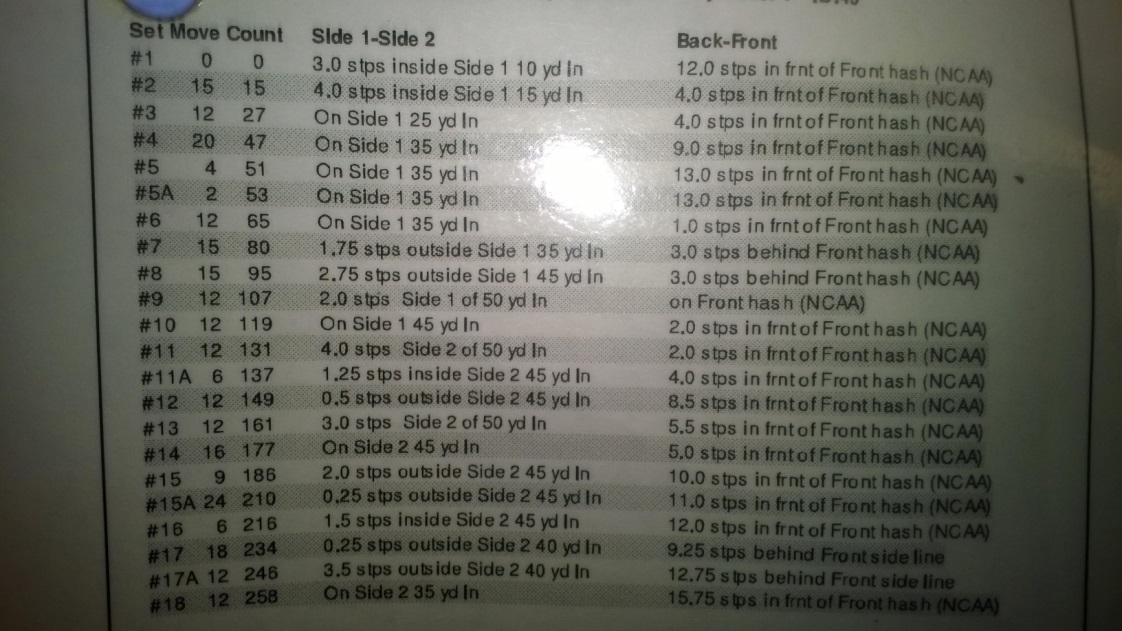
“Given the marching band coordinates shown in the picture, plot the points on the Cartesian coordinate plane and connect the points to show the line of where the band member will march.” This is an engaging warm up problem for the students because the problem covers all three aspects of the topic while engaging the students who are not normally the subject of the example. Normally, as teachers, we focus on involving the athletes due to stereotypes but we forget there are other students who are not interested in sports or math so they do not stay engaged in the lesson. Using band coordinates allows the band members to feel appreciated and they also get to help explain the marching process to their classmates who may not know how the band creates such intricate designs on the football field. The students should be able to plot the points on the plane and connect the lines before the main lesson. This will allow the teacher to scaffold the students into making connections between the undefined terms of point, line, and plane.
B1. How can this topic be used in your students’ future courses in mathematics or science?
This topic will be continuously used in every following math class and most science classes. Students will be expected to know how to find an equation of a line and graph the line on a plane in all future math courses. They will also be expected to plot points in both polar and rectangular coordinates. A lesson in using the undefined terms of point, line, and plane will come in use for multiple facets of their educational journey. Learning how to plot points on a plane should come fairly easy at this point. Students should be able to label their x and y axis and therefore can plot points. Graphing lines on a plane is a bit more difficult. Students will need to learn how to find the slope and understand what it means. With that information, the students will be able to graph a line when given two points, a point and a slope, and a y-intercept (a point) and a slope. Students will hopefully be able to transfer this knowledge to other topics and courses.
C2. How has this topic appeared in high culture (art, classical music, theatre, etc.)?
This topic has appeared in high culture through art, theatre, and dance. An artist must know their canvas they are working with. Whether the canvas is an actual canvas, a piece of clay, or a pile of scrap metal they will be welding together, the artist must understand the concept of how points, lines, and planes work together to create a masterpiece. A lighting designer must work with a director of a play to know where to point a spotlight, when to follow an actor walking in a line, and to know what altitude the spotlighted actor would be at (for example, if the actor is on a platform or flying in a harness). A dance choreographer must also be conscientious of points, lines, and planes so that the dancers can create formations that are pleasing to the eye. A dancer must understand points and lines so that he or she can move their body with the music and show the audience the lines and contorts of their body.
 Mean Green Math