
This begins a series of post concerning how the area of a triangle can be computed. This post concerns the formula that students most often remember:

Why is this formula true? Consider 


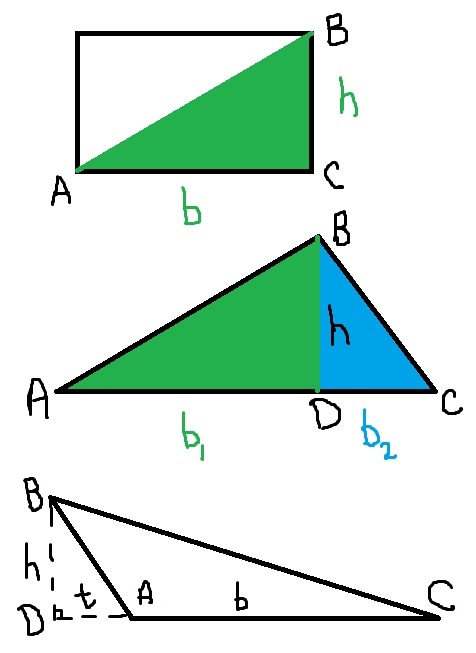
Case 1. The altitude intersects 


Knowing the area of a right triangle will be important for Cases 2 and 3, as we will act like a good MIT freshman and use this previous work.
Case 2. The altitude intersects 


Case 3. The altitude intersects



 Mean Green Math
One thought on “Area of a triangle: Base and height (Part 1)”